
Monday, 25 March 2019
Friday, 22 March 2019
Bookish Déjà-Vu: Red Rose, White Rose by Eileen Chang
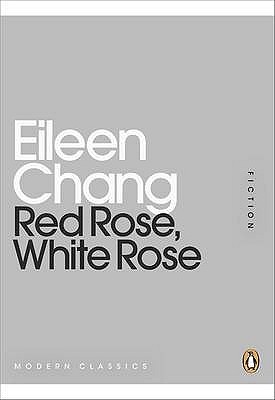
However hard we try to reach perfection, we’ll never succeed because we are just flawed human beings. In love preconceived ideas and great expectations of the perfect partner-to-be usually are a sure way to unhappiness. This is even more true when they combine with the general desire to create a world that is right in the sense that it always corresponds perfectly with personal plans and with set social standards. But life is in a state of continuous change – πάντα ῥεῖ or everything flows, as the Ancient Greek said – that naturally defies absolute control. Besides, the imperfect often has a very strong appeal. My bookish déjà vu Red Rose, White Rose by Eileen Chang proves all of this against the backdrop of Shanghai, China, in the 1940s where Tong Zhenbao lives torn between his wild lover and his (seemingly) perfect wife as well as between old traditions and modern times.
Read my review »
Wednesday, 20 March 2019
Back Reviews Reel: March 2016
This month three years ago, it was the turn of the letters E, F, U and V in my double alphabet of writers. I started with the fictionalised memoir A Man’s Place by Annie Ernaux that evokes the author’s father raising her in a small town in post-war Normandy, France. Then I moved on to Germany with the comical novel Look Who’s Back by Timur Vermes about Adolf Hitler who one day miraculously regains consciousness in present-day Berlin instead of on the sofa in his Führerbunker beside his newly-wed wife Eva in 1945 as he last remembers. Another fictionalised childhood, this time from New Zealand, is at the centre of the 1957 autobiographical satire Owls Do Cry by Janet Frame. My final read of March 2016 was the classical collection Abel Sanchez and Other Stories by Miguel de Unamuno containing three tales revolving each around a protagonist caught in suffering.
Monday, 18 March 2019
Poetry Revisited: My Star by Robert Browning
My Star
(from Men and Women: 1855)All that I know
Of a certain star,
Is, it can throw
(Like the angled spar)
Now a dart of red,
Now a dart of blue,
Till my friends have said
They would fain see, too,
My star that dartles the red and the blue!
Then it stops like a bud, like a flower hangs furled
They must solace themselves with the Saturn above it.
What matter to meif their star is a world?
Mine has opened its soul to me therefore I love it.
Robert Browning (1812-1889)
English poet and playwright
Friday, 15 March 2019
Book Review: Short Letter, Long Farewell by Peter Handke
 To come to terms with important events in life, notably with big changes, usually takes time even if they don’t turn upside-down the entire universe that we have known. Sometimes they can leave us at a complete loss because they put into question who we are and force us to re-evaluate our whole being to piece together a new identity. In the novella Short Letter, Long Farewell by Peter Handke a young Austrian writer has fled to the USA to recover his peace of mind after the end of his marriage to Judith. Years of life together had turned them into opponents seething with hatred to the point of trying to kill each other more than once, and yet, his fear of his ex-wife mixes with the urge to go after her. As a result, he zigzags across the country as much in flight from as in pursuit of Judith...
Monday, 11 March 2019
Poetry Revisited: Farewell to a Happy Day by Frances Sargent Osgood
Farewell to a Happy Day
(from Rufus Wilmot Griswold: The Female Poets of America. 1873)Good-by, good-by, though gracious, golden day:
Through luminous tears thou smilest, far away
In the blue heaven, thy sweet farewell to me,
And I, though my tears, gaze and smile with thee.
I see the last faint glowing amber gleam
Of thy rich pinion, like a lovely dream,
Whose floating glory melts within the sky,
And now thou’rt passed for ever from mine eye!
Were we not friends –best friends– my cherished day?
Did I not treasure every eloquent ray
Of golden light and love thou gavest me?
And have I not been true – most true to thee?
And thou – thou camést like a joyous bird,
Whose sacred wings by heaven’s own air were stirred,
And lowly sang me all the happy time
Dear, soothing stories of that blissful clime!
And more, oh! more than this, there came with thee,
From Heaven, a stranger, rare and bright to me —
A new, sweet joy – a smiling angel-guest,
That softly asked a home within my breast.
For talking sadly with my soul alone,
I heard far off and faint a music-tone:
It seemed a spirit’s call – so soft it stole
On fairy wings into my waiting soul.
I knew it summoned me to something sweet,
And so I followed it with faltering feet —
And found – what I had prayed for with wild tears —
A rest, that soothed the lingering grief of years!
Sor for that deep, perpetual joy, my day!
And for all lovely things that came to play
In thy glad smile – the pure and pleading flowers
That crowned with their frail blom thy flying hours:
For these – for all – bear thou to Heaven for me
The grateful thanks with which I mission thee!
Then should thy sisters, wasted, wronged, upbraid:
Speak thou for me – for thou wert not betrayed!
‘T was little, true, I could to thee impart —
I, with my simple, frail, and wayward heart;
But that I strove the diamond sands to light,
In Life’s rich hour-glass, with Love’s rainbow flight:
And that on generous spirit owed to me
A moment of exulting ecstasy;
And that I won o’er wrong a queenly sway —
For this, thou ’lt smile for me in Heaven, my Day!
Frances Sargent Osgood (1811-1850)
American poet
Friday, 8 March 2019
Bookish Déjà-Vu: The Winter of Our Discontent by John Steinbeck
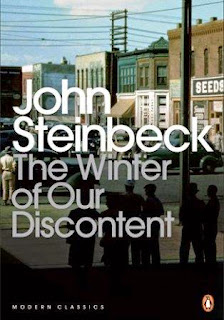
As Charles Darwin impressively proved in his key works On the Origin of Species (1859) and The Descent of Man (1871), the ability to adapt to new conditions helped the human race enormously not just to survive, but to “fill the Earth and govern it” as the Holy Bible puts it. Nonetheless, it’s undeniable that we all have a conservative streak in us – some more, some less – because as a rule it assures us when things stay as they are and we aren’t forced to try out something new that could well turn out wrong. The protagonist of my bookish déjà vu, The Winter of Our Discontent by en-NOBEL-ed American author John Steinbeck, is a middle-aged man of old lineage who proudly holds fast to the principles and morals passed on to him by his forefathers although he realises that they prevent his success in a much changed modern world.
Read my review »
Subscribe to:
Posts (Atom)