 The horrors that alleged “enemies of the Third Reich”, most of all those with Jewish ancestors, had to endure under Nazi reign were so appalling that at the time many simply couldn’t believe rumours about them. When eye witnesses and hard facts of systematic atrocities turned up eventually – as they use to, in general –, the world was dumbfounded and reluctant to take them at face value. In a modern European country like Germany people couldn’t be so barbarous as that, could they? Therefore even when their countries were annexed or occupied, many Jews lulled themselves into a false sense of security until it was too late for escape. The narrator of Bitter Herbs by Marga Minco observes the growing concern of her apparently calm family, notably her parents, as race laws are gradually implemented in the German-occupied Netherlands and deportation to the Polish concentration camps becomes a daily threat.
Showing posts with label 1950s. Show all posts
Showing posts with label 1950s. Show all posts
Friday, 4 January 2019
Book Review: Bitter Herbs by Marga Minco
The horrors that alleged “enemies of the Third Reich”, most of all those with Jewish ancestors, had to endure under Nazi reign were so appalling that at the time many simply couldn’t believe rumours about them. When eye witnesses and hard facts of systematic atrocities turned up eventually – as they use to, in general –, the world was dumbfounded and reluctant to take them at face value. In a modern European country like Germany people couldn’t be so barbarous as that, could they? Therefore even when their countries were annexed or occupied, many Jews lulled themselves into a false sense of security until it was too late for escape. The narrator of Bitter Herbs by Marga Minco observes the growing concern of her apparently calm family, notably her parents, as race laws are gradually implemented in the German-occupied Netherlands and deportation to the Polish concentration camps becomes a daily threat.Friday, 8 September 2017
Book Review: This is the Hour by Lion Feuchtwanger
 |
| Click on the index card to enlarge it! |
Friday, 1 September 2017
Book Review: The River Ki by Ariyoshi Sawako
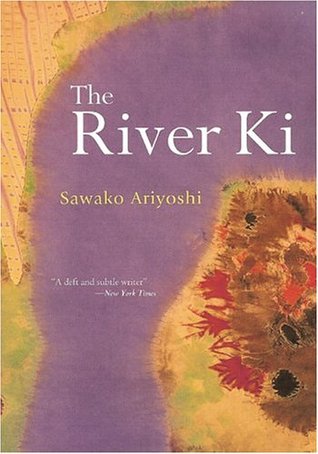 All around the world the twentieth century has been a time of important, not to say radical social changes. In the Far East, notably in China and Japan, the transition from the old way of life to a modern society was rapid as well as fundamental because the adaptation to the needs of global economy went hand in hand with the Westernisation of culture. Not everybody welcomed the development, not everybody was able or willing to adopt new ideas. Although Hana, the protagonist of The River Ki by Ariyoshi Sawako, received higher education in Wakayama-City, she adopts the traditional role of a Japanese wife when she enters the marriage arranged for her by her beloved grandmother. Her daughter Fumio, however, is a rebel and virtually from the day of her birth revolts against everything that smells of tradition and of old times. Fumio too gets married and has a daughter who is unlike her.
Friday, 14 July 2017
The Green Pope by Miguel Ángel Asturias
 It’s not a particularly secret wisdom that those who have wealth are likely to have power too. After all, it’s money that makes the world go round… at least a materialistic world like ours. Little wonder that our society produces considerable numbers of men and women whose primary goal in life is to gain money and ever more money. In The Green Pope by Miguel Ángel Asturias, Guatemalan winner of the Nobel Prize in Literature 1967 “for his vivid literary achievement, deep-rooted in the national traits and traditions of Indian peoples of Latin-America”, a young American who cares for nothing but wealth and power starts a banana plantation in Guatemala mercilessly ruining, driving out or even killing small local farmers and opponents on his rise. Neither the suicide of his fiancé, the death of his wife in childbirth or the pregnancy of his unmarried daughter make him reconsider his priorities.
Friday, 14 April 2017
Book Review: Celebration in the Northwest by Ana María Matute
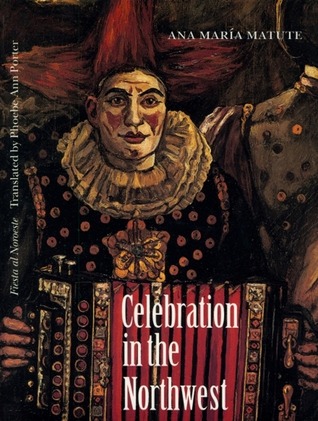 To give way to feelings of inferiority and fear, to envy and ill will, to hatred and malice is never a good idea because it leads straight into a life of ever growing misery. Once caught in the vicious circle of such harmful emotions, it’s difficult to break out and to see the good in life or other people. Often the seed for a negative view of the world – and lifelong unhappiness – is planted in the soul already in earliest childhood like in the case of the main protagonist of Celebration in the Northwest by Catalan author Ana María Matute. As a man in his mid-forties, Juan looks back on his childhood and youth, notably on the mixture of hatred and love that he felt for his half-brother Pablo who was his complete opposite in looks as well as character and whom he chased away in an attempt to make him share his misery.
 Friday, 24 March 2017
Book Review: The Roots of Heaven by Romain Gary

Friday, 27 January 2017
Book Review: Billiards at Half Past Nine by Heinrich Böll

Without any doubt, the first half of the twentieth century counts among the most unstable and most violent times in European history. For survivors and Spätgeborene (“late-born”, i.e. the post-war generation) it was difficult to come to terms with the horrors of holocaust and war and to build a pluralistic and truly democratic society on the rubbles that the totalitarian Nazi regime left behind. As shows the much-acclaimed novel Billiards at Half Past Nine by Heinrich Böll, the German recipient of the Nobel Prize in Literature of 1972, in the years or even decades immediately following World War II, most Germans preferred to push the memory of the Third Reich and their role in it into the background. With survival being the first priority, it was rather natural after all to focus on the present. But to forget the lessons of the past means to give those charismatic populists who wish to turn back time a chance to rise.
Friday, 20 January 2017
Book Review: The River With No Bridge by Sumii Sué

It seems to be deeply rooted in human nature to put the strong and powerful on a pedestal for unconditional adoration and to push the weak and helpless down into the gutter to trample on just as unreservedly. Social history is full of examples of organised discrimination like slavery, the Indian caste system or less strict class structures. Japanese society is no exception. For centuries, the country knew different classes and religion justified their inequality with karma. Only in 1871 – after Japan was forced into dealing with Western civilisation – the lowest class called eta was renamed and given equal rights as commoners, but society didn’t change overnight. More than three decades later, the boy whose school years the first volume of The River With No Bridge by Sumii Sué relates has to learn that no matter how much he excels in his studies and in virtue, for people he’ll remain the filthy eta who should be avoided.
Friday, 2 December 2016
Book Review: The Hive by Camilo José Cela

by an author whose family name starts with the letter
A B C D E F G H I J K L M N O P Q R S T U V W X Y Z
It’s a characteristic of the big city that there’s a constant hustle and bustle in all the central places. Around every corner seems to wait big adventure… or maybe just the daily struggle for a petty livelihood that is the inexorable fate of the masses crammed together in its less fashionable quarters. However hard the times, day in day out without fail people go about their business – because they have to – and fill the city if not with cheer then at least with life. Overall, their existence may appear ordinary and dull, but it suffices to break it down to the individual level to discover the unique, sometimes surprising and often moving stories that make it up. The Hive by Camilo José Cela, the Spanish recipient of the 1989 Nobel Prize in Literature, shows the much-tried people of Madrid striving to return to something like normality after the Spanish Civil War.
Wednesday, 9 November 2016
New on Lagraziana's Kalliopeion: The Jib Door by Marlen Haushofer
 When a Woman Loves a Man:
 The Jib Door by Marlen Haushofer
It’s a well-known truth that love has the potential to make blind for anything unpleasant involved and at all times writers gladly took up the theme to dwell on the tangle and the suffering that results from it. In the history of literature there are scores of novels – all-time classics and probably many more forgotten ones – surrounding ill-matched couples whose relationships are doomed from the start however much they try to bridge the factual, emotional, social or psychological divide. The Jib Door by Marlen Haushofer is an impressive, though often overlooked example of an Austrian novel dealing with passionate love leading into a marriage that is based on the desperate longing to escape loneliness in a “normal” life with a husband and self-denial. First published in 1957, the primarily male critics of the time showed all but enthusiasm for the book because they had neither an interest in nor an understanding for what might be called the female condition in a patriarchal society.
read more » (external link to Lagraziana's Kalliopeion)
Friday, 30 September 2016
Book Review: Twenty-four Eyes by Tsuboi Sakae
 2016 review of a book written
by an author whose family name starts with the letter
A B C D E F G H I J K L M N O P Q R S T U V W X Y Z
Every war necessarily leaves painful and indelible traces in society, but people’s souls are wounded not just during the war itself. Often the suffering begins already before it breaks out and lasts until long after its end because there’s always a more or less intricate history leading to open hostility and often unexpected aftermaths emerge long after the restoration of peace. World War II is no exception there. The holocaust, the nuclear bombings of Hiroshima and Nagasaki and the bloody battles virtually all around the world are burnt into individual and collective memory forever. But also those who weren’t directly affected by such traumatising horrors suffered, though differently, less obviously. The pacifistic novel Twenty-four Eyes by Tsuboi Sakae evokes the years before, during and after World War II as a primary school teacher and the twelve pupils in the first class that she ever taught experienced them in a small Japanese village.
Friday, 18 March 2016
Book Review: Owls Do Cry by Janet Frame

2016 review of a book written
by an author whose family name starts with the letter
A B C D E F G H I J K L M N O P Q R S T U V W X Y Z
Rubbish dumps as (forbidden) playing grounds for children and mental institutions as homes for people considered for one reason or another to be unfit for taking equal part in society are a sad reality that most of us prefer not to think about. Thus it’s understandable that they aren’t among the favourite places of writers to use as setting for the main plot or a central scene of a book, but if sought for they can yet be found in literature. An example for a novel featuring both as important elements of the story is Owls Do Cry by Janet Frame, a satire on a New Zealand childhood in the boom years after World War II drawn from the author’s own experience. Confronted from an early age with all kinds of problems implied in working-class poverty, with illness and death, each of the Withers children takes another way out of misery.
Friday, 26 February 2016
Book Review: The Tree of Man by Patrick White

2016 review of a book written
by an author whose family name starts with the letter
A B C D E F G H I J K L M N O P Q R S T U V W X Y Z
Everyday life with its inevitable, often annoying routine is what most of us gladly pass over in silence because it doesn’t seem worthwhile to lose a word about it or just a thought. Nonetheless, the greatest part of human existence is made up of it and at least sometimes we wonder whether there isn’t some unexpected meaning or purpose behind it all – like a secret plan of God or Destiny or whatever other seminal power. The Tree of Man by Patrick White, the Australian Nobel Prize-laureate in Literature of 1973, tells the story of a man who leads just the ordinary life of a hard-working farmer with wife, son and daughter in a changing world. He does what needs to be done and accepts all vicissitudes – joys as well as trials – with apparent stoicism although inwardly he wrestles all his life to reach a deeper understanding and find God.
Friday, 29 January 2016
Book Review: The Heike Story by Yoshikawa Eiji
 2016 review of a book written
by an author whose family name starts with the letter
A B C D E F G H I J K L M N O P Q R S T U V W X Y Z
We all tend to think of the past as “good old times” and easily forget that our ancestors often had much harder and more dangerous lives than we have today. The proof: leafing through any history book we find a succession of bloody wars, terrible pandemics, natural disasters and migration waves. Some historical events and their heroes became the subjects of legends like the story of the rise and fall of the Heike clan in twelfth-century Japan passed on from generation to generation in scattered poems that were assembled only two hundred years later. The Heike Story by Yoshikawa Eiji retells in modern – fictionalised – style the ancient tale of war and peace surrounding the warrior Heita Kiyomori who led the poor clan of the Heike through wars and court intrigues to wealth, power and glory provoking the anger and envy of the rival Genji clan that he almost erased.
Friday, 4 December 2015
Book Review: The Angry Hills by Leon Uris
 Espionage is a dangerous trade, especially in times of – hot or cold – war, but not everybody deliberately chooses to enter it. Sometimes, above all in novels, outsiders get mixed up in intelligence work more or less by accident like Graham Greene’s Jim Wormold, the Englishman living in Cuba before Fidel Castro, who is recruited as a spy against his will (»»» read my review of Our Man in Havana) or the middle-aged American protagonist of The Angry Hills by Leon Uris who at first doesn’t even know that Greek resistance against Nazi Germany and British Secret Service have chosen him as unsuspicious and ignorant courier. What starts for the “bread-and-butter” writer Mike Morrison as an innocent business trip to Greece to transfer family money to the USA just in time before war will prevent it turns into a flight from invading German troops and Nazi spies hunting after a sealed envelope containing secret information.
Friday, 27 November 2015
Book Review: Désirée by Annemarie Selinko
 Life sometimes takes such amazing turns that, if they came into the mind of a writer, even the most daring among them might refrain from using them in a book because they seem just too far-fetched to make a realistic story. To a historical novel based on well-researched facts, however, they can give the magic touch of a fairy-tale come true as is the case with the book that I’m reviewing today. In the 1940s, an Austrian author of popular novels chose to base what was to be her last and most famous work on a true story from revolutionary France that ends on the Swedish throne. Désirée by Annemarie Selinko is the fictionalised account of the stunning fate of Désirée Clary that reminds of the story of Cinderella, but the silk merchant’s daughter from Marseille who was the first love of Napoleone Buonaparte and who eventually became Queen Desideria I of Sweden and Norway really existed.
Friday, 11 September 2015
Book Review: Breakfast at Tiffany's by Truman Capote
 There are books that everybody has at least heard of and that keep attracting readers throughout years, decades and in some cases even centuries, in short books that are timeless classics of literature. Undeniably, the slim volume that I picked for today’s review is such a classic or to be precise a modern classic since it first appeared only in 1958. I admit that Breakfast at Tiffany's by Truman Capote may owe part of its lasting notoriety and popularity to the fact that it was adapted for the screen as early as in 1961 starring Audrey Hepburn. For the rest, the novella is a brilliant portrait of a young woman who left behind a modest life somewhere at the back of beyond in order to enter well-to-do society of New York City and to get her share of glamour and happiness.
Friday, 6 March 2015
Book Review: Arturo's Island by Elsa Morante
 Authors have always enjoyed writing memoirs, be they true or fictitious. Luck would have it that after the first and last part of the fictitious Memoirs of the Marquis of Bradomin by Ramón del Valle-Inclán, of which I reviewed a combined English edition titled Autumn and Winter Sonatas a week ago, I picked another book containing an invented man’s look back on his past. This time, however, they are memoirs of a childhood and confusions of first love which makes Arturo’s Island by Elsa Morante a coming-of-age novel. The story set on a small island off the coast of Naples, Italy, revolves around teenage Arturo, his scarcely older step-mother Nunziatella and his mostly absent father who keeps everybody including his son at a distance.
Friday, 5 December 2014
Book Review: A Monkey in Winter by Antoine Blondin
 |
| Click on the index card to enlarge it! |
Friday, 28 March 2014
Book Review: A Town Like Alice by Nevil Shute
 Today I’m turning my attention to Australia and to a book which I first read as a young teenager. Admittedly, back then I had to put up with its German translation and, what is worse, with an abridged version, but the story impressed me so that it lingered on in my memory for decades. It occurred to me that after all those years it could be an interesting experience to read the original of A Town Like Alice (published as The Legacy in the USA) by Nevil Shute and to see how I feel about this mainstream novel now as a passably well-read woman in my forties. So here's my review!
Nevil Shute, in full Nevil Shute Norway, was born in London, England, U.K., in January 1899. After his engineering studies he worked as an aeronautical engineer until 1938, when he decided to retreat from his own (highly successful) aircraft construction company. By then he had already published three novels: Marazan (1926), So Disdained (1928), and Lonely Road (1932). From 1938 on Nevil Shute wrote full-time and prolifically. His most important works produced until after World War II are Ruined City (1938; published as Kindling in the USA), What Happened to the Corbetts (1939), Pied Piper (1942), Pastoral (1944), The Chequer Board (1947), and No Highway (1948). In the late 1940s the novelist decided to move to Australia with his family. Notable among his Australian novels are above all A Town Like Alice (1950), Round the Bend (1951), The Far Country (1952), In the Wet (1953), Beyond the Black Stump (1956), and On the Beach (1957). Also his autobiography of the years before 1938, Slide Rule (1954), was produced during this last period of his life. Nevil Shute died in Melbourne, Victoria, Australia, shortly before his sixty-first birthday in January 1960.
The narrator of A Town Like Alice is the old family solicitor Noel Strachan from London who writes down the story of Jean Paget, a young Englishwoman whose trustee he was according to the will of the late Douglas Macfadden. It was quite a surprise for the shorthand typist in a shoe and handbag factory, when Mr. Strachan told her that her uncle had left her his estate, even though in trust until she was thirty-five, and that the capital yields that she was to receive until 1956 would allow her to live without the need to work unless she wanted to. As the widowed solicitor got to know Jean Paget better, he took a fancy bordering on love to the unusually mature woman of twenty-eight years. On one occasion she told him the whole story of her life or rather survival in Malaya during World War II, when she and thirty-one women and children were taken prisoner by the Japanese and marched criss-cross through the country under guard. After several months on the road they met two other prisoners-of-war, men driving trucks for the Japanese. One of them was the Australian stockman Joe Harman who got himself into dangerous trouble stealing chickens from the Japanese captain for the women and children, but above all for Jean Paget. When he was found out, he was nailed to a tree and beaten to death before the eyes of the other prisoners. The women and children continued their exhausting odyssey until their only guard died and Jean Paget who was fluent in Malay arranged for the remaining party to stay in a village and work in the rice fields until the end of the war instead of marching on. When Jean Paget received her first cheque from the trust, she returned to the Malayan village to thank the native women for their hospitality and to build a well for them. There she heard that Joe Harman hadn’t died from the beating after all and she decided to go on to his native Australia to look for him, to Alice Springs where he had been living before the war. Alas he worked in Queensland now and moreover he had just taken a plane to England in search for her! And that’s the beginning of an amazing adventure during which the industrious and energetic Jean Paget used part of her trust money to turn remote and backward Willstown in the outback of Queensland into “a town like Alice” Springs where she could bear living as the wife of Joe Harman.
In A Town Like Alice there is always something going on. Nevil Shute skilfully interweaved the multilayered main plot about the Macfadden trust, which allows Jean Paget to put her various business ideas and town development plans into practice, with the flashback on her experience as a prisoner in Malaya during the war and with Joe Harman’s precipitate trip to London. Despite all, the story remains straight and clear throughout. Everything that happens seems plausible because it results from previous events and decisions, and yet, there are some unexpected turns. Certain aspects of the novel seem outdated, especially when it comes to the love story between Jean and Joe which is a lot more innocent than we are used to today. Times have changed since the book first came out in 1950 and so have values and manners. The author’s style is simple and easy to read – maybe with the exception of some typically Australian expressions and there my problems with it may be rooted in the fact that English isn’t my native language.
Summing up, I can say that I enjoyed also this second read of A Town Like Alice by Nevil Shute. The novel may not be as deep and challenging as the reads that I use to like best, but it certainly was entertaining. It deserved to be a bestseller in the 1950s… and it’s worthwhile reading today, too.
Subscribe to:
Posts (Atom)