The steadily growing divide between rich and poor isn’t a new phenomenon, or else Karl Marx and Friedrich Engels would never have had reason to write the Communist Manifest and the blood-soaked October Revolution of 1917 might never have massacred the Russian Tsar along with his family to put the idealistic principles of Marxism into practice. During the first decades of the new regime, people worldwide dreamt of following the country’s example unawares of the fact that Lenin, Stalin and their likes turned their egalitarian Soviet utopia into the dystopian oligarchy, even monocracy of totalitarian Bolshevik leaders. Set in the working-class district Brás in São Paulo, Brazil, the proletarian novel Industrial Park by Patrícia Galvão, first published under the pseudonym Mara Lobo in 1933, shows the daily struggles of women who have to cope not just with cutthroat capitalism but also with machismo. The communists among them call for fight…
Please help me spread information on good literature. In other words: please consider sharing a post that you like. Thank you!
Showing posts with label 1930s. Show all posts
Friday, 31 January 2020
Friday, 12 April 2019
Book Review: Murphy by Samuel Beckett
Many ways lead to enlightenment. Some of them – like religion and other established spiritual practice – are conventional and almost generally accepted, while others are so individual that they seem rather absurd, even completely crazy from an outsider’s point of view. They all have in common that it requires great determination and perseverance to pursue them because all along it remains uncertain when or if at all the ultimate goal will be reached. On the other hand, we are only beginning to learn here in the West that following the way is actually more important than arriving. The Irishman in London of the 1930s who is the title hero of Murphy by Samuel Beckett, the 1969 recipient of the Nobel Prize in Literature, tries to reach a presumably blissful state of non-existence through complete inactivity, but just like his earlier lover his new one urges him to take on a job... Friday, 26 October 2018
Book Review: Vipers’ Tangle by François Mauriac
Exclusion happens every day and even in the family as the most intimate social group. Often it results from misunderstandings that nobody cared to clear up out of pride, shame or simply lack of concern and that were thus allowed to grow without measure. As time passes, the excluded may try to compensate the estrangement from the group or/and develop bitter feelings towards the others. It’s how the protagonist of Vipers’ Tangle by François Mauriac, who was awarded the 1952 Nobel Prize in Literature, became a rancorous miser expecting the worst from his surrounding. Feeling death approach, he decides to put into writing all the exasperation at his family’s indifference and selfishness that he bottled up for decades. He sets out to write a pungent letter to his wife, but as he advances he gradually understands that he added his own to getting estranged from his family and everybody else. Friday, 6 October 2017
Book Review: Lust for Life by Irving Stone
Most artists know passion as the essential driving force of their creative work and recognise it as a precondition for their advancement and eventually success. It can grow so powerful, though, that it becomes an all-consuming, often uncontrollable obsession bordering on lunacy and even closest friends or family react with incomprehension or fear. A strong fit of working passion may bring to light a great masterpiece or result in the complete breakdown of the artist. Sometimes neither. Sometimes both. The classical “bio-history” Lust for Life by Irving Stone shows the painter Vincent Van Gogh as he changes from a not quite ordinary young man from Brabant who seeks his true vocation in life to the fanatical painter who finds his own way. Whatever he does, he does it with all his body and soul risking physical as well as mental health and not wasting a doubt on whether his efforts are worthwhile or not.Friday, 11 August 2017
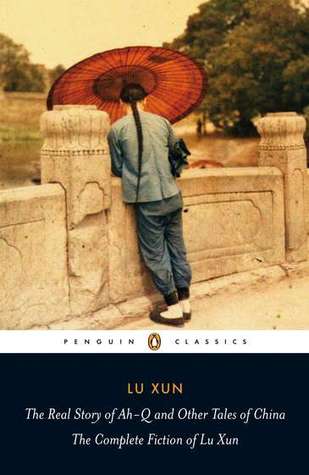
Book Review: The Real Story of Ah-Q and Other Tales of China by Lu Xun
China is a vast country with an ancient culture, and yet, only few books from the pens (or rather brushes) of Chinese writers have made it into Western bookshops. This is little wonder considering that China has been a Communist country since 1949 and only after the death of Mao Zedong intellectual life slowly reawakened. There are some contemporary authors who have gained international attention, notably the laureate of the Nobel Prize in Literature 2012 Mo Yan. Among modern classical writers of the twentieth century Eileen Chang may be the best remembered (»»» read my review of Red Rose, White Rose), while others like Lin Yutang or Xiao Hong are quite forgotten today. Notwithstanding that a new English translation has been brought out in 2009, also The Real Story of Ah-Q and Other Tales of China by Lu Xun have remained secret gems of Chinese literature evoking the 1920s and ancient myths. Friday, 21 April 2017
Book Review: They Were Counted by Bánffy Miklós
The twentieth century before World War One is widely known as the belle époque although already at the time those willing to see could make out the signs of looming disaster. Then just like today, the vast majority preferred to block out forebodings of a ghastly future and went on with their lives as if what was to come were none of their business. The once celebrated and then long forgotten Hungarian classic They Were Counted by Bánffy Miklós shows Hungaro-Transylvanian nobility indulging in balls, hunting parties, horse races, gambling, political discussions, amorous adventures, duels, and voyages abroad. While young Count Bálint Abády represents his district in Hungarian Parliament in Budapest and runs after his married youth friend Adrienne, his sensitive cousin and gifted musician László Gyerőffy falls a victim to unhappy love and to the temptations of Bohemian life, most importantly gambling for high stakes.
Labels:
1930s,
book reviews,
fiction,
Hungarian literature,
novels
Friday, 17 June 2016
Book Review: Burmese Days by George Orwell
by an author whose family name starts with the letter
A B C D E F G H I J K L M N O P Q R S T U V W X Y Z
All my life, I felt bewildered at how disinterested and narrow-minded most people are with regard to other cultures. It always seemed to me as if they put on blinkers out of fear to see that their own way of life, of thinking, of believing wasn’t the most desirable, the most worthwhile, the best after all. I can’t relate to this. I always longed to know what was beyond my own cultural horizon and therefore I like reading books from all corners of the world, be it the original version or a translation. Burmese Days by George Orwell is an English novel through and through, but its protagonist is different from his compatriots who look down on the natives and their ways almost with disgust. Not sharing their views makes him an outsider and terribly lonely until Elizabeth arrives and he feels that she could be the soul mate for whom he has been aching for so long.
Labels:
1930s,
book reviews,
English literature,
fiction,
Interwar Period,
novels
Friday, 22 April 2016
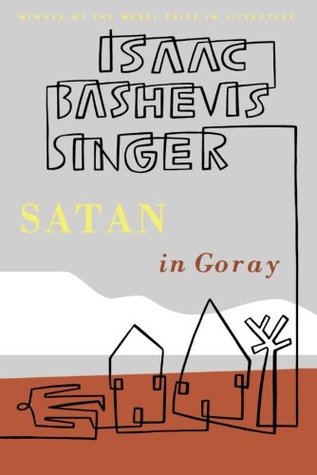
Book Review: Satan in Goray by Isaac Bashevis Singer
by an author whose family name starts with the letter
A B C D E F G H I J K L M N O P Q R S T U V W X Y Z
Today the world of the traditional Jewish shtetl in Eastern Europe only lives on in musicals like Fiddler on the Roof, films like Yentl and books like Satan in Goray. The opponents of World War II wiped it out ravaging homes and slaughtering people. Some like Isaac Bashevis Singer, the 1978 laureate of the Nobel Prize in literature, were lucky to get a chance to leave in time, but the great majority was either killed on the spot or transported to deadly concentration camps scattered all over Nazi Germany. However, the holocaust was only the broadest stroke against Jews in the region. There were other pogroms like the Khmelnytsky Massacres of 1648 that serve as starting point of the novel Satan in Goray by Isaac Bashevis Singer. Years later the survivors return to their small town and are only too willing to believe the rather unholy message of a Messiah doing miracles in the Promised Land.
Friday, 15 April 2016
Book Review: South Riding by Winifred Holtby
by an author whose family name starts with the letter
A B C D E F G H I J K L M N O P Q R S T U V W X Y Z
Nobel Prize laureate in Literature Sir Winston Churchill once quoted an unknown source stating “that democracy is the worst form of government except all the others that have been tried.” Witnessing the poor performance of politicians in virtually all important matters of modern life, this can be hard to believe. In fact, many of us feel that politics have ceased to be about people because our representatives seem to care only about money and power instead of getting anything done. But this isn’t a new phenomenon as prove works of literature from all ages. The novel South Riding by Winifred Holtby shows how politics work on the local level, namely in the county council of the Yorkshire community from the title during the depression years of the 1930s, and how it affects the daily lives of people, notably of those who depend on the government to get along.
Friday, 25 March 2016
Book Review: Abel Sanchez and Other Stories by Miguel de Unamuno
2016 review of a book written
by an author whose family name starts with the letter
A B C D E F G H I J K L M N O P Q R S T U V W X Y Z
It is often said that life is suffering and this is certainly true because our bodies are vulnerable, not to say mortal, and our minds use to be overflowing with desires, many of them such that can never be fulfilled. Pain is the inevitable consequence, but the big question is how we cope with it. At the heart of all three works assembled in Abel Sanchez and Other Stories by Miguel de Unamuno are suffering souls, be it that of a man unable to stop envying his best friend Abel who is almost like a twin brother to him, be it a physician who sees that his innovative talent as a writer isn’t recognised and slowly ruins his practice, be it the charitable village priest who knows how important religion is for his people and never gets tired of preaching the Catholic creed although he himself has long ceased to believe.
Labels:
1900s,
1910s,
1930s,
book reviews,
fiction,
novellas,
public domain,
short stories,
Spanish literature
Friday, 19 February 2016
Book Review: The Loving Spirit by Daphne du Maurier
by an author whose family name starts with the letter
A B C D E F G H I J K L M N O P Q R S T U V W X Y Z
We all know that love in all its forms is not just a strong emotion but also a very important driving force in life. And it can outlast death so we like to call it eternal. The mere idea of it makes us dream and not least because of this quality, love has always been a favourite topic of authors and readers alike. Bestselling lists prove that the romance genre keeps being enormously popular – and also very diverse since it comprises works considered as shallow chick lit as well as highbrow literature. The classical novel The Loving Spirit by Daphne du Maurier first published in 1931 is a sentimental family saga in the tradition of Emily Brontë. It recounts the lives of Janet Coombie and her descendants that through a hundred years remain connected and characterised just as much by a wandering as by a loving spirit passed on from generation to generation.
Friday, 4 September 2015
Book Review: Confessions of Love by Uno Chiyo
Labels:
1930s,
book reviews,
fiction,
Japanese literature,
novels
Friday, 19 June 2015
Book Review: People in the Summer Night by Frans Eemil Sillanpää
Since times immemorial Midsummer has been an important date in the solar calendar with many traditions linked to it, especially in Scandinavia, but not only as proves the fact that William Shakespeare wrote a play entitled A Midsummer Night’s Dream. However, my literary rambles take me to the Finnish countryside this week. Due to luminous and warm nights summer there almost necessarily invites to stay up like the protagonists of the classical novel People in the Summer Night by Frans Eemil Sillanpää do for very different reasons. People give birth, people fall in love, people crave for sleep, people stroll around observing and musing, and people die in this novel of the Finnish Nobel laureate revolving around the human condition in all its diversity.
Friday, 29 May 2015
Book Review: Yellow Street by Veza Canetti
Friday, 1 May 2015
Book Review: Lyric Novella by Annemarie Schwarzenbach
Thinking of Switzerland literature certainly isn’t the first thing that comes to mind because in this context language is more important than nationality and therefore the country’s bigger neighbours France, Italy… and Germany reap many of the laurels. Nonetheless there is a thriving community of German-language writers in Switzerland and probably there always was although among Swiss authors published before 1939 I could name only four until recently: Johanna Spyri, C. F. Meyer, Carl Spitteler, and Hermann Hesse. With today’s review I’m putting the spotlight on the work of a fifth, of a woman writer. Lyric Novella by Annemarie Schwarzenbach is the sentimental story of a nameless narrator’s obsession for the cabaret singer Sibylle set in the thriving theatre scene of 1930s Berlin as it is known from the musical Cabaret.
Friday, 27 March 2015
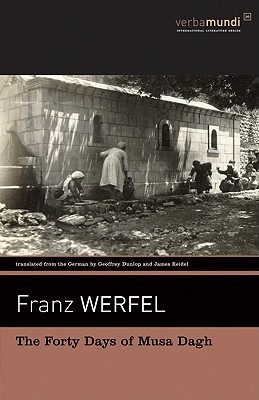
Book Review: The Forty Days of Musa Dagh by Franz Werfel
A hundred years ago, in 1915, the Young Turk government, that had seized power in the Ottoman Empire in 1908, took advantage of the chaos of World War I to get rid of the Armenian population living in Eastern Anatolia. Thanks to the foot marches of several days with hardly any provisions the deportation to concentration camps in the Mesopotamian desert meant almost certain death from exhaustion and hunger – provided that people weren’t killed on the way by scoundrels seething of hatred and greed or even by their guards. However, six Armenian villages in the Syrian Hatay Province revolted against expulsion seeking refuge on Musa Dagh (Mount Moses), a natural fortress at the Gulf of Alexandrette, and a major work of Austrian literature, namely The Forty Days of Musa Dagh by Franz Werfel which I’m reviewing today, gives fictional testimony of the events until the last-minute rescue of 4,200 men, women and children by French and British warships. Friday, 12 December 2014
Book Review: The Winter of Artifice by Anaïs Nin
Originally, I intended to close my cycle of reviews for the Books on France 2014 reading challenge only in two weeks with the novel Voyage d’hiver by Amélie Nothomb, but unfortunately it seems that this work of the Belgian author – unlike most others – hasn’t been translated into English yet. As a result, I had to change my plans and look for another France-related book with the word WINTER in the title (»»» see my post on the current special). In the end I picked a collection of three novellas of which two are set in France: The Winter of Artifice by Anaïs Nin, namely the original published in Paris in 1939 which is available as a facsimile edition. The author wrote her diary-style stories revolving around love and passion in English although her mother tongue was French.Friday, 7 November 2014
Book Review: Journey to the End of the Night by Louis-Ferdinand Céline
The World War of 1914-18 brought not only radical changes regarding borders, governments and relations between countries, but it also had a lasting impact on people and society. An important, though controversial novel that shows how the war shadowed life and attitude of two average French combatants, and that I’m reviewing today for both the Books on France 2014 Reading Challenge and The Great War in Literature Special, is Journey to the End of the Night by Louis-Ferdinand Céline. The plot begins with the belligerent atmosphere before the war which led the French army into incredibly atrocious battles in Belgium. The narrating protagonist survives, but carrying the burden of what he has witnessed and participated in his soul remains in the gloom of a never-ending night.
Labels:
1930s,
book reviews,
fiction,
French literature,
novels,
World War 1
Friday, 15 August 2014
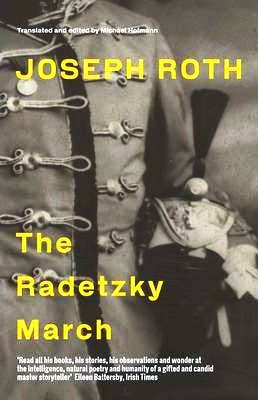
Book Review: The Radetzky March by Joseph Roth
A hundred years after the outbreak of the Great War we often wonder how the light and merry belle époque could lead the world into a barbaric carnage of unprecedented dimensions. Taking into account that propaganda was running wild at the time, it is difficult to say if people, above all military and bourgeoisie, really welcomed the war with as much patriotic fervour as is reported, but it seems that the atmosphere in the early twentieth century was very peculiar. In the realm of fiction one of the most succeeded and important depictions of life in the Austro-Hungarian Dual Monarchy during the decades before its fall is The Radetzky March by Joseph Roth which I’m reviewing today. It’s the chronicle of three Barons Trotta von Sipolje, descendants of poor Slovenian farmers, whose lives are determined by their instilled devotion to Emperor Francis Joseph I and to Austria-Hungary.
Joseph Roth, full name Moses Joseph Roth, was born in Lemberg (today: Lwow), Galicia, Austria-Hungary (today: Ukraine) in September 1894. Until the outbreak of World War I he studied philosophy, German philology and literature at the universities of Lemberg and Vienna. In 1915 his first novella Der Vorzugsschüler (The Honours Student), was published. While working in the news service of the Austro-Hungarian army from 1916 on, he began his career as a journalist and continued writing fiction. The most important literary works of the prolific writer are The Spider’s Web (Das Spinnennetz: 1923), Job: The Story of a Simple Man (Hiob. Roman eines einfachen Mannes: 1930) and above all The Radetzky March (Radetzkymarsch: 1932) as well as its sequel The Emperor’s Tomb (Kapuzinergruft: 1938). Following complications caused by chronic abuse of alcohol, which he dealt with in his novella The Legend of the Holy Drinker (Die Legende vom Heiligen Trinker: 1939), Joseph Roth died in Paris, France, in May 1939.
The main scene of The Radetzky March is Austria-Hungary in the early twentieth century through the first years of World War I although the chronicle actually begins in the Battle of Solferino in 1859. Inexperienced as the young Emperor Francis Joseph I is in war matters (he is not yet thirty), he lifts his field glasses before the enemy has fully withdrawn. Infantry Lieutenant Joseph Trotta knows the danger from snipers and dives at the Emperor to save him. His rewards are promotion to the rank of Captain, ennoblement to Baron Trotta von Sipolje… and a bullet in his collarbone. Inevitably life changes for the hero of Solferino who finds himself sort of uprooted because he no longer belongs to the class of ordinary soldiers and citizens, nor feels comfortable among aristocrats. Eventually, he marries and has a son, Franz, whom he sends to cadet school in Vienna as becomes his station. When he finds out that his act of heroism in the battle of Soferino is exaggerated in his son’s school books, he asks that facts are set right. After his audience with the Emperor he retires to his wife’s country estate where he takes to managing the farm and requires his son to promise him to never join the army. As is a good son’s duty, he obeys and successfully pursues a career as a lawyer in the civil service. Two years after the death of his father, Franz Baron Trotta of Sipolje is appointed District Administrator in W., a small town in Moravia. He marries and has a son, Carl Joseph, whom he sends away to cadet school in Vienna. Carl Joseph grows up in an atmosphere of strict routines both in school and at home. At the age of eighteen, he joins the cavalry as his father wishes because for the grandson of the hero of Solferino a military career is the only suitable choice. Carl Joseph feels out of place and he is bored like all his comrades, but he is quickly dragged into the typical life of a soldier in peacetime which involves streams of alcohol, gambling, duelling with pistols, visits to the brothel and passionate love. Serious trouble is predestined and behind the horizon war is looming.
Life in The Radetzky March passes under the eyes of two great father figures who look down on all three Trottas from their canvases and determine their lives. One is the hero of Solferino who would much rather have remained an anonymous soldier in his Emperor’s army and the other is Emperor Francis Joseph I himself who rules multiethnic Austria-Hungary during sixty-eight years. Both idols are fixed stars in the universe of the Trotta family around which each generation revolves. Also the melody of the Radetzky March, which Johann Strauss Sr. composed in honour of the heroic Austrian Field Marshall Joseph Count Radetzky von Radetz (1766–1858) in 1848, thus the year of Francis Joseph’s accession to the throne, is a red thread running through the entire novel and like life in the Austro-Hungarian Dual Monarchy it always goes on unchanged in the way of a haunting tune. The author’s focus is on Carl Joseph Baron Trotta von Sipolje whose story not just shows his tragic fate, but at the same time reflects in great detail social and military life in the early twentieth century. As always, the language in which Joseph Roth told his novel is a mere delight to read – it’s elegant, precise, poetic and powerful from beginning to end. If the English translation is only half so good, it’s still excellent.
The Radetzky March by Joseph Roth is one of my all-time favourite novels and I’m glad that an English translation is available. To my great satisfaction I found out recently that the late German literary critic Marcel Reich-Ranitzky included it into his canon of the most important literary novels in German language, and quite on top of the list. I shouldn’t be surprised. Not without reason scores of German teachers have read it with their students since it first appeared in 1932. It certainly deserves the popularity and I join them with my recommendation.
Friday, 30 May 2014
Book Review: The Church of Solitude by Grazia Deledda
There are topics which aren’t actually a taboo in our society, but we still prefer to envelope them with silence because they are embarrassing, terrifying or painful. Sometimes they are all three and many of them are related to serious health problems. Also literature uses to deal with fatal illness only reluctantly and tends to insinuate it rather than call it by name. This was the case regarding tuberculosis and still is the literary approach to cancer and AIDS. For today’s review I picked The Church of Solitude by Grazia Deledda, the Nobel laureate in Literature of 1926, which shows the effects of breast cancer on the life of a young woman in Sardinia, Italy, during the 1930s. Silence and solitude play an essential role in the story.
Grazia Deledda was born in Nuoro, Sardinia, Italy, in September 1871. She was largely educated by private tutors and completed her literary studies as an autodidact. Already in 1888 she brought out her first novel Sangue sardo (Sardinian Blood). Over the following five decades the author produced an immense number of novels, short stories and essays along with poetry and plays, most memorable among them After the Divorce (Dopo il divorzio: 1902), Elias Portolu (1903), Ashes (Cenere: 1904), L'edera (1908; The Ivy), Reeds in the Wind (Canne al vento: 1913), and – rather untypical – The Mother (La madre: 1922). In 1926 Grazia Deledda was awarded the Nobel Prize in Literature with only one vote ahead of the Spanish writer Concha Espina (»»» read my review of The Metal of the Dead). Her last novel published during her lifetime was The Church of Solitude (La Chiesa della solitudine: 1936). Having suffered from breast cancer for a while Grazia Deledda died in Rome, Italy, in August 1936. The (unfinished) autobiographical novella Cosima and a collection of novellas titled Il cedro del Libano (The Cedar from Lebanon) first appeared posthumously in 1936/37 and 1939 respectively.
The Church of Solitude is the story of twenty-eight-year-old Concezione who has just been discharged from hospital after a mastectomy, the removal of her cancerous left breast. She has resigned herself to living as a recluse and passing the rest of her days taking care of her mother. They live together (sharing even the bed) in a two-room house outside town which Concezione’s grandfather built at a fork in the road together with the adjoining small church consecrated to the Virgin Mary, Mary of Solitude. Her late father left house and church to her along with some money so she won’t need to work. However, Concezione takes pride in earning her own living sewing linens, above all men’s shirts. It was through her work that she got to know Aroldo, a blond blue-eyed foreigner who has been hired like many others to build a provincial road. Love was budding between them, but cancer changed everything. After her return home Concezione behaves reserved and cold to Aroldo.
“…; she seemed another person to him too. It was as if the hospital, instead of the operation the two women had described to him – that is, the simple extraction of a nasal polyp – had by witchcraft taken her blood, her flesh, her youth.”Aroldo asks her to marry him despite all. At the same time other suitors make an unexpected appearance. Old Giordano, a friend of her father, wants to convince her that she should marry one of his two grandsons. He tempts her with the prospect of reuniting land, woods, and livestock that her sick father sold to provide for her and her mother after his death. Her mother’s wealthy and childless friend Maria Giuseppa would like to see her married to her nephew, an illegitimate son of her late brother who is handsome and strong, but even in his aunt’s opinion an imbecile. She makes Concezione opulent gifts and paints the splendour of her house and all her stuff, which would one day belong to her, in the brightest colours to persuade her to take her nephew for a husband. For Concezione, however, getting married to any of them is out of the question. In the church she prays to Mary of Solitude to be spared the suffering which they all cause her with their constant pestering:
“‘Mary, Mother of God, make them leave me alone,’ Concezione prayed, kneeling at the foot of the altar. ‘… And if they knew that a terrible illness, the worst of all, was lurking like a poisonous snake in my poor breast, they would flee me like they flee lepers and the possessed. Most Holy Mary, make them leave me in peace, like an old woman who has nothing in the world but a meter of ground on which to die, and under which to be buried.’”Aroldo at last realises that his efforts are hopeless and takes to playing the guitar, drinking and running after women to hurt Concezione. The others too become less pressing although they continue the courting. Month after month slips by. All the while Concezione is trying to understand the reasons for her illness and fighting against the love for Aroldo that she has forbidden herself. It doesn’t help that one day in July Aroldo turns up dead drunk in the neighbourhood and then disappears without a trace. People gossip and the local sergeant of the Carabinieri (the police) starts an investigation about the young man’s fate.
Probably due to its serious topic The Church of Solitude is one of the most neglected works of Grazia Deledda. Like her other novels it is full of descriptions of the ways of life in Sardinia in the 1930s and of hints at the social changes that modern times were slowly bringing even to the remotest parts of the island at the time. The central focus of the author is, however, on Concezione’s inner world and on her reaction to what happened to her and to what she expects to be her fate. She’s a young woman with a great zest for life and at the same time she knows that she needs to be reasonable. So she hides, she renounces and she prays a lot, but she remains silent about the true nature of her illness because she’s too ashamed. Consequently the word cancer appears only once in the entire novel and not with regard to Concezione. Not knowing her secret, people – of course – treat her like any other woman of marriageable age with a tempting little fortune and don’t leave her alone as she wishes. Grazia Deledda displays her protagonist’s constant, though changing inner conflict in a powerful and very convincing way. Although Concezione herself never leaves the immediate environs of house and church, the plot is surprisingly varying and gripping. In addition, the author’s language is rich in strong images and often poetical which made it a pleasure to read despite the topic.
It goes without saying that I warmly recommend The Church of Solitude by Grazia Deledda for reading. Since the author died already in 1936, at least the original Italian version of this novel is in the public domain in Europe. La chiesa della solitudine can be downloaded for free from several Italian websites, but unfortunately it isn't available on Project Gutenberg or the sites of other big providers of free e-books as it seems.
* * * * *

This review is a contribution to the perpetual Read the Nobels challenge.
For more information and a complete list of books that I already reviewed for it »»» please read my sign-up post!
Subscribe to:
Posts (Atom)