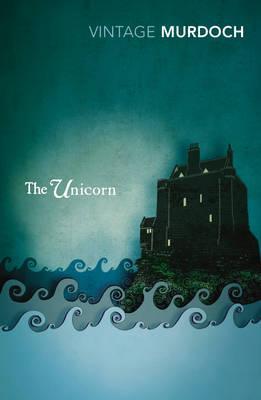
 Fairy-tales, legends and myths have always been key sources of inspiration for writers. Among the most striking examples of this doubtlessly count the plays credited to William Shakespeare, but there must be countless others who during their careers borrowed more or less generously and palpably to varying degrees from them. In the 1960s, it seems to have been fashionable to write novels with titles referring to a mythological creature that symbolises the protagonist. The Unicorn by Iris Murdoch is one of these. At its centre is a young woman resigned to living like a prisoner on her estate in a remote part of Ireland. Her almost complete passivity pains the newly arrived governess (or rather lady companion) who finds out about the tragic events that made her husband shut her up and who is determined to give her amiable mistress back freedom as well as the joys of real life.
Showing posts with label philosophical. Show all posts
Showing posts with label philosophical. Show all posts
Friday, 14 September 2018
Book Review: The Unicorn by Iris Murdoch
Fairy-tales, legends and myths have always been key sources of inspiration for writers. Among the most striking examples of this doubtlessly count the plays credited to William Shakespeare, but there must be countless others who during their careers borrowed more or less generously and palpably to varying degrees from them. In the 1960s, it seems to have been fashionable to write novels with titles referring to a mythological creature that symbolises the protagonist. The Unicorn by Iris Murdoch is one of these. At its centre is a young woman resigned to living like a prisoner on her estate in a remote part of Ireland. Her almost complete passivity pains the newly arrived governess (or rather lady companion) who finds out about the tragic events that made her husband shut her up and who is determined to give her amiable mistress back freedom as well as the joys of real life.Wednesday, 8 February 2017
New on Lagraziana's Kalliopeion: Vita Brevis by Jostein Gaarder
 Saint Augustine and His Abandoned Concubine:
Vita Brevis by Jostein Gaarder
During much of European history men shaped the world of things and thought as they believed right and passed over women in silence, if they didn’t hold them in contempt. Highly revered Fathers of the Christian Church like Saint Augustine of Hippo Regius further institutionalised this contempt of women… and of earthly pleasures altogether as shows his autobiography titled Confessiones. In this theological key text he admits that before his conversion to Christianity in 385 he was a man who tasted life to the full. For over ten years he lived with a concubine (probably law forbade a formal marriage) and had a son with her, but in retrospect he regrets this sinful and immoral relationship because it kept him from true love of God. In Vita Brevis. A Letter to Saint Augustine (also translated into English as The Same Flower) the Norwegian writer, philosopher and theologian Jostein Gaarder gave this abandoned woman a voice.
Read more » (external link to Lagraziana's Kalliopeion)
Friday, 3 June 2016
Book Review: The Monkey Grammarian by Octavio Paz
 2016 review of a book written
by an author whose family name starts with the letter
A B C D E F G H I J K L M N O P Q R S T U V W X Y Z
When I decided to read and review The Monkey Grammarian by Octavio Paz for Guiltless Reader’s Read the Nobels 2016 challenge, I didn’t quite know what to expect. After all, my main reason to choose the book was that I liked its title and that at first sight it wasn’t poetry like most other works from the pen of this Mexican author that I saw in the bookshop. Having read that the Swedish Academy had honoured him in 1990 with the Nobel Prize in Literature “for impassioned writing with wide horizons, characterized by sensuous intelligence and humanistic integrity”, I divined – correctly – that it would be a difficult read that required much attention as well as patience. However, for me this was rather an incentive to read it than a deterrent! As it turns out, the slim book is a highly philosophical exploration of language and grammar inspired by the memories of a visit to the Hindu temples of Galta in Rajastan.
Friday, 10 October 2014
Book Review: One, No One, and One Hundred Thousand by Luigi Pirandello
 Who are we? Are we really who we believe we are? Or are we someone completely different than we think? Do others see us the way we see ourselves? These are questions that occupied and still occupy the minds of many ordinary people and of scores of philosophers worldwide. While philosophers necessarily take a scientific point of view on matters of identity, writers can deal with it more freely, and in fact, they do so rather often – to their own as well as to their readers’ delight. Often the philosophical aspects of a novel almost disappear under the surface of an intricate plot, but One, No One and One Hundred Thousand by Luigi Pirandello offers a direct approach. The work of the Nobel laureate 1934 centres on the narrating protagonist’s search for his only true identity which disturbs him to the point of madness and confuses his surroundings.
Friday, 4 July 2014
Book Review: The Following Story by Cees Nooteboom
 After going a little astray for a full month, I felt like returning to the old rut again and in the end picked a rather slim volume from my shelves where it had been waiting undisturbed and patiently for many months. My penchant was towards something by a European author whose work has so far escaped my bibliomania and I was pleased to find that my instinct led me to a most intriguing philosophical novelette partly set in Lisbon. The Following Story by Cees Nooteboom deals with the many questions surrounding the experience of death and the inexplicable bond between body and mind, but also with matters of love and identity.
Friday, 6 June 2014
Book Review: Portuguese Irregular Verbs by Alexander McCall Smith
 As my regular readers will have noticed without doubt, I’ve been engrossed in a lot of very sad, even depressing or disturbing reads during the past couple of weeks. Their burden is beginning to weigh heavily on the atmosphere of this blog and I decided to plunge into something lighter and more entertaining for a change. I’m also aware of the fact that humour is going rather short in my review list and I believe that it’s high time to do something about it, or else I risk to push my most loyal readers over the edge into clinical depression. Since I use to be attracted by everything connected to Portugal, if only very remotely, the comic novel Portuguese Irregular Verbs by Alexander McCall Smith seems just the right choice for today’s review.
Alexander McCall Smith was born in Bulawayo, Southern Rhodesia (now: Zimbabwe), in August 1948. He studied law at the University of Edinburgh, Scotland, U.K., and then taught law (specialising in Medical Law) in Belfast, Botswana and Edinburgh until his retirement. In the late 1970s he made his debut as an author of fiction and from then on published several children’s books. The year 1999 brought his international breakthrough with an adult novel, namely the first volume of the No. 1 Ladies' Detective Agency series. The prolific writer also received much acclaim for the comic novels of the Professor Dr von Igelfeld Entertainment series (launched with Portuguese Irregular Verbs in 1997), the Sunday Philosophy Club series (also known as Isabel Dalhousie Mysteries) started in 2004, the 44 Scotland Street series begun in 2005, and the Corduroy Mansions series introduced to the market in 2009. Alexander McCall Smith lives in Edinburgh, Scotland, U.K., with his wife.
The eight quite independent, though interconnected stories of Portuguese Irregular Verbs are set in the world of academia and tell the adventures of Prof Dr Moritz-Maria von Igelfeld. He is a hopelessly principled and old-fashioned professor at the Institute of Romance Philology in Regensburg, Germany, where also his friends Dr Detlev Amadeus Unterholzer and Dr Dr (honoris causa) Florianus Prinzel, are working as professors. They compete with each other and Prof von Igelfeld ever again finds reason to envy them because they seem to get more academic recognition than they deserve compared to him, the author of the 1200-page standard work of reference on Portuguese Irregular Verbs. The book sells so poorly that after some years the publishers ask permission to sell the remaining over seven hundred copies (of one thousand) to a firm of interior decorators that wants to change the spine title into Portuguese Irrigated Herbs so they can furnish the shelves of their customers with them. Hurt in his pride von Igelfeld wants to do something to increase sales, but of course his tries to make out likely buyers are so discreet or awkward that it doesn’t work out. On the other hand, he succeeds in thwarting an intrigue of Dr Unterholzer and Dr Dr Prinzel who took advantage of his attendance to a conference in Goa, India, to suggest a reorganisation of the library and to banish von Igelfeld’s Portuguese Irregular Verbs to an obscure back room. A Holy Man in the rat-infested courtyard of a decayed Portuguese house in Goa had warned him. Also other conferences as well as a field trip to Ireland, holidays in Italy and even a visit to the dentist bring the ivory-towered professor ever again into touch with the real world which never actually functions the way he expects it to.
In general, Portuguese Irregular Verbs uses to be referred to as a short comic novel, but I’d rather call it a collection of humorous short stories. As a matter of fact, I miss a red thread other than the three professorial protagonists or a frame plot merging the stories into one to think of it as a novel. However, this is only a question of label, not of quality. The characters, especially Professor Dr von Igelfeld, are portrayed in a very convincing way, no matter how exaggerated (and ridiculous) their idiosyncrasies may be. Throughout the book the professor’s view of the world is veiled by the outdated ideals that his aristocratic ancestors have passed on to him and it is even further limited because his sole focus is on philological matters. This allows for many comic turns in the adventures of the scholarly scholar who outside university behaves like an innocent child in a jungle full of strange things and noises which he notices, but about which he cares little. It’s true that the academic environment in which Professor Dr von Igelfeld moves is exaggerated too, but every insider knows that the author depicted much of it in a painfully realistic light. Alexander McCall Smith told his comic stories with much skill staying on the side of irony and never drifting off to the truly absurd. As a non-native speaker I won’t take a liberty to judge the literary quality of the English used by the Scotch author, but I definitely loved it!
In fact, I passed a particularly enjoyable morning reading Portuguese Irregular Verbs by Alexander McCall Smith. The book was a mere pleasure and a very amusing one too. The character of Professor Dr von Igelfeld made me laugh every so often! In short, it’s a quick read which I highly recommend. And for those who want more of it Portuguese Irregular Verbs has also been published together with the following two novels of the Professor Dr von Igelfeld Entertainment series in an omnibus edition titled The 2½ Pillars of Wisdom.
The eight quite independent, though interconnected stories of Portuguese Irregular Verbs are set in the world of academia and tell the adventures of Prof Dr Moritz-Maria von Igelfeld. He is a hopelessly principled and old-fashioned professor at the Institute of Romance Philology in Regensburg, Germany, where also his friends Dr Detlev Amadeus Unterholzer and Dr Dr (honoris causa) Florianus Prinzel, are working as professors. They compete with each other and Prof von Igelfeld ever again finds reason to envy them because they seem to get more academic recognition than they deserve compared to him, the author of the 1200-page standard work of reference on Portuguese Irregular Verbs. The book sells so poorly that after some years the publishers ask permission to sell the remaining over seven hundred copies (of one thousand) to a firm of interior decorators that wants to change the spine title into Portuguese Irrigated Herbs so they can furnish the shelves of their customers with them. Hurt in his pride von Igelfeld wants to do something to increase sales, but of course his tries to make out likely buyers are so discreet or awkward that it doesn’t work out. On the other hand, he succeeds in thwarting an intrigue of Dr Unterholzer and Dr Dr Prinzel who took advantage of his attendance to a conference in Goa, India, to suggest a reorganisation of the library and to banish von Igelfeld’s Portuguese Irregular Verbs to an obscure back room. A Holy Man in the rat-infested courtyard of a decayed Portuguese house in Goa had warned him. Also other conferences as well as a field trip to Ireland, holidays in Italy and even a visit to the dentist bring the ivory-towered professor ever again into touch with the real world which never actually functions the way he expects it to.
In general, Portuguese Irregular Verbs uses to be referred to as a short comic novel, but I’d rather call it a collection of humorous short stories. As a matter of fact, I miss a red thread other than the three professorial protagonists or a frame plot merging the stories into one to think of it as a novel. However, this is only a question of label, not of quality. The characters, especially Professor Dr von Igelfeld, are portrayed in a very convincing way, no matter how exaggerated (and ridiculous) their idiosyncrasies may be. Throughout the book the professor’s view of the world is veiled by the outdated ideals that his aristocratic ancestors have passed on to him and it is even further limited because his sole focus is on philological matters. This allows for many comic turns in the adventures of the scholarly scholar who outside university behaves like an innocent child in a jungle full of strange things and noises which he notices, but about which he cares little. It’s true that the academic environment in which Professor Dr von Igelfeld moves is exaggerated too, but every insider knows that the author depicted much of it in a painfully realistic light. Alexander McCall Smith told his comic stories with much skill staying on the side of irony and never drifting off to the truly absurd. As a non-native speaker I won’t take a liberty to judge the literary quality of the English used by the Scotch author, but I definitely loved it!
In fact, I passed a particularly enjoyable morning reading Portuguese Irregular Verbs by Alexander McCall Smith. The book was a mere pleasure and a very amusing one too. The character of Professor Dr von Igelfeld made me laugh every so often! In short, it’s a quick read which I highly recommend. And for those who want more of it Portuguese Irregular Verbs has also been published together with the following two novels of the Professor Dr von Igelfeld Entertainment series in an omnibus edition titled The 2½ Pillars of Wisdom.
Friday, 28 June 2013
Book Review: Night Train to Lisbon by Pascal Mercier
 Life is like a journey on a train. Sometimes it feels as if it were standing still although in reality we are advancing at the usual pace without noticing it because the landscape by the wayside is so uniform or dark. Sometimes we seem to be rushing through such an incredibly varying scenery that we get dizzy looking out of the window of our compartment. The big question is: do we prefer travelling through unspectacular and secure spheres or are we ready for some adventure and nausea? The novel Night Train to Lisbon by Pascal Mercier that I picked for today’s review deals with such choices and what makes us take them.
Pascal Mercier is the pen name of the Swiss writer and philosopher Peter Bieri who was born in Berne, Switzerland, in June 1944. After his studies of philosophy he pursued a scientific career becoming a full professor of philosophy at the Free University of Berlin in 1993. His debut novel Perlmann’s Silence (Perlmanns Schweigen) came out in 1995 and was followed by Der Klavierstimmer (The Piano Tuner, still untranslated into English) in 1998. Night Train to Lisbon (Nachtzug nach Lissabon) was released in 2004 and soon became an international best-seller. Pascal Mercier’s latest published fiction work is Lea (still untranslated into English) from 2007.
The protagonist of Night Train to Lisbon is 57-year-old Raimund Gregorius who has been teaching ancient Greek, Latin and biblical Hebrew in a grammar school in his birth town Berne for decades. He is a creature of habit and a model of reliability paired with precision avoiding the imponderables of life best possible. He doesn’t enjoy travelling out of fear to get lost or to lose his already very poor eyesight and delights in ancient languages for their invariability which gives him security. Everything changes on a rainy morning when Raimund Gregorius encounters a woman about to jump from the bridge that he crosses every day on his way to school. To his question about her native language, she answers only one word: ‘português’. In his ears it sounds like music that adds to the mystery surrounding the deadly pale stranger.
The daily routine is broken and in class Gregorius’ mind wanders off to questions about the rich future lying ahead of his students. In the middle of his lesson he leaves school without a word knowing inside that he won’t return. He strolls through the city of Berne and ends in the Spanish bookshop where a humble grey book printed in Lisbon in 1975 attracts him: UM OURIVES DAS PALAVRAS – A GOLDSMITH OF WORDS. The owner of the shop translates the first passages for him and he is hooked. Its Portuguese author Amadeu Inácio de Almeida Prado expressed his thoughts in a way that makes Gregorius feel as if the words were directed at him alone:
‘Given that we can live only a small part of what there is in us – what happens with the rest?’
The book and its author intrigue Gregorius. It doesn’t suffice him to translate the text with the help of his sound knowledge of Latin and a Portuguese self-study course for beginners. After only one night immerged into the thoughts of Amadeu Inácio de Almeida Prado he knows that he must find out more about the man and his life. He needs to go to Portugal, but for a moment he hesitates because it means giving up his settled and secure existence. Then his mind is set and he takes the night train to Lisbon not knowing what he will find, nor what he is really looking for. In Lisbon he plunges into the history of Amadeu Inácio de Almeida Prado and that of Portugal during the dictatorship of António de Oliveira Salazar. He investigates the life of the mysterious medical doctor from a noble family, traces and meets people who knew him, sees places where he was at some point, and learns about events that made him the person who eventually brought to paper a goldsmith’s words. Putting together all those pieces of the puzzle, he reveals an ever completer picture of Amadeu Inácio de Almeida Prado. At the same time Gregorius analyses and questions his own life as a school teacher without ambitions and as a divorced man without passion.
Pascal Mercier’s Night Train to Lisbon is no light read. It’s a philosophical novel about the search for identity, for the outer events of a life and seized as well as missed opportunities moulding a personality. In addition the text is interspersed with Portuguese phrases that Gregorius translates with ever more ease as his studies of the language advance. The story is absorbing like a thriller with the difference that on the way through the book we aren’t hunting for a dangerous killer, but for the life story of a person never catching more than just a small glimpse of it at a time.
Some may find Night Train to Lisbon too meditative and/or too intricate a novel, but for me it was a real treat. It’s definitely among the best books that I ever read in my life. I enjoyed it very much and recommend it more than warmly to everyone with a philosophical vein.
Saturday, 30 March 2013
Beyond the Average
It’s generally said that the line between genius and madness is narrow. Often it’s blurred as well like in the case of John Forbes Nash, Jr. who is a brilliant mathematician with a record of mental illness having suffered from paranoid schizophrenia. He would never have received the Nobel Prize in economy, if he didn’t have such A Beautiful Mind. Firstly, he began his life as a not very sociable prodigy tipping over into so-called madness only later for reasons unknown. And secondly, he managed to fight back the voices of non-existent people in his mind and returned to what we call a normal life. If his paranoid schizophrenia has disappeared completely or if it just isn’t showing anymore, I can’t tell. I’m no expert on the human brain.
However, genius and madness are both deviations from what we call normality. And everything that doesn’t fit into our view of how the world, people and life are or should be disturbs us. At best we are amazed, at worst we are scared. In former times it could happen that genius was mistaken for madness, especially with the common people and women. Less than two hundred years ago a highly gifted Sofia Kovalevskaya had to fight to be allowed first to study and then to lecture mathematics at a European university. Today we are in awe of people like her who are highly intelligent and many of us would love to see their children belong to this elite, but extraordinary talent still has a touch of the mysterious, the unearthly, the paranormal.
Average people don’t care about equations describing the mathematical patterns of the universe and human behaviour. Average people don’t care about making out a new prime number in the infinite row. Some might not even remember what a prime number is because it doesn’t help them to master their lives. Literature is less of a mystery to the public which easily leads us to believe that everybody can write. The truth is that everybody can pen or type a text, but only few can tell a story that is worthwhile reading. True literary genius is often difficult to discover among the crowds of writers because it has a habit of thriving in dark corners that can easily be overlooked. Magazines like Prime Number try to bring them out into the light.
There are uncountable realms of imagination unknown even to avid readers, each one of them a white spot on the literary world map. To disclose the well hidden gems of contemporary literature it needs dedicated explorers of the calibre of Alexander von Humboldt, who sacrificed his entire fortune to his discoveries, or devoted surveyors like Carl Friedrich Gauß, whose mind was able to reveal the so far unnoticed. As Daniel Kehlmann expressed it, those two giants of the Age of Enlightenment were, each one in his way, Measuring the World. Numbers were their key to life and to the future. The literary quest must be for distinctive stories, words and style that don’t follow strict rules and that cannot be measured. What a task!
Friday, 22 March 2013
Book Review: Follow Your Heart by Susanna Tamaro

Susanna Tamaro, a niece of Italo Svevo, was born in Trieste, Italy, in December 1957. She graduated from a teachers’ training college and moved to Rome to attend a film directing course. After her studies she worked as an assistant to film director Salvatore Samperi and started her own film career making several TV documentaries. Her first novels and short stories were rejected until La testa fra le nuvole (The Head in the Clouds) was published in 1989 and awarded the Elsa Morante prize. Then followed the likewise prize-winning collection of short stories For Solo Voice (Per voce sola), a children’s book and eventually, in 1994, Follow Your Heart that soon advanced to the most successful Italian novel of the century. The writer’s later works including children’s books, memoirs and novels – among them Listen to My Voice, a sequel to Follow Your Heart – received less acclaim from critics and readers. Susanna Tamaro is living in the countryside near Ovieto, Italy.
The novel Follow Your Heart tells the life
story of Olga, a woman in her eighties who is living alone in her house in
Trieste since her nameless granddaughter went to America. Olga suffers from the
after-effects of a heart attack and feels that her end is near, but she still
has so much to say and to explain to her granddaughter. So Olga decides to
write the unhappy, angry and disturbed young woman a series of twelve letters. Those
letters are a confession, a diary, a last will – or the balance of a long life scattered
with mistakes. Olga talks about her childhood, her marriage, her big secret
love for the father of her daughter Ilaria (who hasn’t been her husband), about
the sudden death of her lover and her despair that followed, about her
difficult relations with her daughter who never felt loved and who confused Olga,
about the sudden death of Ilaria when her granddaughter wasn’t yet four years
old, about the childhood of the granddaughter and the rejection she experienced
from her side when she was older. All in all, Olga explains everything that
made her the woman she is, that made her act the way she did. And in the end
she rediscovers herself and gives her grand-daughter the advice not to repeat
her mistakes, to always listen to her heart and to follow it.
Writing Follow Your Heart as an epistolary
novel Susanna Tamaro chose a literary form that may not be appreciated by all
readers, in the new millennium even less than in 1994 when it was first
published. I’m used to reading letters, but to someone who isn’t the novel may
seem rather outdated. Also the letters often feel admonishing, something that most
modern readers don’t particularly like. However, the warnings seem very appropriate
considering that they come from a woman in her eighties who wishes to pass on
some of her worldly wisdom to her granddaughter. The resigned and detached language
of the letters too appears very authentic to me. Certainly many personal
experiences of Susanna Tamaro, who has been raised by her grandmother, have slipped
into this novel.
As for
me, I’ve always had a strong liking for practical philosophy and for letters.
It’s also interesting to learn more about how other generations grew up and
lived although in this case the author couldn’t know it from her own
experience. At any rate, I enjoyed the read very much and am ready to recommend Follow Your Heart to everybody who
has a certain inclination to ponder the ups and downs of life.
Saturday, 9 March 2013
Butterfly Wings
It is said that when a butterfly flaps its wings somewhere in South America at this moment, it could well trigger the formation of a hurricane that hits Texas at the same moment. Of course, this is only a beautiful picture thought out by Edward Lorenz to explain chaos theory and to show that everything on this planet is interrelated. On the psychological level C. G. Jung’s collective unconscious points into a similar direction. No knowledge and no memory ever gets lost because it’s stored deep down in the universal human mind. It goes without saying that under ordinary circumstances we can’t access that information (and if we could, we would be overwhelmed by it), but it’s all there and influences us.
Chaos theory and analytical psychology aren’t part of general education. They are too difficult to understand, if anyone at all can really understand them in their full import. For average people like me, the material world gives enough evidence of the sometimes visible and often hidden relations of things. Coincidence is an excellent example for such connections that are beyond our perception. Often, we can’t explain why the pieces of our lives fell into place the way they did because there has been no obvious relation between the events that led to it. Most of us call this pure chance. Others may call it a sign of Providence or kismet, maybe the result of our karma. Whatever: the facts are there. And we had our share in it knowingly or unconsciously doing or omitting something that made the outcome possible.
It can be a bit frightening to realise that all our actions and non-actions have consequences of some kind either now or later. When we can’t see them coming, we don’t have much of a choice really. We can only do what we judge best at the moment and leave the rest to fate. In other cases we know about the consequences or we can at least imagine them. There, too, we are called upon doing what is best. The question is: best for whom? Me? My family? My company? My country? My planet? We have to make choices in every single moment of our lives and live with them for the rest of our days. Each one of our choices changes something, often in a way that we don’t even notice. Something as simple as having a snack can have an impact.
If I eat a banana or sip a cup of tea (or coffee, if you prefer), it influences the life of a farmer elsewhere. My share to the farmer’s income may be less than marginal, but still I added something to it. As a responsible consumer I can control part of the consequences that I cause. I can buy organically grown bananas and tea (coffee) in order to make sure that my European habits won’t harm environment and people in those parts of the world where bananas and tea (coffee) come from. In addition, I can pick fairly traded bananas and tea (coffee) to improve the living conditions of the farmers and their families along with reducing their dependence on big and exploitive companies. Of course, this means that I’ll have to spend more money on bananas and tea, but in Europe most of us are living in abundance and it won’t do us any harm to cut back on quantity.
This is my way of being a butterfly flapping its wings… and trying to start a change for the better instead of disaster.
Friday, 8 March 2013
Book Review: The Blood of Others by Simone de Beauvoir

Simone de Beauvoir is known to have been a strong, unconventional and very controversial woman. Born in Paris in January 1908 into a bourgeois family, her rise to one of the most influential figures of feminism and existentialist philosophy was all but preordained. However, her father supported her ambitions. After graduation from a prestigious convent school Simone de Beauvoir went to university where she first studied mathematics and literature as well as languages and then philosophy. During her studies she got to know Jean-Paul Sartre who was going to become her lifelong companion. During World War II Simone de Beauvoir joined the French Résistance and continued her fiction writing. She Came to Stay (L’invitée) was published during the war and The Blood of Others (Le sang des autres) first appeared in 1945, immediately after World War II, but as a writer Simone de Beauvoir is best known for her feminist treatise The Second Sex (Le deuxième sexe: 1949) that was included into the Vatican’s list of forbidden books. She also wrote her four-volume autobiography: Memoirs of a Dutiful Daughter (Mémoirs d’une jeune fille rangée: 1958), The Prime of Life (La force de l’âge: 1960), Force of Circumstance (La force des choses: 1963) and All Said and Done (Tout compte fait: 1972). Simone de Beauvoir fought all her life for the feminist cause and died in April 1986.
In The Blood of Others Simone de Beauvoir deals with questions of freedom and individual responsibility in the setting of German-occupied France during World War II. The novel starts with Jean Blomart sitting by the side of dying Hélène who has been shot in an operation for French Résistance. The story of their lives and their love affair is told in flashbacks. When they first meet, she’s a naïve young woman who doesn’t care about anything but the moment and can’t understand the political commitment of her fiancé Paul and Jean. Hélène is attracted by Jean’s strong character that gives him the air of always knowing what is right and of being an independent mind. It’s Hélène who wishes to get involved with him although he warns her. They begin a relationship. When war breaks out, Jean volunteers as a soldier which annoys Hélène. In order to protect him she arranges – with the help of his parents – that he’s transferred to a desk job in Paris that he doesn’t want. Instead of getting married they split up. They get back together only when Hélène needs the help of Jean, who meanwhile joined the French Résistance, to get a Jewish friend across the border. At this point Hélène starts working for the resistance, too. With Hélène dying, Jean becomes fully aware that he has the blood of others on his hands because each time he triggers a bomb or commits sabotage the Germans kill hostages. But for Jean freedom is too important a value to save their lives by doing nothing.
The novel The Blood of Others is fluently written and a capturing story about life in the French Résistance that required difficult choices with sometimes horrible consequences. Freedom for one could mean death for oneself and for others. For Simone de Beauvoir it was worth the sacrifice. She was so convinced of herself that she sometimes sliped into an admonishing, almost preaching language. The characters of Jean and Hélène are a bit one-dimensional and predictible, but this doesn't ruin the pleasure of reading.
Almost seventy years after the end of World War II this novel of Simone the Beauvoir has lost nothing of its power and message. Everyone of us has to make choices every day and often our decisions have more or less dramatic effects on the lives of others. It's important to be aware of this or we might some day wake up and be shocked or ashamed by what we've done. Books like The Blood of Others remind us of our responsibility.
Monday, 18 February 2013
Realination
Day for day every living creature has to face reality in order to survive. We have to deal and interact with the world surrounding us, with the world perceived through our senses. But the senses only deliver the raw data that our minds then process and assess. Without being aware of it, our minds filter out the greater part of information to avoid being overwhelmed with futilities. Our minds also interpret what we see, hear, feel, smell and taste, so that what we perceive fits into our logic, into our view of life. There’s no need, nor room for conscious thought in all this.
The individual mind is complex. Not one seems to be like the other. So how can the reality of one mind be the same reality as that of another mind? Isn’t it impossible unless there exists something that could be called the absolute, the ultimate or the objective reality that would be the same for everybody? The problem is that there is no way that allows us ever to find out because our individual minds are always involved. Without a mind there’s no perception, just biochemical and electrical activity of organic tissue. A computer doesn’t perceive, it processes data and that’s it.
My conclusion is that the last reality is completely out of our reach, outside our sphere. Without perception we might still be there, but we wouldn’t know. If there’s no mind, there can be no consciousness of a self existing in a given frame of space and time. As a child I wondered if sleep didn’t just transfer me into another life that was mine too although in a world following different rules. My dreams during the night were no less real to me than my life during the day. Some dreams still feel very real, while I find some real events hard to believe. So what if all life were just a dream?
Many great philosophers asked the same question ever again during the past millennia and tried to answer it with scientific logic and accuracy. To me it isn’t important if this life is a dream or not. It isn’t important to know if we exist in an absolute reality or just in an imagined one. We see, hear, feel, smell and taste. We act and react. We love and hate. In a nutshell: we are living our lives. The reality of our minds, filtered and adapted according to previous experience and sociological background, is all we have for sure. The individual realination must suffice for a lifetime.
Sunday, 17 February 2013
Monday, 11 February 2013
Time
What is time? I won't venture to answer this question. Scores of
philosophers and physicists have been meditating, researching and
writing about time and haven't come to a unanimous conclusion. We can measure time, that's true. The movement of the earth indicates roughly the fixed points of our time scale: years, seasons, days. In the end, time depends a lot on our personal points of view, though. Perception of time is individual and contextual.
Time is creeping, time is running, time is flying. It can be described with many different verbs, but they have one quality in common: they are verbs of movement. In fact, time is always heading forward, never standing still although there can be moments that feel as if it were and others when we would wish it to. We also can't turn back time however much we would welcome it on certain occasions. Time travels keep being the realm of science fiction... and of nostalgists.
Some of us actually manage to live in the past. It's the memory of certain events that chains them. Recollections of happier days or of endured hardships keep spinning round and round in their minds without end. Past, present and future merge into one despite calendars and clocks. The remembered facts may long be past, but the emotions linked to them are a result of the moment. Nostalgists mentally relive their experiences to the point that they forget about their bodily existence in the present.
Others are living in the future. Their minds get absorbed in often elaborate ideas of what their life will be like. Making plans for themselves and for others is their favourite occupation. We all know such people. They always talk about what they will be doing some time... and never do. They always talk about what will be some time... and never is. It's as if they get lost in their dreams and can't see the realities or the requirements of their present lives.
Most of us, however, are living in the here and now. At least most of the time. We do what needs to be done. If we pass our days with full attention to the moment, we can even experience something that is called the flow. All of us know the feeling that time has lost its power over us. Past, present and future don't just merge, they cease to exist, but we can see it only in retrospect when we realise that we passed hours on end with something that absorbed us.
Isn't it nice to look at the clock and to be amazed at how much time we passed with something or someone that we adore? Life can be wonderful!
Time is creeping, time is running, time is flying. It can be described with many different verbs, but they have one quality in common: they are verbs of movement. In fact, time is always heading forward, never standing still although there can be moments that feel as if it were and others when we would wish it to. We also can't turn back time however much we would welcome it on certain occasions. Time travels keep being the realm of science fiction... and of nostalgists.
Some of us actually manage to live in the past. It's the memory of certain events that chains them. Recollections of happier days or of endured hardships keep spinning round and round in their minds without end. Past, present and future merge into one despite calendars and clocks. The remembered facts may long be past, but the emotions linked to them are a result of the moment. Nostalgists mentally relive their experiences to the point that they forget about their bodily existence in the present.
Others are living in the future. Their minds get absorbed in often elaborate ideas of what their life will be like. Making plans for themselves and for others is their favourite occupation. We all know such people. They always talk about what they will be doing some time... and never do. They always talk about what will be some time... and never is. It's as if they get lost in their dreams and can't see the realities or the requirements of their present lives.
Most of us, however, are living in the here and now. At least most of the time. We do what needs to be done. If we pass our days with full attention to the moment, we can even experience something that is called the flow. All of us know the feeling that time has lost its power over us. Past, present and future don't just merge, they cease to exist, but we can see it only in retrospect when we realise that we passed hours on end with something that absorbed us.
Isn't it nice to look at the clock and to be amazed at how much time we passed with something or someone that we adore? Life can be wonderful!
Wednesday, 6 February 2013
Grey Skies and the Colours of the Rainbow
When I left home this morning, grey skies embraced me. The dim light tinted grey the whole world before my eyes. It wasn't much of a surprise. It's winter and a rather harsh one although these days the temperatures are only around freezing point here in Graz. However, at this time of year the palette of colours is always reduced to shades of muted brown, green and grey. The sun is already strong enough to melt away the shining white of snow, but it's still too weak to revive the grass, spring flowers, bushes, shrubs and deciduous trees.
The grey weighs on my soul, makes it slow and tired. Many here are suffering from winter depression, but I never went through one in all my life despite the lack of light, warmth and air that come over us every year without exception. I feel like floating in the greyish-pink bubble of my life, always at risk to fall from my cosy, though alarmingly thin-skinned and vulnerable nest that is surrounded by a world scattered with rough edges and countless stings. The grey of the skies makes me aware of the fact that in the forty-two years on this planet I haven't seen an awful lot of hardships yet. What does life still have in store for me? Good things? Bad things?
Whatever! Life is change. The seasons of the year show us that everything in the world exists in a cycle of beginning and end, of birth and death, of decay and resurrection. Nothing ever gets lost. The matter of a dead leaf will become a part of something else, maybe of a green blade of grass, maybe of a yellow petal of a primrose, maybe of a red sprout of a tree. It doesn't matter. Transformed as it will be, it'll still belong to our universe. It'll be part of our lives and it'll add its share to the colours of the world during another season or during the ages to come.
How much I long for spring to come and to bring back the colours of the rainbow!
How much I long for spring to come and to bring back the colours of the rainbow!
Saturday, 12 January 2013
A Tiny Injury and the Stream of Life
For the past couple of days I have been feeling
quite handicapped because I couldn’t use my right index finger. About a week
ago I must have hit or squeezed it somewhere… and pretty hard, too. Despite all
I can’t remember when or where or how. All I know is that the fingertip was
slightly swollen and uncommonly rosy all of a sudden. And worst of all: it hurt
terribly! At first even a gentle touch felt as if my finger were caught in a
screw. I didn’t see a doctor about this because I thought that it couldn’t be
anything serious really, maybe a small haematoma that would heal before soon.
Luckily I was right and the finger hurt less every day. By now the pain has
changed into a prickle.
However, I’m much behind with work. Not being
ambidextrous like Leonardo Da Vinci, handwriting was completely out of the
question and typing with only nine instead of ten fingers was an ordeal. In my
job I didn’t really have a choice, but at home I postponed all manual work –
writing included – that didn’t need immediate attention. It’s incredible that
such a tiny injury forced me to refrain from writing for a whole week! For me
as an avid writer this was quite a sacrifice. Well, I couldn’t change it. It
was necessary to allow my finger to recover and I made the best of it: I gave
my current read more time than I would have been able to otherwise.
Life is like that. We make our plans according
to probabilities and previous experience, but we have to accept that our
knowledge is limited. Out of the blue small causes can trigger a chain of
unexpected events and we have to adapt to a new situation. No need to be
frightened! Evolution has cut us out for learning and for changing plans. In
fact we should be grateful for the surprises that life has in store for us
every day. I’m sure that it would spoil my pleasure if I always knew what was
coming. Admittedly my injured finger wasn’t a pleasant surprise and I could
well have done without it, but having additional time to indulge in good literature
was nice, too.
The stream of life doesn’t run smoothly through
a straight pipeline with the perfect fall! There are stones and other obstacles
everywhere, the bed is narrowing and widening ever again, the height of fall is
always changing. There’s a very diverse landscape unfolding along the banks.
Isn’t it beautiful?
Subscribe to:
Posts (Atom)