 However much we’d like to start life all over again with a clean slate after a traumatising experience, it’s virtually impossible. If we like it or not, any such experience has a lasting impact on our world view and on our behaviour as well. It marks and even forms us. Cases of dementia and brain injury excluded, we can only refuse to allow memories to come back to our conscious minds. Nonetheless, they keep working on us under the surface. And more often than not, these disagreeable ghosts of the past return sooner or later to haunt us. Ten years after his flight, the exiled playwright in One Man’s Bible by Gao Xinjian, the Sino-French recipient of the Nobel Prize in Literature 2000, finds himself forced to relive the trauma of almost fifty years under Communist reign that he tried to forget when his Jewish-German sex partner starts asking questions.
Showing posts with label 1990s. Show all posts
Showing posts with label 1990s. Show all posts
Friday, 20 December 2019
Book Review: One Man’s Bible by Gao Xingjian
However much we’d like to start life all over again with a clean slate after a traumatising experience, it’s virtually impossible. If we like it or not, any such experience has a lasting impact on our world view and on our behaviour as well. It marks and even forms us. Cases of dementia and brain injury excluded, we can only refuse to allow memories to come back to our conscious minds. Nonetheless, they keep working on us under the surface. And more often than not, these disagreeable ghosts of the past return sooner or later to haunt us. Ten years after his flight, the exiled playwright in One Man’s Bible by Gao Xinjian, the Sino-French recipient of the Nobel Prize in Literature 2000, finds himself forced to relive the trauma of almost fifty years under Communist reign that he tried to forget when his Jewish-German sex partner starts asking questions.Friday, 22 June 2018
Book Review: Island of Shattered Dreams by Chantal T. Spitz
 While beauty and wealth especially of tropical islands always attracted adventurers, fortune-hunters and eventually colonists from other parts of the world, ancient cultures thriving there were – are? – quite routinely written off as savage and worthless. Thus many non-European civilisations have disappeared since the great age of discoveries. Colonial powers imposed their own culture and language on people thus imbibing the autochthones with a feeling of inferiority that made them loathe the assumedly primitive traditions of their ancestors and look down on those who refused to adapt to the new ways stubbornly holding on to their old ones. Tahiti in French Polynesia was no exception there as shows the novel Island of Shattered Dreams by Polynesian writer Chantal T. Spitz. It’s the story of a Tahitian family in the twentieth century that within only three generations loses its identity and even its ancestral lands to be swallowed by Western civilisation.
Friday, 5 January 2018
Book Review: The Auschwitz Violin by Maria Àngels Anglada
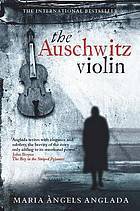 As regards books, I’m starting into the year 2018 on a rather sad note. This is because I dedicate this whole month to the horrors of the holocaust and World War II in Eastern Europe as they come to life through the very different stories of four survivors, ones real, others more or less fictionalised, if not fictitious. Three of the four books on my blogging schedule of January have protagonists who devoted their lives to music. The novel that I picked for my first review of the year evokes the literally life-saving craftsmanship of a young Jewish violin maker in a small subcamp of Auschwitz. When the camp commander finds out that Daniel is a luthier, he orders him to make The Auschwitz Violin following a bet with the sadistic camp doctor. Not knowing that his life is even more at stake than usual, Daniel plunges into the work he loves.
Friday, 26 May 2017
Book Review: No Silver Spoon by Katie Flynn
 Much in life comes as a surprise, be it an agreeable or an unpleasant one. Biographies without more or less significant swerves, detours or even sharp turns are rare although we tend to believe that the rich and successful have to overcome less obstacles and can head straight towards their goals. And yet, the way we cope with the vicissitudes of life is just as important as the right focus. As children neither the Irish girl Dympna nor the Liverpudlian boy Jimmy in No Silver Spoon by Katie Flynn could expect to go into the direction that events made them choose, but they both accept the challenge and are determined to make the best of whatever may come. Their paths have crossed and separated already twice before love finally joins them and fate tears them apart again in Liverpool of the 1930s. But what is meant to be, will be.
Wednesday, 8 February 2017
New on Lagraziana's Kalliopeion: Vita Brevis by Jostein Gaarder
 Saint Augustine and His Abandoned Concubine:
Vita Brevis by Jostein Gaarder
During much of European history men shaped the world of things and thought as they believed right and passed over women in silence, if they didn’t hold them in contempt. Highly revered Fathers of the Christian Church like Saint Augustine of Hippo Regius further institutionalised this contempt of women… and of earthly pleasures altogether as shows his autobiography titled Confessiones. In this theological key text he admits that before his conversion to Christianity in 385 he was a man who tasted life to the full. For over ten years he lived with a concubine (probably law forbade a formal marriage) and had a son with her, but in retrospect he regrets this sinful and immoral relationship because it kept him from true love of God. In Vita Brevis. A Letter to Saint Augustine (also translated into English as The Same Flower) the Norwegian writer, philosopher and theologian Jostein Gaarder gave this abandoned woman a voice.
Read more » (external link to Lagraziana's Kalliopeion)
Friday, 13 January 2017
Book Review: The Flanders Panel by Arturo Pérez-Reverte
 Many believe that until the break-through of photography painters did little more than depict what they, saw in reality or in imagination. In fact, even naturalistic pictures like portraits are the product of an idea that can include mysteries. Some are obvious and easily revealed knowing the code, i.e. the meaning of symbols, colours, composition, etc. in a given period, while others are hidden or inexplicable because their codes are lost and too subtle or time-bound to be cracked. Occasionally, the restauration of a painting exposes a secret that sheds new light on time, methods and mind of the artist like in the novel The Flanders Panel by Arturo Pérez-Reverte. Nearly five hundred years after its creation the art restorer Julia discovers a hidden inscription in the painting of a chess game that turns it into an encrypted testimonial of a murder... and the reason for more crimes in Julia’s immediate surroundings.
Friday, 18 November 2016
Book Review: The Woman Who Walked Into Doors by Roddy Doyle
 2016 review of a book written
by an author whose family name starts with the letter
A B C D E F G H I J K L M N O P Q R S T U V W X Y Z
Domestic abuse is a sad reality and even in modern western society it’s probably much commoner than we are ready to believe. Today it may be less of a taboo to talk about it than it used to be in former times, but still many victims keep suffering in their own homes without losing a word about their ordeal even to closest friends or family. For someone who has never been in the situation it’s really hard to understand why anyone would put up with being verbally or physically attacked on a regular basis, maybe even daily and sometimes so violently that being killed is an actual possibility. Quite obviously, it’s a very complex matter psychologically. The Irish novel The Woman Who Walked Into Doors by Roddy Doyle shows the mixed feelings that Paula Spencer has about her husband who early on in their marriage began to beat her up ferociously and who drove her into alcoholism.
Friday, 26 August 2016
Book Review: The Mighty Walzer by Howard Jacobson
 2016 review of a book written
by an author whose family name starts with the letter
A B C D E F G H I J K L M N O P Q R S T U V W X Y Z
We all know – if not from own experience, then from what we see, hear and read every day – that the years of adolescence are an enormously formative period of life. Moreover, they can be a terribly confusing and difficult time for the youths. They are even harder for a boy who grows up surrounded mostly by women, moreover Jewish ones in 1950s England, and who happens to be so shy that he is blushing virtually for no reason and that he prefers to hide on the toilet for hours on end. As a woman in my mid-forties I can relate only to some of it, but this is the life that the scarcely teenage protagonist of the award-winning comic novel The Mighty Walzer by Howard Jacobson has until an unexpected talent for table tennis opens a whole new world to him and eventually even allows him to study in Cambridge.
Friday, 29 April 2016
Book Review: Tierra del Fuego by Sylvia Iparraguirre
 2016 review of a book written
by an author whose family name starts with the letter
A B C D E F G H I J K L M N O P Q R S T U V W X Y Z
It’s a sad fact that for centuries most Europeans looked down on indigenous peoples living in the countries that their explorers not only discovered but also conquered. How often do we find that they were treated like wild beast and some of them brought to Europe to entertain kings and queens or to show in curiosity shops. Missionaries and colonists were hardly any more understanding and open-minded towards seemingly primitive cultures. In the epistolary novel Tierra del Fuego by Sylvia Iparraguirre a fictional Anglo-Argentine seaman recounts true events from the early nineteenth century surrounding a native Patagonian who is known as Jemmy Button. As a young man he was brought from Tierra del Fuego to London to learn the basics of English civilisation and years later he was put on trial, then sentenced and executed for having played a leading role in the massacre of English missionaries in the islands.
Friday, 11 December 2015
Book Review: Lake of Heaven by Ishimure Michiko
 Modern life in overcrowded cities estranges society ever more from its roots, be they natural, cultural or spiritual. The consequence is that many people are discontent although they have everything they could wish and hope for. They suffer feeling empty, lost and out of place. Looking for a way to salvation, some become easy prey for self-appointed preachers who offer ready-made instructions for everybody leading to quick as well as lasting peace of mind. Others are luckier. Fate pushes them into a situation that allows them to get back in touch with their souls and to restore their natural bond with the world. In Lake of Heaven by Ishimure Michiko the protagonist travels to the place where his late grandfather grew up to scatter his ashes over the old family grave and finds a fading world still in harmony with nature and local culture.
Friday, 23 October 2015
Book Review: Of Love and Other Demons by Gabriel García Márquez

Love is a very powerful emotion that can overwhelm even the strongest and most disciplined character, especially when it comes by surprise and for the first time. Love always feels like magic, but sometimes it appears to the outsider as if a potent spell has been cast on the lovers or only one of them. When the passion is so strong that it becomes harmful and destructive to the people concerned, it isn’t a long way to think that a demon must be at work. This is what happens in the historical novel Of Love and Other Demons by Gabriel García Márquez set in a time when and a place where superstition was common. It tells a story of first love under particularly unfavourable circumstances and between a most unlikely couple, namely between a scarcely adolescent girl alleged of being possessed by demons and her already middle-aged exorcist in an eighteenth-century sea town somewhere in South America.
Friday, 8 May 2015
Book Review: Pereira Maintains by Antonio Tabucchi
 It is often said that centuries-old literature is too remote from modern life to have any regard to current affairs. In fact, real classics are universal and timeless which allows every new generation to gain new insights from them. Moreover it’s a big mistake to believe that they are inconspicuous from a political point of view. As one of my teachers at university used to say, everything is politics – not one of us can live without making political statements all the time, be it through the choice of a read. The literature-loving protagonist of Pereira Maintains by Antonio Tabucchi learns it the hard way. The literary editor of a newspaper in fascist Portugal doesn’t expect that publishing the translations of French nineteenth-century classics will get him into trouble with the terror regime of António de Oliveira Salazar just like his young trainee Francesco Monteiro Rossi and his friend Marta who are active in the resistance.
Friday, 23 January 2015
Book Review: Winter Quarters by Evelyn Grill
 Over three weeks into the new year it’s high time for Austrian literature again for a change. Considering that mine is a small country, her writers are amazingly numerous and prolific. Their books are also notably present on the German-language book market, but only shamefully few of them are ever translated into English which makes it difficult to come up with something interesting from my country for review on this blog. This time I dug out a short novel from the 1990s, namely Winter Quarters by Evelyn Grill. It’s the story of a woman in her forties who never had a chance to develop high self-esteem because she was always told that with her limp she was a born loser. She has long given up hope for love and marriage, when a construction worker proposes to her. Saying yes to the mere stranger is the beginning of her ordeal.
Friday, 28 November 2014
Book Review: None to Accompany Me by Nadine Gordimer
 For a long time South Africa was a place where a white minority saw itself in the right to exclude the vast coloured majority from power and even to determine the lives of its members in a way that nobody with working brains was likely to endure willingly, but in the end segregation and institutionalised discrimination couldn’t last even there. Thanks to the influence of Nelson Mandela and other moderate political activists the country saw a peaceful transition from the Apartheid regime to a democratic system based on equal rights for all her citizens. None to Accompany Me by Nadine Gordimer, the winner of the Nobel Prize in Literature 1991, shows some of the dramatic changes during this difficult period and their influence on the daily lives of South Africans.
Friday, 21 November 2014
Book Review: Brother of Sleep by Robert Schneider
 Austrian literature has a long tradition, but it’s not very well known abroad and as you may have noticed I’ve taken it upon me to spread its word a little. In fact, I would consider it rather odd if I – an Austrian book blogger – neglected the literary production of my own country in favour of Anglo-American blockbusters which are overwhelmingly present on the internet and in bookshops, anyways. For this week’s review I chose an Austrian novel which earned international fame in the early 1990s. Brother of Sleep by Robert Schneider is historical fiction set in the mountains of Austria in the early nineteenth century and tells the story of a musical genius in love who was born into a poor and hardworking environment without use or understanding for his exceptional gift.
Friday, 31 October 2014
Book Review: The Tea Lords by Hella S. Haasse
 However crazy the distinction is considering that we all share only one planet and however politically incorrect the terms are today, in our minds Earth keeps being divided into a first (rich), a second (well-to-do) and a third (poor) world because Gross National Products and European culture remain the established standards of comparison. In an effort to show some appreciation at least in language, already many years ago we adopted the term “developing countries” for former colonies released into independence after centuries of mainly taking and little giving. Unfortunately, this doesn’t mean that the arrogance in relations with them has been eliminated. Much of it has been passed on to us through generations. The usual mind-set of colonists becomes evident in The Tea Lords by Helle S. Haasse which I’m reviewing today. The story is about a young man who in the late nineteenth century joins his parents in the Dutch East Indies to make his fortune growing tea.
Friday, 26 September 2014
Book Review: I'm Off by Jean Echenoz
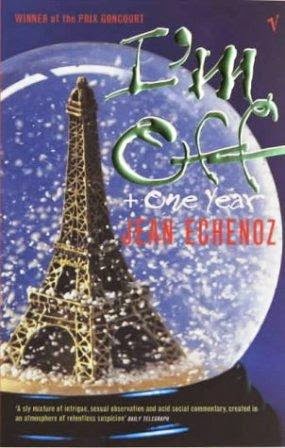
Art business is tough. Tastes change at the same pace as fashion and buyers always ask for something new at a good price, something that will increase its value with time and that will give the owner the aura of a true connoisseur. Who wants to earn a fortune selling art thus needs to be either some kind of a clairvoyant or a genius in sales or a trendsetter of renown. The lady-killing protagonist of I'm Off by Jean Echenoz, which I'm reviewing for the Books on France 2014 reading challenge, is the owner of a small art gallery in Paris who doesn’t spare costs nor pains to secure priceless objects for his clients almost from North Pole when his assistant baits him with the profits. Then the whole lot is stolen and it seems the end of all dreams, even of the protagonist’s life, but things are never so bad as they look at first.
Jean Echenoz was born in Orange, Southern France, in December 1947. He studied sociology and civil engineering at different French universities. He made his literary debut with Le méridien de Greenwich (The Greenwich Meridian) in 1979 which was followed by the prize-winning novel Cherokee (1983). Many works of this prolific French author have been translated into English, most notable among them Chopin’s Move (Lac: 1989), I’m Off (Je m’en vais: 1999; also translated as I’m Gone), Ravel (2006), Running (Courir: 2008), Lightning (Des éclairs: 2010), and the World War I novel 1914 (14: 2012). Jean Echenoz lives in Paris, France.
With the title words I'm Off the Parisian gallery owner Félix Ferrer leaves his wife Suzanne on Sunday, 3 January. He is a womaniser in his mid-fifties and longing for a change, but he is despite all surprised that Suzanne doesn’t even bother to make a scene. For a couple of months he lives with his young lover Laurence, until she throws him out. Then Ferrer moves into a luxurious apartment in the rue d’Amsterdam where his assistant Delahaye shows up one night with his friend Victoire (who settles down there for a while). Business in the gallery has been slack already for a while and Delahaye seizes the opportunity to talk to Ferrer about a small commercial ship called Nechilik that got stuck in the Arctic ice in 1957 and was recently rediscovered. Among the frozen cargo is Inuit art which happens to be sought for by collectors and seems such a good bargain to Ferrer that he decides to travel to northwesternmost Canada to secure it for his gallery. Before the adventure can begin, Delahaye is victim of a fatal accident. At least that’s what Ferrer and the rest of the world is made believe, while in reality he has taken on the name Baumgartner and waits for the moment to score the prepared big coup. On a day in June Ferrer boards a plane to Montreal and continues the strenuous travel to the remote coast of the District of Mackenzie (Nunavut Territory since 1999) first on an icebreaker and then on dogsled. Even in the isolation of the Arctic he finds women to seduce, the nurse-librarian of the icebreaker and an Inuit girl. The artefacts from the Nechilik meet all his expectations and he takes them back with him to his gallery in Paris. Before he has a chance to even insure his treasure, it is stolen by the junkie thief Le Flétan who was hired by Delahaye, now Baumgartner. For Ferrer the loss is a disaster, since he put almost all his money and hopes into the acquisition. He calls at every bank to get a loan, but his errands are in vain and eventually it is too much for his already weak heart. His life, however, goes on after a multiple heart bypass and it still has some surprises as well as charming women in store for him.
The novel I'm Off is told from the perspective of an all-knowing narrator who doesn’t hesitate to insert his own (sometimes laconic) comments on described events and actions in the plot whenever he considers it necessary or useful. It’s obvious that the main two story lines – Ferrer’s expedition beyond the Arctic Circle to secure the Inuit artefacts and everything concerning their following theft – combine the popular genres of adventure and crime with a character study of the protagonist, a womaniser going through a midlife crisis. Jean Echenoz spiced his novel with a good dash of irony, though, making fun of the established rules of fiction writing which keep being observed above all by authors who (try to) create genre bestsellers in great numbers in as little time and with as little effort as possible. A considerable number of flashbacks and flash-forwards livens up the plot which all in all feels plausible and without loose ends. Despite being caricatured to a certain degree, all characters in the book appear and act like types that can be found in any neighbourhood. With Jean Echenoz the choice of their names sometimes is a pun too, but in general they aren’t translated because otherwise the junkie thief of this novel would be called the Halibut instead of Le Flétan. In style the work of Jean Echenoz is said to evoke Raymond Queneau and Laurence Sterne. Since I haven’t read anything by either of them, I can’t tell it it’s true, though. The author’s language is modern, unpretentious and characterised by the ample use of wordplay as well as unique images which add a great deal to the pleasure of the read. I had no difficulty at all to read the original French version although some of the puns obvious to a French reader may have been lost on me.
All things considered, I'm Off by Jean Echenoz has been an entertaining and interesting cross-genre read. I liked the author’s sense of humour that shows in subtle irony rather than gross jokes and I will surely read others of his (usually) short novels. The first one will be the novella titled One Year (Un an) from 1987 that is included in the English edition that I chose for this review.
Friday, 11 July 2014
Book Review: The Mussel Feast by Birgit Vanderbeke
 Past Sunday (6 July 2014) the writer and cartoonist Tex Rubinowitz received this year’s Ingeborg Bachmann Prize in Klagenfurt, Austria. Since it’s the most prestigious literary award for German-language writers, it occurred to me that it might be a good idea to review today the work of one of the thirty-seven previous laureates. As luck would have it, The Mussel Feast by Birgit Vanderbeke has just recently been translated into English for the first time and shortlisted for the Independent Foreign Fiction Prize. Almost a quarter of a century ago (sic!) an extract from the very same narrative about the repressed anger of a family ruled by a tyrannical father earned the author the Ingeborg Bachmann Prize.
Birgit Vanderbeke was born in Dahme, Brandenburg, German Democratic Republic, in August 1956. As from 1961 she grew up in Frankfurt am Main, Federal Republic of Germany, where she later studied law, Germanic and Romance philology. Reading from her narrative The Mussel Feast (Das Muschelessen) she won the Ingeborg Bachmann Prize 1990 which marked her literary breakthrough. None of the author’s other works, most notable among them Ich will meinen Mord (1995; I Want My Murder), Alberta empfängt einen Liebhaber (1997; Alberta Receives a Lover) and Geld oder Leben (2003; Money or Life), have been translated into English yet. Her latest published work is Der Sommer der Wildschweine (2013; The Summer of the Wild Boars). Birgit Vanderbeke lives in Southern France.
The main plot of The Mussel Feast is set in Western Germany some time during the 1970s. Waiting for the father’s return from an official trip which is expected to have led to the longed-for promotion, the eighteen-year-old narrator sits in the kitchen with her mother and younger brother. In anticipation of the good news the mother has prepared mussels which are the father’s favourite dish ever since he fled with his wife and baby daughter from East Germany shortly before the Berlin Wall was erected in 1961. None of the others cares for mussels – the two women even find them disgusting –, but everything in this family is done according to the father’s rules and (presumed) wishes because otherwise they would have to suffer the humiliating, often violent consequences. He is a tyrant with very precise ideas of how a proper family works and how a perfect wife and the perfect children should be. He’s always right and everybody else is automatically at fault. Of course, reality never corresponds with the idyll in his mind and every so often he interrogates and punishes wife, daughter and son. At every opportunity he makes them feel his disappointment. He is obsessed also with social status to the point of living beyond the family’s means. Mother and children have learnt to play their roles and to live their own ideas of life outside his sphere when there’s no risk to be discovered. As the evening advances and the usual routine is broken because the father doesn’t arrive for dinner at six as expected, the three help themselves to some wine and before long they get slightly drunk. Their repressed anger drifts to the surface.
Superficially The Mussel Feast looks like a first-person narrative about a family falling short of the all-controlling father’s distorted ideal, but in reality it’s the story of people living in a tyrannical system of any kind. The dysfunctional family assembled around the kitchen table is at the same time a small-scale model of a dictatorial state like the German Democratic Republic between 1949 and 1990. Characteristic of both social entities is a climate of constant fear and distrust. Also the strategies of oppressor and oppressed are the same: the first rules with an iron fist to crush opposition against the proclaimed only truth as well as to sap self-confidence and the latter take on a habit of servility while secretly indulging in unwanted or even prohibited activities and behaviour. At the end the pressure gets too strong and emotions boil over in a revolution. History proved more than once that sooner or later the human urge for freedom of thought always succeeds in overthrowing a repressive system! Birgit Vanderbeke’s book is a slim volume of scarcely more than a hundred pages even in German, certainly less in English translation. There are no chapters and in addition the text is divided by only few paragraphs composed of long, involved periods which require a bit of concentration in order not to lose the thread. The language used by the author is colloquial in general and appropriate for the eighteen-year-old narrator. Everything, including dialogues, is narrated.
All in all, The Mussel Feast by Birgit Vanderbeke is an absorbing read which reveals a lot about the mechanisms of tyranny and the abysses behind the façade of a proper family. Unfortunately, there are fathers like the one portrayed in this novella in reality… and even worse brutes (men and women) who bring up children and keep the vicious circle of violence and abuse going behind the well-protected walls of home. The novella no light read, but one that makes think. Therefore I’m more than willing to recommend it.
To know more about the Austrian author in whose honour is awarded the leading prize for German-language literature »»» read my portrait of Ingeborg Bachmann.
Friday, 4 July 2014
Book Review: The Following Story by Cees Nooteboom
 After going a little astray for a full month, I felt like returning to the old rut again and in the end picked a rather slim volume from my shelves where it had been waiting undisturbed and patiently for many months. My penchant was towards something by a European author whose work has so far escaped my bibliomania and I was pleased to find that my instinct led me to a most intriguing philosophical novelette partly set in Lisbon. The Following Story by Cees Nooteboom deals with the many questions surrounding the experience of death and the inexplicable bond between body and mind, but also with matters of love and identity.
Friday, 6 June 2014
Book Review: Portuguese Irregular Verbs by Alexander McCall Smith
 As my regular readers will have noticed without doubt, I’ve been engrossed in a lot of very sad, even depressing or disturbing reads during the past couple of weeks. Their burden is beginning to weigh heavily on the atmosphere of this blog and I decided to plunge into something lighter and more entertaining for a change. I’m also aware of the fact that humour is going rather short in my review list and I believe that it’s high time to do something about it, or else I risk to push my most loyal readers over the edge into clinical depression. Since I use to be attracted by everything connected to Portugal, if only very remotely, the comic novel Portuguese Irregular Verbs by Alexander McCall Smith seems just the right choice for today’s review.
Alexander McCall Smith was born in Bulawayo, Southern Rhodesia (now: Zimbabwe), in August 1948. He studied law at the University of Edinburgh, Scotland, U.K., and then taught law (specialising in Medical Law) in Belfast, Botswana and Edinburgh until his retirement. In the late 1970s he made his debut as an author of fiction and from then on published several children’s books. The year 1999 brought his international breakthrough with an adult novel, namely the first volume of the No. 1 Ladies' Detective Agency series. The prolific writer also received much acclaim for the comic novels of the Professor Dr von Igelfeld Entertainment series (launched with Portuguese Irregular Verbs in 1997), the Sunday Philosophy Club series (also known as Isabel Dalhousie Mysteries) started in 2004, the 44 Scotland Street series begun in 2005, and the Corduroy Mansions series introduced to the market in 2009. Alexander McCall Smith lives in Edinburgh, Scotland, U.K., with his wife.
The eight quite independent, though interconnected stories of Portuguese Irregular Verbs are set in the world of academia and tell the adventures of Prof Dr Moritz-Maria von Igelfeld. He is a hopelessly principled and old-fashioned professor at the Institute of Romance Philology in Regensburg, Germany, where also his friends Dr Detlev Amadeus Unterholzer and Dr Dr (honoris causa) Florianus Prinzel, are working as professors. They compete with each other and Prof von Igelfeld ever again finds reason to envy them because they seem to get more academic recognition than they deserve compared to him, the author of the 1200-page standard work of reference on Portuguese Irregular Verbs. The book sells so poorly that after some years the publishers ask permission to sell the remaining over seven hundred copies (of one thousand) to a firm of interior decorators that wants to change the spine title into Portuguese Irrigated Herbs so they can furnish the shelves of their customers with them. Hurt in his pride von Igelfeld wants to do something to increase sales, but of course his tries to make out likely buyers are so discreet or awkward that it doesn’t work out. On the other hand, he succeeds in thwarting an intrigue of Dr Unterholzer and Dr Dr Prinzel who took advantage of his attendance to a conference in Goa, India, to suggest a reorganisation of the library and to banish von Igelfeld’s Portuguese Irregular Verbs to an obscure back room. A Holy Man in the rat-infested courtyard of a decayed Portuguese house in Goa had warned him. Also other conferences as well as a field trip to Ireland, holidays in Italy and even a visit to the dentist bring the ivory-towered professor ever again into touch with the real world which never actually functions the way he expects it to.
In general, Portuguese Irregular Verbs uses to be referred to as a short comic novel, but I’d rather call it a collection of humorous short stories. As a matter of fact, I miss a red thread other than the three professorial protagonists or a frame plot merging the stories into one to think of it as a novel. However, this is only a question of label, not of quality. The characters, especially Professor Dr von Igelfeld, are portrayed in a very convincing way, no matter how exaggerated (and ridiculous) their idiosyncrasies may be. Throughout the book the professor’s view of the world is veiled by the outdated ideals that his aristocratic ancestors have passed on to him and it is even further limited because his sole focus is on philological matters. This allows for many comic turns in the adventures of the scholarly scholar who outside university behaves like an innocent child in a jungle full of strange things and noises which he notices, but about which he cares little. It’s true that the academic environment in which Professor Dr von Igelfeld moves is exaggerated too, but every insider knows that the author depicted much of it in a painfully realistic light. Alexander McCall Smith told his comic stories with much skill staying on the side of irony and never drifting off to the truly absurd. As a non-native speaker I won’t take a liberty to judge the literary quality of the English used by the Scotch author, but I definitely loved it!
In fact, I passed a particularly enjoyable morning reading Portuguese Irregular Verbs by Alexander McCall Smith. The book was a mere pleasure and a very amusing one too. The character of Professor Dr von Igelfeld made me laugh every so often! In short, it’s a quick read which I highly recommend. And for those who want more of it Portuguese Irregular Verbs has also been published together with the following two novels of the Professor Dr von Igelfeld Entertainment series in an omnibus edition titled The 2½ Pillars of Wisdom.
Subscribe to:
Posts (Atom)