
Showing posts with label 2010s. Show all posts
Showing posts with label 2010s. Show all posts
Friday, 4 October 2019
Book Review: Meet Me at the Museum by Anne Youngson
Friday, 10 May 2019
Book Review: The Prague Cemetery by Umberto Eco

Friday, 23 November 2018
Book Review: Open City by Teju Cole
 For certain people, especially for those who stand out of the masses for one reason or another, be it in reality or just in their subjective experience, it seems to be harder than for others to find their proper place in the world. Even those who appear to have succeeded in life and to have a rich social life may feel isolated from the rest of the world without showing it on the outside. The protagonist of Open City by Teju Cole is one of these outsiders because having a white German mother and a black Nigerian father he feels that he doesn’t fit in anywhere. Moreover, Julius is a psychiatry fellow at Columbia Presbyterian Hospital in New York City and a highly educated man with highbrow interests. When his girlfriend leaves him, he takes to walking through the streets whenever he can to clear his mind and to contemplate.
 Friday, 12 October 2018
Book Review: Go, Went, Gone by Jenny Erpenbeck
 Undeniably, it’s an innate impulse to go in search of a better place to live in when for some reason things turn tough where we are and it’s thanks to it that, in the course of tens of thousands of years, human race colonised virtually the entire planet. However, as soon as our ancestors began settling down, migration became a problem because it’s in our nature, too, to protect kith and kin as well as resources from rapacious outsiders. Huge migration waves as in ancient times no longer happen, but a stream of refugees like in the summer of 2015 suffices to put us into a state of alarm. In Go, Went, Gone by Jenny Erpenbeck a recently retired classics professor gets involved in the lives of a group of asylum seekers who camp on a central square in Berlin to become visible as human beings in need.
 Friday, 8 June 2018
Book Review: Islands of the Dying Light by Rolf Lappert

Friday, 2 March 2018
Book Review: Blue Jewellery by Katharina Winkler

Friday, 25 August 2017
Book Review: 4 3 2 1 by Paul Auster
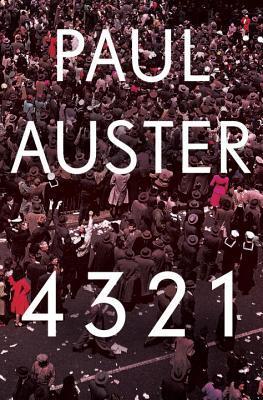 Who we are is the result of many influences to which we have been exposed since the day we were born or, to be exact, since the moment we were conceived. The people we met, the choices we made, the good and evil that “came over us”, everything had a more or less noticeable impact on our character and on our “fate”. Family history too has a part in personal development because, if we like it or not, the past shaped our surroundings, notably the people around us. And even small occurences can turn out to be of paramount importance. In 4 3 2 1 by Paul Auster four versions of a Jewish boy called Ferguson step into life from the same starting point, but against the backdrop of recent American history their lives take very different courses because already after a short time their worlds are no longer the same and drift apart ever more.
Friday, 18 August 2017
Book Review: Roman Elegy by Sabine Gruber
 The death of a person often unleashes a train of unexpected thoughts and memories, sometimes even events. Moreover, it can make us question our relations to other people, notably spouses and children, our meaning in life and our standpoints. Sometimes we gain new insights that make us change direction or take long overdue decisions. It’s a death in Rome that sets off the Roman Elegy by Sabine Gruber, an Italian writer in German language, and lays the seed for an unlikely romance. Through the typescript of a novel that the deceased wrote, she connects her youth friend not just with the widowed owner of a hotel in Rome where she worked for a short while in 1978, but also with the then young man who awakened her interest in the position of her boss in fascist and Nazi times. And in the background there’s always Stillbach, the Southern Tyrolean village where all three women grew up.
Friday, 21 July 2017
Book Review: The Giraffe's Neck by Judith Schalansky
 Already the ancient Greeks knew that everything is in flow or as Heraclitus of Ephesus put it: πάντα ῥεῖ. In bad times this may be a great consolation, in good times it’s more often a terrible threat. Consequently, only few people unreservedly welcome even big change as a challenge that makes life interesting. Most people are less favourable, some downright adverse to all kinds of alteration because in general it goes hand in hand with uncertainty and it requires an effort to adapt to new circumstances. Not everybody is up to such challenge. For more than half a century the East German biology teacher in The Giraffe’s Neck by Judith Schalansky did her best to lead a dutiful and inconspicuous life, i.e. to survive in the Darwinian sense, but after the German reunification this is no longer enough. Her ways are called antiquated and she is criticised for her lack of sympathy for her students.
Friday, 30 June 2017
Book Review: Indigo by Clemens J. Setz
 Although we often – usually when we feel misunderstood or hurt – complain about the lack of empathy in people today, it isn’t a quality that our technology-based and highly competitive modern society particularly favours. Much rather egotism and a thick skin seem to be characteristics that someone wishing for success in this world vitally needs to cultivate. Most of us learn early that it’s better to reduce sensitiveness and to avoid getting emotionally involved in the fates of others, especially when what they go through is none of our business. Thus we allow abuse and exclusion. The Helianau Institute from Indigo by Clemens J. Setz is a boarding school for children who were born with a strange disorder: they make every human being near them sick. The overly sensitive new Maths teacher Clemens Setz feels for the children who are condemned to grow up always staying at a big physical distance to others.
Friday, 23 June 2017
Book Review: A Love Letter From a Stray Moon by Jay Griffiths
 Human soul is amazing. Ever again it happens that instead of being crushed by a terrible experience a person draws great force from it and even succeeds in transcending it into a powerful incentive to stop just dreaming the impossible dream and to actually reach for the stars at last. Often only the closest family gets a chance to witness such personal growth born from suffering because seen from outside nothing has changed, but sometimes it’s the birth of a completely altered person who decides to make a fresh start into a new direction. It was a horrible bus accident at the age of eighteen that upset Frida Kahlo’s life and made her turn her attention to painting as a way of expressing herself. In A Love Letter from a Stray Moon by Jay Griffiths the celebrated Mexican painter writes a poetical review of her turbulent and painful life from beyond her grave.
Friday, 10 March 2017
Book Review: The Pope’s Daughter by Dario Fo
 It’s a known fact that places of power are and have always been hotbeds of gossip, intrigue and crime. As capital of the Papal State and seat of her glamorous Court, the Holy See in Renaissance Rome wasn’t an exception as Martin Luther learnt during his visit there in 1510/11. The idealistic German monk must still have heard people gossipping about the Borgia family and its unscrupulous head Pope Alexander VI. who had died less than a decade earlier. Instead of a paragon of virtue Alexander VI. was a family man with great plans for himself as well as for his children. And his ambitions knew no limits. The historical novel The Pope’s Daughter by Dario Fo, the famous Italian playwright and recipient of the Nobel Prize in Literature 1997, traces the life of highly intelligent, well-educated and beautiful Lucrezia Borgia who served her father and brother as pawn in their endless game of power.
Friday, 6 January 2017
Book Review: Angel of Oblvion by Maja Haderlap

Friday, 23 September 2016
Book Review: Submission by Michel Houellebecq
 2016 review of a book written
by an author whose family name starts with the letter
A B C D E F G H I J K L M N O P Q R S T U V W X Y Z
With refugees from Muslim countries streaming to Europe without end and too often without permission too, we’re living turbulent times that put politics and even democracy altogether to a hard test. Moreover, recurring terrorist attacks kindle increasingly negative feelings towards our Muslim neighbours, be they foreigners or citizens. Calls of the extreme right not to allow in any more foreigners (and even to throw out those who are here already) are growing louder every day and the number of people sharing their opinion is likewise growing as prove the results of their parties in elections virtually everywhere around. However, the times of ethnically homogeneous nations – if they ever existed at all! – are long over. Muslims are part of European society and begin to take responsibility on a political level too. With a professor of French literature as a protagonist, the 2015 novel Submission by Michel Houellebecq shows where the development could lead by 2022.
Friday, 19 August 2016
Book Review: The Conductor by Sarah Quigley

2016 review of a book written
by an author whose family name starts with the letter
A B C D E F G H I J K L M N O P Q R S T U V W X Y Z
Undeniably, every war affects the civilian population in many ways and to varying degrees. It’s inevitable. And the closer people live to the front lines, the greater is the danger that they will find themselves run over by the enemy or even by their own troops. If there is time they will flee as far away from the fighting as they can, but if it’s a big city and if they live under a rigid regime like Stalin’s Soviet Union this option may be refused them. If they are lucky, it’s all soon over. If they aren’t, they have to struggle for survival under siege as was the case in Leningrad (today again: Saint Petersburg) during the winter of 1941/42. In The Conductor by Sarah Quigley the musicians of the Leningrad Radio Orchestra who are caught in the city by advancing German troops strive for some kind of normality despite hunger and cold.
Friday, 27 May 2016
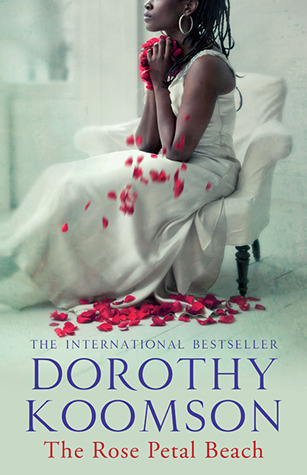
Book Review: The Rose Petal Beach by Dorothy Koomson
by an author whose family name starts with the letter
A B C D E F G H I J K L M N O P Q R S T U V W X Y Z
The monotony of daily routine tends to lull us into delusive safety and easily tempts us into overlooking all those tiny signs that hint at the fact that something in our life is not quite right any more. Very often it’s only a question of time until the ignored warnings add up to something more important, to something that will push us rather rudely out of the comfort zone of life as we have got used to see it into the harsh reality of life as it actually is. This is what happens at the beginning of the best-selling novel The Rose Petal Beach by Dorothy Koomson and brings about not just the end of what Tami believed to be a happy marriage but also the brutal murder of her second-best friend and soul mate. Events force her to review the relationship to her husband, the character of her friends and her own behaviour.
Friday, 11 March 2016
Book Review: Look Who's Back by Timur Vermes

2016 review of a book written
by an author whose family name starts with the letter
A B C D E F G H I J K L M N O P Q R S T U V W X Y Z
Seeing old recordings of the fiery speeches that Adolf Hitler stage-managed throughout his long political career, it’s hard to believe that people flocked to see him in person and were so impressed by his fascist rants that they followed him like dumb sheep into genocide and war. By today’s standards he behaved much like the laughingstock that Charlie Chaplin so brilliantly made of him (and others of his kind) in his legendary 1940 political comedy The Great Dictator, but people then were desperate and he offered, no promised a way out of misery and humiliation. And what if he (or someone like him) appeared in Germany these days? Could he rise to success and fame again? The satirical novel Look Who’s Back by Timur Vermes pushes Adolf Hitler into the role of a star comedian on TV impersonating his own old self and making plans for his return into politics.
Friday, 12 February 2016
Book Review: Bells Above Greens by David Xavier
 2016 review of a book written
by an author whose family name starts with the letter
A B C D E F G H I J K L M N O P Q R S T U V W X Y Z
In general, I don’t review any self-published works, even less when they are coming-of-age or young adult fiction, but the letter X in my alphabet of writers was quite a hard nut to crack – above all because I wanted to read something by a non-Chinese author for a change. So despite me, I seized the opportunity to get myself a free copy of Bells Above Greens by David Xavier, a novel set in the early 1950s surrounding a confused young man who just returned from the Korean War where he lost his older brother as well as much admired role model and only family. Although he has not the slightest idea what to make of his life, he resumes his studies at the University of Notre Dame du Lac in Indiana and soon finds himself torn between two women, namely rebellious as well as shallow Liv and his late brother’s ambitious girlfriend Elle.
Friday, 5 February 2016
Book Review: The Encyclopaedia of Good Reasons by Monica Cantieni

2016 review of a book written
by an author whose family name starts with the letter
A B C D E F G H I J K L M N O P Q R S T U V W X Y Z
For many children the world is a thrilling place full of mystery and adventure that they are allowed to discover step by step, while for others it has in store mainly misery, pain and reproaches. Not every child is blessed with a carefree and happy existence! The six-year-old protagonist of The Encyclopaedia of Good Reasons by Monica Cantieni had a poor start into life although she was born in Switzerland. She passed her early years in a typical orphanage of the 1970s until a childless Swiss couple “buys” her for 365,-- francs and takes her home with them. All of a sudden she finds herself in a confusing new world filled with words that nobody ever bothered to teach her and with good reasons that she doesn’t know. In ancient and senile grand-father Tat the girl finds an invaluable ally who helps her to find her way.
Friday, 18 December 2015
Book Review: So You Don't Get Lost in the Neighbourhood by Patrick Modiano
 The workings of the mind are mysterious and our memory isn’t always very reliable, especially about childhood. Some people recall their early years vividly and in great detail, while others seem to remember hardly anything. Moreover, the bits and pieces that have lasted in our minds for many years often turn out to be shockingly incomplete, blurred or even alienated past the recognition of others who were present too. Some memories are so painful that they are downright repressed: access denied until… This is the experience that an ageing novelist makes in So You Don't Get Lost in the Neighbourhood by Patrick Modiano, winner of the Nobel Prize in Literature 2014. When a man steps into his life to return his lost address book, he rouses the ghosts of childhood asking after a person whose long outdated number is in it.
Subscribe to:
Posts (Atom)