 When fate strikes badly and turns life completely upside down thwarting all plans, it’s usually a very unsettling experience that can make feel at a loss even the most flexible mind. Some people quickly pull themselves together and take life back into their own hands trying to make the best of the situation, while others give in to despair and just drift on with the current unwilling to set a new course because it just doesn’t seem worthwhile or at least possible. The protagonist of The Women at the Pump by Knut Hamsum, the recipient of the 1920 Nobel Prize in Literature, is one of the latter. Having lost one leg in an accident aboard a cargo steamer and unfit to work as a sailor again, Oliver Andersen takes to brooding and idling away his time. Not even for the sake of his growing family, he is able to change.
Showing posts with label innovators of literature. Show all posts
Showing posts with label innovators of literature. Show all posts
Friday, 27 September 2019
Book Review: The Women at the Pump by Knut Hamsun
When fate strikes badly and turns life completely upside down thwarting all plans, it’s usually a very unsettling experience that can make feel at a loss even the most flexible mind. Some people quickly pull themselves together and take life back into their own hands trying to make the best of the situation, while others give in to despair and just drift on with the current unwilling to set a new course because it just doesn’t seem worthwhile or at least possible. The protagonist of The Women at the Pump by Knut Hamsum, the recipient of the 1920 Nobel Prize in Literature, is one of the latter. Having lost one leg in an accident aboard a cargo steamer and unfit to work as a sailor again, Oliver Andersen takes to brooding and idling away his time. Not even for the sake of his growing family, he is able to change.Wednesday, 18 February 2015
Author's Portrait: Robert Musil
 |
| Robert Musil in 1900 |
Among Austrian writers of the early twentieth century there is one who is now often mentioned in one breath with the great modernists James Joyce and Marcel Proust although his fame never reached the same heights, least of all during his lifetime. Like them he is chiefly remembered today for the monumental novel which represents his life’s work and which only few have read in its entirety. The author, of course, is Robert Musil and the opus magnum in question is The Man Without Qualities which actually happens to be jus a fragment because the author died during work on the third volume. Here’s my portrait of this exceptional Austrian writer who was always grieved by not getting the attention that he deserved.
Friday, 14 November 2014
Book Review: The Garden Party and Other Stories by Katherine Mansfield
 The early twentieth century brought forth some important woman writers whose innovative approach to writing has left such a lasting impact on literary production that the effects are noticeable up to this day. They not only continue to be widely read, but their work also keeps inspiring ever new generations of authors. One of them is Virginia Woolf, of course (»»» read my review of Jacob’s Room). Another one of those much revered modernists is Katherine Mansfield, the master of short story from New Zealand. Her last collection published during her (short) lifetime is The Garden Party and Other Stories which combines fifteen more or less cursory portraits of the everyday lives of well-to-do people, their children and servants in their habitat.
Friday, 11 October 2013
Book Review: Lafcadio's Adventures by André Gide
 The mystery and glamour surrounding the
Vatican have always stimulated the imagination of writers as prove
countless books which make it on bestselling lists all over the world
every year and which without doubt have been, are and will be discussed
on a great number of book blogs and other literary websites. Since I
don’t have a special liking for thrillers, historical fiction or
insiders’ revelations, my literary expedition around Europe inevitably
led me to a less common read related to the city of the Holy See: Lafcadio's Adventures
by André Gide. Next summer this surrealistic novel of the Nobel Prize
laureate in literature 1947, or rather this “sotie” or satirical farce as the
author himself called it, will see the centenary of its publication.
The mystery and glamour surrounding the
Vatican have always stimulated the imagination of writers as prove
countless books which make it on bestselling lists all over the world
every year and which without doubt have been, are and will be discussed
on a great number of book blogs and other literary websites. Since I
don’t have a special liking for thrillers, historical fiction or
insiders’ revelations, my literary expedition around Europe inevitably
led me to a less common read related to the city of the Holy See: Lafcadio's Adventures
by André Gide. Next summer this surrealistic novel of the Nobel Prize
laureate in literature 1947, or rather this “sotie” or satirical farce as the
author himself called it, will see the centenary of its publication.
The French writer and moralist André Gide was born in Paris, France, in November 1869. His first novel The Notebooks of André Walter (Les Cahiers d’André Walter)
was published already in 1891 and sold poorly, but it marked the
beginning of a prolific career. André Gide’s writing was symbolist and
dealt openly with sexual matters, as from 1914 with homosexuality in
particular. Among his most famous and not purely autobiographical works
count The Fruits of the Earth (Les nourritures terrestres: 1897), The Immoralist (L'immoraliste: 1902), Strait Is the Gate (La porte étroite: 1909), Lafcadio's Adventures (Les caves du Vatican: 1914; also and more accurately translated as The Vatican Cellars and The Vatican Swindle), and The Counterfeiters (Les faux-monnayeurs:
1925). From the mid-1920s on he wrote against social injustice both in
mainland France and the colonies, above all the Congo. In 1947 the
writer received the Nobel Prize in Literature. André Gide died in Paris,
France, in February 1951. The following year all his works were put on
the Index of Prohibited Books of the Roman Catholic Church.
The
story of Lafcadio's Adventures revolves around a set of five exaggerated
types rather than characters. First of all there is the confirmed
atheist Anthime Armand-Dubois who resides in Rome with his pious
Catholic wife Veronique. He is the model scientist and freemason making
cruel experiments with rats and despising everything religious until he
is miraculously cured of his crippling rheumatism. Count Julius de
Baraglioul is his brother-in-law, a practicing, though pragmatic
Catholic and the writer of mediocre novels who yearns to have a seat in
the Académie française. He just brought out the biography of his highly
respected and spotless father who was a French diplomat. The old Count
feels death approaching and as soon as his son is back to Paris he asks
him to discretely make inquiries about a young man called Lafcadio
Wluiki. Julius de Baraglioul visits the eighteen-year-old in his cheap
lodgings and the youth turns out to be a highly intelligent and charming
happy-go-lucky. After the visit Lafacadio immediately goes to the
library to find out who his visitor was and what could have been his
true motives. Reading the biography of the old Count he gathers – like
Julius de Baraglioul before – that he must be the illegitimate son of
the honourable diplomat. Lafcadio decides to visit the old man and finds
himself well-received. Soon the old Count dies and the young man
receives a legacy which allows him to break with the past. At the same
time Protos, a former school-mate of Lafcadio, sets up a big swindle
about the Freemasons having secretly imprisoned Pope Leo XIII in the
Vatican cellars and having replaced him by a false pope. When naïve and
devout Amédée Fleurissoire, another brother-in-law of Julius de
Baraglioul, hears about this outrageous crime from his wife, he leaves his provincial home for the first time
in his life to rescue the Pope in Rome. As fate would have it,
this travel leads to a “motiveless murder” on the train to Naples with
unexpected aftermaths for everybody involved.
Even
though Lafcadio's Adventures bursts with irony and exaggeration, its
basic plot is borrowed from true events. In 1892, thus more than twenty
years before André Gide brought out his comedy of manners, there had in
fact been a rumour that the Freemasons had put a false Pope, one who was
sympathetic to the French Republic, in the place of Leo XIII. Quite
some Catholics and monarchists were deceived and handed over to the
swindlers considerable amounts of money. However, the actual
swindle, exposed by the novel’s original French title referring to Vatican
cellars which in reality don’t exist, serves the author only as the
suitable background for his multilayered character and sociological
studies. André Gide raises many different, often existentialist
questions regarding human condition. Also his writing style is
varied and satirizes the traditional form of novels which use to be realistic or
analytical.
My
overall impression of Lafcadio's Adventures by André Gide is positive
although the read didn’t send me into raptures. I must admit that I had
some trouble getting into the story. Maybe this was because I’m not
used to reading surrealistic satires in French. Despite all I enjoyed
the book and am ready to recommend it to everybody with a taste for the
grotesque.
Wednesday, 3 July 2013
Author's Portrait: Ingeborg Bachmann
 Always in the beginning of July, the town of Klagenfurt, Austria, changes for a couple of days from the quiet capital of the federal province of Carinthia into a buzzing hub of modern literature: it’s the venue of the Festival of German-language Literature. Its highlight is the award of one of the most prestigious literature prizes in the German-speaking world named after the late Austrian poet, playwright and novelist Ingeborg Bachmann. From 4 to 7 July 2013 the finalists for this year’s prize will read their texts in front of the jury, an interested audience and TV cameras. For me this is reason enough to portray the writer today.
Ingeborg Bachmann was born in Klagenfurt, Austria, in July 1926. Her father was a teacher of languages in a grammar school and later a headmaster. The entry of Hitler’s troops into Austria in March 1938, which was hailed in many places of my country, and everything that followed had great impact on her view of the world making her take a firm stand against war and violence for the rest of her life. In 1944 she went to university to study philosophy, psychology and German philology in Innsbruck, Graz and Vienna. As a student she had a love affair with the poet Paul Celan. In 1950 she presented her doctoral thesis on Die kritische Aufnahme der Existenzialphilosophie Martin Heideggers (The Critical Reception of the Existential Philosophy of Martin Heidegger).
As from the early 1950s Ingeborg Bachmann earned a decent living as an editor and scriptwriter for the Allied radio station Rot-Weiss-Rot. She became a member of the literary circle called Gruppe 47 that loosely united German-language writers like Ilse Aichinger, Paul Celan, Heinrich Böll (Nobel Prize for literature 1972), Marcel Reich-Ranicki and Günter Grass (Nobel Prize for literature 1999). At a conference in 1952 she read her lyrical poetry which was her literary breakthrough. The following year she gave up her job and moved to Italy working as a freelance writer and travelling a lot, while partly living with the German composer Hans Werner Henze. During their relationship she produced libretti for Hinze’s Operas Der Prinz von Homburg (The Prince of Homburg: 1960) and Der junge Lord (The Young Lord: 1965) and several poems which he set to music.
In 1958 Ingeborg Bachmann met the Swiss writer Max Frisch and plunged into a difficult relationship with him which influenced the work of both and lasted until 1962. The early 1960s saw her moving between Rome, Zurich, Munich, Berlin, and Frankfurt (where she held the newly created chair of poetics at the university during the winter term 1959/60) and travelling to Egypt, the Sudan and the German Democratic Republic. She settled down permanently in Rome in 1963. During this time she also began reconsidering her choice of literary genre. She took to writing few poems and concentrating on prose instead. In spring 1973 she made a reading tour of Poland visiting Auschwitz and Birkenau among others.
The literary work of Ingeborg Bachmann can be called feminist writing because of its woman-centred perspective, but this is a label which was developed only later on. Apart from her poems which have been translated into English and collected in a bilingual volume titled Darkness Spoken (2005), Ingeborg Bachmann’s most important works comprise the early radio plays A Deal in Dreams (Ein Geschäft mit Träumen: 1953), The Cicadas (Zikaden: 1955) and The Good God of Manhattan (Der gute Gott von Manhattan: 1958) published in English as Three Radio Plays (1999), her partly autobiographical cycle of stories titled The Thirtieth Year (Das dreißigste Jahr: 1961), the novel Malina (1971), and the volume of stories Three Paths to the Lake (Simultan: 1972).
Ingeborg Bachmann died from severe burns in a hospital in Rome, Italy, in October 1973, three weeks after her apartment had gone up in flames. Until today it remains uncertain whether the fire was an accident caused by her having fallen asleep with a burning cigarette or if it was suicide.

Wednesday, 10 April 2013
Marcel Proust
 | |
| Marcel Proust ca. 1900 |
Marcel Proust was born in Auteuil, France in July 1871. Already early in his life an excessive sensitivity and frail health became apparent. During a walk in the Bois de Boulogne with his family when he was nine years old, he had his first attack of asthma and it was so severe that even his father, a renowned medical doctor, believed that he was going to die. Graduated from school Marcel Proust began his military service in 1889, but after one year he was discharged because of his poor health. He then went to the Sorbonne and to the École des Sciences Politiques to study law and later philosophy.
During his studies Marcel Proust frequented different literary salons of high society ladies in Paris which earned him the reputation of a snob and social climber. Later he was said to have been one of the last dandies of the Belle Époque (the years preceding World War I). The family fortune putting him financially at ease, the only job that he ever had was as a volunteer clerk at the Bibliothèque Mazarine where he was conspicuous by his absence.
As a writer Marcel Proust made his first steps already while still in school. He wrote regularly for different magazines, above all criticism, short stories and poems. A collection of those writings was published in 1896 under the title Pleasures and Days (Les plaisirs et les jours). The same year he attempted at his first novel, but abandoned it in 1899. He reused parts of the novel in his later projects, though. In 1952 the unfinished novel was edited and published under the title Jean Santueil. In the early 1900s, with the help of his mother and a friend who had better command of English, Marcel Proust translated The Bible of Amiens (La Bible d'Amiens) and Sesame and Lilies (Sésame et les lys: des trésors des rois, des jardins des reines) of John Ruskin into French.
In 1903 Marcel Proust’s father died, his beloved mother followed in 1905. The loss hit the writer so hard that he stayed in bed mourning for a whole month during which he couldn’t stop crying. Afterwards he changed his life-style staying in Paris most of the time, writing at night and sleeping during the day. In order to be able to write in complete silence, he shut out all noise having his bedroom lined with cork, the window sealed and the chimney walled up.
After having published several pastiches in different magazines, Marcel Proust set out to write a novel again, but couldn’t convince a publisher to print it. On Art and Literature (Contre Sainte-Beuve) appeared only in 1954. Marcel Proust’s following work was the cycle of novels that created his worldwide fame as a writer: In Search of Lost Time (À la recherche du temps perdu, also translated as Remembrance of Things Past). It consists of seven novels. Not finding a publisher willing to take the risk, Marcel Proust had to bring out the first novel, Swann’s Way (Du côté de chez Swann, also translated as The Way by Swann’s), at his own expense. It came out in 1913. The second novel was delayed by World War I and the author’s deteriorating health. Within a Budding Grove (À l'ombre des jeunes filles en fleurs, also translated as In the Shadow of Young Girls in Flower) was published in 1919. The third and fourth novel, The Guermantes Way (Le Côté de Guermantes) and Sodom and Gomorrah (Sodome et Gomorrhe, also published as Cities of the Plain), were released in two volumes each in 1920/21 and 1921/22. The final three novels The Captive (La prisonnière, also translated literally as The Prisoner), The Fugitive (La Fugitive, also published as Albertine disparue, translated as The Sweet Cheat Gone or Albertine Gone) and Time Regained (Le temps retrouvé, also translated as The Past Recaptured, Finding Time Again or Remembrance of Things Past) were edited and published posthumously by Marcel Proust’s brother Robert in 1923, 1925 and 1927 respectively.
Malnourished and worn out Marcel Proust caught pneumonia and died from it in November 1922. His grave can be found at the Père Lachaise Cemetery in Paris.
Wednesday, 20 March 2013
Daniel Defoe
 |
| Daniel Defoe (from 1881 Young Folks Cyclopedia of Persons and Places) |
It’s uncertain when exactly Daniel Defoe (originally Foe) was born and where, but it must have been in the area of London around the year 1660. His father was a butcher and a Protestant Presbyterian which made the family subject to discrimination and hostility from the governing Anglican majority. Daniel Defoe and his family survived the Great Plague of London in 1665 as well as the Great Fire of London in 1666. His mother died, when he was about ten years old. In the 1870s Daniel Defoe attended Reverend Charles Morton's academy near London to become a Presbyterian minister, but eventually decided to go into business.
Daniel Defoe wasn’t a particularly successful businessman. During most of his life he was in debt and in 1692 he actually went bankrupt. Besides he had a strong interest in politics that more than once got him into trouble because he wrote pamphlets against the king’s policies. Only between 1689 and 1702, during the reign of King William III whom Daniel Defoe admired, he supported the government writing pamphlets and his famous poem ‘The True-born Englishman’ that opposed the prevalent xenophobia against the King who had been born in the Netherlands. During this time Daniel Foe also prefixed his surname with the gentlemanly “de” and became Daniel Defoe.
When Queen Anne ascended the throne, Daniel Defoe was once again subject to persecution for not being a member of the Anglican Church and aggravated his situation writing a satirical pamphlet in favour of religious tolerance that wasn’t well received by the authorities. He had to stand in the public pillory and was imprisoned in Newgate. The experience didn’t break Daniel Defoe. He continued his fight, although less openly, and started a newspaper called Review in 1704 that existed until 1713. From 1704 on he also worked as a spy for the government and he wrote political essays for the party in power as well as secretly for the opposition along with works on business and social issues.
Only in 1719 Daniel Defoe became a novelist writing his great literary masterpiece ‘The Life and Strange Surprising Adventures of Robinson Crusoe’ that was received by readers with immediate acclaim. Two – less famous – sequels to ‘Robinson Crusoe’ and the novels ‘Captain Singleton’, ‘Memoirs of a Cavalier’, ‘A Journal of the Plague Year’, ‘Colonel Jack’, ‘Moll Flanders’, and ‘Roxana’ followed until 1724. In his final years Daniel Defoe wrote essays and books about business, politics and morality again. Altogether more than 200 written works (poems, fiction and non-fiction) are ascribed to the prolific writer who is known to have used over one hundred pen names.
Daniel Defoe died in April 1731 in Bunhill Fields, London.
When Queen Anne ascended the throne, Daniel Defoe was once again subject to persecution for not being a member of the Anglican Church and aggravated his situation writing a satirical pamphlet in favour of religious tolerance that wasn’t well received by the authorities. He had to stand in the public pillory and was imprisoned in Newgate. The experience didn’t break Daniel Defoe. He continued his fight, although less openly, and started a newspaper called Review in 1704 that existed until 1713. From 1704 on he also worked as a spy for the government and he wrote political essays for the party in power as well as secretly for the opposition along with works on business and social issues.
Only in 1719 Daniel Defoe became a novelist writing his great literary masterpiece ‘The Life and Strange Surprising Adventures of Robinson Crusoe’ that was received by readers with immediate acclaim. Two – less famous – sequels to ‘Robinson Crusoe’ and the novels ‘Captain Singleton’, ‘Memoirs of a Cavalier’, ‘A Journal of the Plague Year’, ‘Colonel Jack’, ‘Moll Flanders’, and ‘Roxana’ followed until 1724. In his final years Daniel Defoe wrote essays and books about business, politics and morality again. Altogether more than 200 written works (poems, fiction and non-fiction) are ascribed to the prolific writer who is known to have used over one hundred pen names.
Daniel Defoe died in April 1731 in Bunhill Fields, London.
Wednesday, 13 March 2013
George Bernard Shaw
 |
| George Bernard Shaw 1936 |
In 1876 George Bernard Shaw gave up the job in Dublin that he despised to join his mother, her voice teacher and companion George Vandeleur Lee, and his sisters in London. By this time the young man was determined to become a writer, but first he got about completing his education spending much time in public libraries and the reading room of the British Museum. While supported by his mother and sisters (in exchange for ghost-writing a music column for George Vandeleur Lee), he started writing music, literary and theatre criticism for different newspapers. During those seven years he also wrote five novels that failed at first, but were published later.
As from 1882 George Bernard Shaw got involved with the Socialist cause joining the Social Democratic Federation (SDF), the Fabian Society and the Socialist League. Eventually, George Bernard Shaw focused on his work for the Fabian Society that disapproved of revolutionary ideals and advocated a peaceful as well as gradual change to a socialist society. Throughout the years he wrote many pointed and articulate pamphlets and speeches for the Fabian Society in which he branded the exploitation of the working class, advocated equal rights for men and women (e.g. 'The Intelligent Woman's Guide to Socialism and Capitalism' in 1912) and stood up for a healthy lifestyle (George Bernard Shaw was a vegetarian and teetotaller).
George Bernard Shaw’s breakthrough as a writer didn’t come before 1892, when his first play ‘Widower’s Houses’ was brought to the stage and received some acclaim from the audience, but not from drama critics because it wasn’t the sentimental entertainment that they had become used to during the Victorian era. However, George Bernard Shaw continued to write socially critical, but also very witty and humorous plays for the rest of his life. In the end they were more than sixty, among them the “unpleasant” early plays, as he liked to call them, ‘Arms and the Man’ and ‘Candida’ (both produced in 1894). His following works were more entertaining, but not less principled, and his popularity kept rising. Plays like ‘Caesar and Cleopatra’ (1898), ‘Man and Superman’ (1903), ‘Major Barbara’ (1905) and ‘Pygmalion’ (1912) made his fame.
Along with his writing George Bernard Shaw kept up his political commitment. He was involved in the formation of the Labour Party and for a short while he was a local councillor to the London County Council. Together with other members of the Fabian Society George Bernard Shaw founded the London School of Economics and Political Science in 1895. The following year he got to know Charlotte Payne-Townshend, a wealthy Irish member of the Fabian Society, and was attracted by her at once. Despite all he refused to marry her when she first proposed to him in 1897. In the next spring, after an accident, he accepted and got married to her after all. The couple stayed together until her death in 1943.
George Bernard Shaw strongly opposed the British Empire’s involvement in World War I (and later World War II as well) which earned him hostility in the patriotic public and among friends. His play written during the war, ‘Heartbreak House’, was put on stage only in 1920 and became a big success like the following plays ‘Back to Methuselah’ (1921), ‘Androcles and the Lion’, and ‘Saint Joan’ (1923) that are considered his best works up to the present day. In 1925 George Bernard Shaw was awarded the Nobel Prize for literature that he accepted only as a tribute to Ireland. He requested, however, that the Prize money was being used to finance the translation of August Strindberg’s plays into English.
George Bernard Shaw continued writing many plays until a few months before his death early in November 1950.
For more information about George Bernard Shaw and his work see the website if the International Shaw Society at: http://www.shawsociety.org
or read a biography:
For more information about George Bernard Shaw and his work see the website if the International Shaw Society at: http://www.shawsociety.org
or read a biography:
Tuesday, 26 February 2013
Jules Verne
 |
| Jules Verne ca. 1878 |
Jules Verne was born in Nantes, France, in February 1828. Already as a boy in boarding school he was fascinated by travels and explorations, a passion that already then inspired him to write short stories and poems. When Jules Verne went to university in Paris to study law he also made his first steps as a professional writer, but his father, a lawyer, didn’t approve of his literary ambitions. From this point Jules Verne was forced to stand on his own feet, and yet, he couldn’t but continue writing. He made his living as a stockbrocker although he hated his job, but it allowed him to marry and have a family. Jules Verne's wife encouraged him to get more seriously about writing and to try finding a publisher. At first he received many rejections, even after some of his stories and a novel had come out. Only when the publisher Pierre-Jules Hetzel recognised Jules Verne’s talent, he could begin his remarkable career in a new genre – science-fiction.
Pierre-Jules Hetzel brought out ‘Five Weeks in a Balloon’ in 1868. From then on Jules Verne published two or more books of the writer every year. Jules Verne was an amazingly prolific as well as imaginative and far-sighted writer. No less than 54 novels make up the Extraordinary Voyages series including Jules Verne’s best known works ‘A Journey to the Centre of the Earth‘ (1864), ‘From the Earth to the Moon‘ (1865), ‘Twenty Thousand Leagues Under the Sea’ (1870), and ‘Around the World in Eighty Days’ (1873). They made him famous and rich, but he also wrote short stories, essays, plays, and poems. The outlines of these widely known stories are familiar even to me. It’s improbable that any child can grow up without ever having heard of Phileas Fogg, an English gentleman, and Passepartout, his French valet, rushing around the planet within 80 days in order to win a very expensive bet. A Spanish-Japanese cartoon adaptation from 1983 is among my most vivid childhood memories.
In 1886 Jules Verne's mentally ill nephew Gaston tried to shoot him with a pistol. The writer wasn't dangerously blessed, but he kept a limp from this assault. Three years later, in 1888, Jules Verne ran for elections in Amiens, France, and became town councelor for fifteen years. Jules Verne died in 1905 at the age of 77 years. His son Michel took care of the publication of several novels that he had left. As was found out later Michel also had revised his father's stories and the original version could be published only in the 1980s.
Friday, 22 February 2013
Book Review: Fräulein Else by Arthur Schnitzler
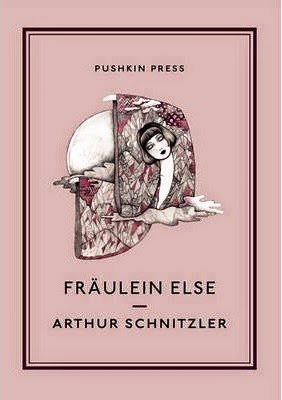
Arthur Schnitzler was born in Vienna, Austria, in May 1862. Stemming from a prominent family of medical doctors he became a doctor himself and worked first at the Vienna General Hospital and at the General Policlinic where he focused on hypnosis and suggestions. Already during his medical studies, Arthur Schnitzler began his career as a writer that later on became his main occupation. As from 1880 he published poems, prose sketches and aphorisms. In 1888 his play, The Adventure of His Life, appeared in print, three years before it was first performed on stage. Arthur Schnitzler’s fame, however, is based on psychologically well founded plays like Anatol, Flirtation and Reigen that shocked the audience of the time with an until then unknown frankness about sexuality. The antiquated conventions of society in the last decades of the Austro-Hungarian monarchy are a topic in all of Arthur Schnitzler’s work, also in his prose like for instance in the novellas None but the Brave, Dream Story or Fräulein Else. As a writer Arthur Schnitzler was a renegade obsessed with love and death as he said himself. He was one of the great innovators of Austrian literature and during his life encountered much praise as well as open malice for it. Arthur Schnitzler died in Vienna in October 1931.
Fräulein Else, a first-person stream of consciousness narrative like None but the Brave, was first published in 1924 and received immediate public acclaim. The plot is simple. It’s 3 September 1896. The adolescent woman Else is staying in a hotel in San Martino di Castrozza in Southern Tyrol, a fashionable summer holiday resort in the then Austro-Hungarian Empire, today in Italy, with her well-to-do aunt and cousin. In the afternoon she receives a telegram from her mother informing her that her father, a lawyer and gambler, needs 30,000 guldens in order to return embezzled money and to avoid prison as well as humiliation. Since there is no other hope for the family, Else is asked to approach the rich art dealer Dorsday, a family acquaintance, present at the hotel and to make him lend her father the necessary money. The young woman follows her mother’s wishes, but Mr. Dorsday requires something in return that Else is reluctant to give: he wants her to take off her clothes and pose naked in front of him that night. The request plunges the young and inexperienced Else into a deep inner tumult. She considers all possibilities that are left to her, acquiescence, rebellion, even suicide. When a second telegram arrives from her mother in the evening telling her that the amount needed is 50,000 guldens, the young woman takes her decision. She goes down to the lobby with nothing but her fur coat on and takes it off in front of all hotel guests including Mr. Dorsday, so everybody will think that she suffered a nervous breakdown. To soothe her nerves she had taken a dose of veronal, a strong sedative and hypnotic very common at the time, or more than just one dose that shows effect when Else regains her hotel room and her bed where the story and Else’s stream of consciousness end.
The story of Fräulein Else is disturbing since it reveals the view of the world of a well-bred, sheltered and probably spoilt girl somewhere on the threshold between childhood and respectable womanhood. The character of Else is very complex and so are her thoughts and daydreams that are mingled with childish fantasies and the dawning of her still innocent sexuality. Arthur Schnitzler made Else tell her story with great mastery of language and with incredible sensitiveness. Reading the novella I often couldn’t help wondering how a man managed to know so much about a woman’s or rather a girl’s inner world. For its psychological depth Fräulein Else is often considered the best of the best among Arthur Schnitzler’s prose. The fact that there are certain parallels to a case described by Sigmund Freud (whom Schnitzler knew) in his Studies on Hysteria can’t derogate the quality of the novella.
I enjoyed reading this novella very much although it’s set in a world of yesterday, a world before the two great wars of the twentieth century and long before the sexual revolution of the 1960s. Despite all it feels very modern. In any case, it’s a masterpiece of Austrian literature and it deserves being read more often than it is today.
Subscribe to:
Posts (Atom)