Der Ring(aus Gedichte: 1837)Ich saß auf einem Berge Gar fern dem Heimatland, Tief unter mir Hügelreihen, Talgründe, Saatenland! In stillen Träumen zog ich Den Ring vom Finger ab, Den sie, ein Pfand der Liebe, Beim Lebewohl mir gab. Ich hielt ihn vor das Auge, Wie man ein Fernrohr hält, Und guckte durch das Reifchen Hernieder auf die Welt: Ei, lustiggrüne Berge Und goldnes Saatgefild, Zu solchem schönen Rahmen Fürwahr ein schönes Bild! Hier schmucke Häuschen schimmernd Am grünen Bergeshang, Dort Sicheln und Sensen blitzend Die reiche Flur entlang! Und weiterhin die Ebne, Die stolz der Strom durchzieht; Und fern die blauen Berge, Grenzwächter von Granit! Und Städte mit blanken Kuppeln, Und grünes Wälderreich, Und Wolken, ziehend zur Ferne, Wohl meiner Sehnsucht gleich! Die Erde und den Himmel, Die Menschen und ihr Land, Dies alles hielt als Rahmen Mein goldner Reif umspannt. O schönes Bild, zu sehen Vom Ring der Lieb‘ umspannt Die Erde und den Himmel, Die Menschen und ihr Land! Anastasius Grün (1806-1876) Pseudonym von Anton Alexander Graf von Auersperg Österreichischer Lyriker und liberaler Politiker |
The Ring(from Poems: 1837)I sat upon a mountain, Far from my native land, Beneath me upland ridges, Dales, corn and meadow land! The ring from off my finger In dreamy thought I drew, The pledge of love she gave me. When last we bade adieu. Before mine eye I held it, Like a telescope unfurled, And through its little circle Gazed down upon the world. Ye smiling verdant mountains, Ye gold fields of corn, No, ne’er did fair picture A fairer frame adorn! Here cottages gleam brightly, On verdant slope and hill, There scythe and sickle gleaming Beside the valley’s rill. And yonder plain, where proudly The foaming torrent swells, Beyond, blue granite mountains, The frontier’s sentinels. And towns with gleaming steeples, Woods clad in verdure’s prime, And clouds that, like my longing, Flee to a distant clime. As by a frame surrounded, My golden circle spanned, The earth and Heaven’s azure, Man and his dwelling land. Fair picture, thus to gaze on, By love’s gold circle spanned. The earth and Heaven’s azure, Man and his dwelling land. Anastasius Grün (1806-1876) Count Anton Alexander von Auersperg Austrian poet and liberal politician translated into English verse by Alfred Baskerville in Alfred Baskerville: The Poetry of Germany. Consisting of Selections from Upwards of Seventy of the Most Celebrated Poets, London-New York 1853 |
Monday, 30 May 2016
Poetry Revisited: Der Ring – The Ring by Anastasius Grün
Friday, 27 May 2016
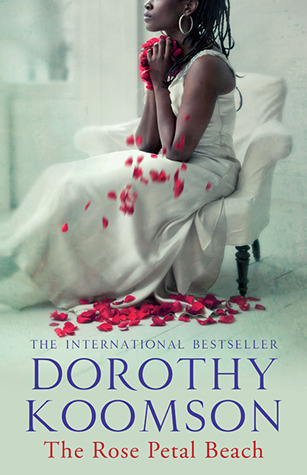
Book Review: The Rose Petal Beach by Dorothy Koomson
by an author whose family name starts with the letter
A B C D E F G H I J K L M N O P Q R S T U V W X Y Z
The monotony of daily routine tends to lull us into delusive safety and easily tempts us into overlooking all those tiny signs that hint at the fact that something in our life is not quite right any more. Very often it’s only a question of time until the ignored warnings add up to something more important, to something that will push us rather rudely out of the comfort zone of life as we have got used to see it into the harsh reality of life as it actually is. This is what happens at the beginning of the best-selling novel The Rose Petal Beach by Dorothy Koomson and brings about not just the end of what Tami believed to be a happy marriage but also the brutal murder of her second-best friend and soul mate. Events force her to review the relationship to her husband, the character of her friends and her own behaviour.
Monday, 23 May 2016
Poetry Revisited: An Hymn to the Morning by Phillis Wheatley
An Hymn to the Morning
(from Poems on Various Subjects: 1773)Attend my lays, ye ever honour’d nine,
Assist my labours, and my strains refine;
In smoothest numbers pour the notes along,
For bright Aurora now demands my song.
Aurora hail, and all the thousand dies,
Which deck thy progress through the vaulted skies:
The morn awakes, and wide extends her rays
On ev’ry leaf the gentle zephyr plays;
Harmonious lays the feather’d race resume,
Dart the bright eye, and shake the painted plume.
Ye shady groves, your verdant gloom display
To shield your poet from the burning day:
Calliope awake the sacred lyre,
While thy fair sisters fan the pleasing fire:
The bow’rs, the gales, the variegated skies
In all their pleasures in my bosom rise.
See in the east th’ illustrious king of day!
His rising radiance drives the shades away –
But Oh! I feel his fervid beams too strong,
And scarce begun, concludes th’ abortive song.
Phillis Wheatley (1753-1784)
African-American poet
Friday, 20 May 2016
Book Review: The Blue Flowers by Raymond Queneau

2016 review of a book written
by an author whose family name starts with the letter
A B C D E F G H I J K L M N O P Q R S T U V W X Y Z
Sometimes dream and reality can be quite difficult to distinguish one from another, and as a matter of fact, ancient cultures often didn’t as we do today. The idea that life is nothing but a dream is rather old too. Philosophers have been discussing the matter for many centuries… and writers too have been attracted to it as proves literary history. The 1965 novel The Blue Flowers by French author Raymond Queneau is a particularly clear and important example for it, one with a decidedly surrealistic touch. In it not only present and past but also dream and reality merge in a way that makes it impossible to tell which is which. There is Cidrolin who lives in Paris in 1964 and there is the Duke of Auge who starts his journey through French history in 1264 leaping towards the present in steps of exactly 175 years. Their weird dreams link them through time and eventually bring them together.
Wednesday, 18 May 2016
Back Reviews Reel: May 2013
The blogging month of May 2013 saw me publishing another five reviews of more or less important novels, three contemporary ones (one of them by a Nobel laureate) and the only two nineteenth-century works featured here on Edith’s Miscellany to date. I started with Puffball by Fay Weldon that added a slightly feminist touch to my contents although it’s rather a popular than an exceptionally deep novel. Following up was Agnes Grey by Anne Brontë, a character driven book with an unspectacular plot from the pen of a quiet writer whose work is often overlooked because of her more famous writer-sisters. Then I moved on to The Queen of Spades by Alexander Pushkin that actually is only a well-known short story about the dangers of gambling and seldom published in a single edition today. The last two books in the archive of May both deal with immigration. The first is The Chef by Martin Suter that surrounds a Tamil refugee in Switzerland who is partner and cook of incredibly effective aphrodisiac meals in a catering business. The second is The Passport by Herta Müller, the German-Romanian Nobel laureate in literature of 2009, and tells the story of a Romanian family doing everything in their power to finally get their passports to leave.
Monday, 16 May 2016
Poetry Revisited: Sighs for Solitude by J. Sheridan Moore
Sighs for Solitude
(from Spring Life: 1864)Oh, give to me deep solitudes,
And I will give you princely halls;
My soul prefers the horrent woods,
And rock o'ver which a torrent brawls.
I love to roam by ocean's flood,
And watch its breakers seethe and foam;
To wander over mountains rude,
Where eagles make themselves a home.
The silent glade – the haunted glen –
The shadowed regions of the Dead –
All paths but seldom trod by men –
Are charmëd scenes I love to tread.
In these alone – not all alone,
For star-eyed Psyche's by my side –
I revel in wild joys, unknown
To those who love life's restless tide.
Then give to me grim solitudes,
And I will leave you princely halls;
My soul prefers the horrent woods,
And rocks o'er which a torrent brawls.
Joseph Sheridan Moore (1828-1891)
Australian poet, teacher, and publicist
Friday, 13 May 2016
Book Review: The Red House by Else Jerusalem
 |
| Click on the index card to enlarge it! |
2016 review of a book written
by an author whose family name starts with the letter
A B C D E F G H I J K L M N O P Q R S T U V W X Y Z
Vienna around 1900 is often idealised as a hub of European culture and as a hotbed of science and modern arts, which the capital of multiethnic Austria-Hungary under elderly Emperor Francis Joseph I certainly was, but place and time were also marked by growing decadence. The number of registered and secret prostitutes in the city – estimated 50,000 of nearly 1.7 million inhabitants – indicates that things weren’t at their best. Nonetheless, it was as if those more or less miserable women, many of them in fact or almost children, didn’t exist. It was a taboo to mention them as it was to talk about sex in general, a taboo that the novel The Red House by Austrian writer Else Jerusalem clearly broke portraying the lives of prostitutes in a brothel and centring on Milada who was born into the milieu. It’s inevitable that she becomes a prostitute, but she feels the desperate need to help and end the misery.
Subscribe to:
Posts (Atom)