Friday, 30 May 2014

Book Review: The Church of Solitude by Grazia Deledda

http://www.amazon.co.uk/gp/product/0791454584/ref=as_li_qf_sp_asin_il_tl?ie=UTF8&camp=1634&creative=6738&creativeASIN=0791454584&linkCode=as2&tag=editsmisc00-21
There are topics which aren’t actually a taboo in our society, but we still prefer to envelope them with silence because they are embarrassing, terrifying or painful. Sometimes they are all three and many of them are related to serious health problems. Also literature uses to deal with fatal illness only reluctantly and tends to insinuate it rather than call it by name. This was the case regarding tuberculosis and still is the literary approach to cancer and AIDS. For today’s review I picked The Church of Solitude by Grazia Deledda, the Nobel laureate in Literature of 1926, which shows the effects of breast cancer on the life of a young woman in Sardinia, Italy, during the 1930s. Silence and solitude play an essential role in the story.

Grazia Deledda was born in Nuoro, Sardinia, Italy, in September 1871. She was largely educated by private tutors and completed her literary studies as an autodidact. Already in 1888 she brought out her first novel Sangue sardo (Sardinian Blood). Over the following five decades the author produced an immense number of novels, short stories and essays along with poetry and plays, most memorable among them After the Divorce (Dopo il divorzio: 1902), Elias Portolu (1903), Ashes (Cenere: 1904), L'edera (1908; The Ivy), Reeds in the Wind (Canne al vento: 1913), and – rather untypical – The Mother (La madre: 1922). In 1926 Grazia Deledda was awarded the Nobel Prize in Literature with only one vote ahead of the Spanish writer Concha Espina (»»» read my review of The Metal of the Dead). Her last novel published during her lifetime was The Church of Solitude (La Chiesa della solitudine: 1936). Having suffered from breast cancer for a while Grazia Deledda died in Rome, Italy, in August 1936. The (unfinished) autobiographical novella Cosima and a collection of novellas titled Il cedro del Libano (The Cedar from Lebanon) first appeared posthumously in 1936/37 and 1939 respectively.

The Church of Solitude is the story of twenty-eight-year-old Concezione who has just been discharged from hospital after a mastectomy, the removal of her cancerous left breast. She has resigned herself to living as a recluse and passing the rest of her days taking care of her mother. They live together (sharing even the bed) in a two-room house outside town which Concezione’s grandfather built at a fork in the road together with the adjoining small church consecrated to the Virgin Mary, Mary of Solitude. Her late father left house and church to her along with some money so she won’t need to work. However, Concezione takes pride in earning her own living sewing linens, above all men’s shirts. It was through her work that she got to know Aroldo, a blond blue-eyed foreigner who has been hired like many others to build a provincial road. Love was budding between them, but cancer changed everything. After her return home Concezione behaves reserved and cold to Aroldo.
“…; she seemed another person to him too. It was as if the hospital, instead of the operation the two women had described to him – that is, the simple extraction of a nasal polyp – had by witchcraft taken her blood, her flesh, her youth.” 
Aroldo asks her to marry him despite all. At the same time other suitors make an unexpected appearance. Old Giordano, a friend of her father, wants to convince her that she should marry one of his two grandsons. He tempts her with the prospect of reuniting land, woods, and livestock that her sick father sold to provide for her and her mother after his death. Her mother’s wealthy and childless friend Maria Giuseppa would like to see her married to her nephew, an illegitimate son of her late brother who is handsome and strong, but even in his aunt’s opinion an imbecile. She makes Concezione opulent gifts and paints the splendour of her house and all her stuff, which would one day belong to her, in the brightest colours to persuade her to take her nephew for a husband. For Concezione, however, getting married to any of them is out of the question. In the church she prays to Mary of Solitude to be spared the suffering which they all cause her with their constant pestering:
“‘Mary, Mother of God, make them leave me alone,’ Concezione prayed, kneeling at the foot of the altar. ‘… And if they knew that a terrible illness, the worst of all, was lurking like a poisonous snake in my poor breast, they would flee me like they flee lepers and the possessed. Most Holy Mary, make them leave me in peace, like an old woman who has nothing in the world but a meter of ground on which to die, and under which to be buried.’” 
Aroldo at last realises that his efforts are hopeless and takes to playing the guitar, drinking and running after women to hurt Concezione. The others too become less pressing although they continue the courting. Month after month slips by. All the while Concezione is trying to understand the reasons for her illness and fighting against the love for Aroldo that she has forbidden herself. It doesn’t help that one day in July Aroldo turns up dead drunk in the neighbourhood and then disappears without a trace. People gossip and the local sergeant of the Carabinieri (the police) starts an investigation about the young man’s fate.

Probably due to its serious topic The Church of Solitude is one of the most neglected works of Grazia Deledda. Like her other novels it is full of descriptions of the ways of life in Sardinia in the 1930s and of hints at the social changes that modern times were slowly bringing even to the remotest parts of the island at the time. The central focus of the author is, however, on Concezione’s inner world and on her reaction to what happened to her and to what she expects to be her fate. She’s a young woman with a great zest for life and at the same time she knows that she needs to be reasonable. So she hides, she renounces and she prays a lot, but she remains silent about the true nature of her illness because she’s too ashamed. Consequently the word cancer appears only once in the entire novel and not with regard to Concezione. Not knowing her secret, people – of course – treat her like any other woman of marriageable age with a tempting little fortune and don’t leave her alone as she wishes. Grazia Deledda displays her protagonist’s constant, though changing inner conflict in a powerful and very convincing way. Although Concezione herself never leaves the immediate environs of house and church, the plot is surprisingly varying and gripping. In addition, the author’s language is rich in strong images and often poetical which made it a pleasure to read despite the topic.

It goes without saying that I warmly recommend The Church of Solitude by Grazia Deledda for reading. Since the author died already in 1936, at least the original Italian version of this novel is in the public domain in Europe. La chiesa della solitudine can be downloaded for free from several Italian websites, but unfortunately it isn't available on Project Gutenberg or the sites of other big providers of free e-books as it seems.


* * * * * 
http://readnobels.blogspot.com/


This review is a contribution to the perpetual Read the Nobels challenge.

For more information and a complete list of books that I already reviewed for it »»» please read my sign-up post!

Wednesday, 28 May 2014

The Sweetness of Life in a Flat World: Chocolat!

http://www.amazon.co.uk/gp/product/B00005LDBH/ref=as_li_qf_sp_asin_il_tl?ie=UTF8&camp=1634&creative=6738&creativeASIN=B00005LDBH&linkCode=as2&tag=editsmisc00-21In an environment where traditions are held high in esteem without questioning and where departures from well-established rules are looked at with disdain, life can be quite dull. In 1959 the average small French village certainly was such a sullen place, even more so during the cheerless Lent season preparing for the Roman-Catholic Easter celebrations. To open a chocolate shop just then and there must have been considered as an attack against propriety, but it’s the peg on which Joanne Harris chose to hang the story of Chocolat, her novel first published in 1999.

Already in the year 2000 the Swedish director Lasse Hallström (also known for My Life as a Dog and The Cider House Rules) made Joanne Harris’s multilayered novel about the conflict between the zest for living and (often stubborn) self-denial, between individuality and conformity, between safe stagnation and the uncertainty of change into a highly successful film. Chocolat was nominated for no less than five Oscars, including that for the Best Picture, and even more than a dozen years later people continue to watch it with great pleasure. Certainly, the first-rate cast, including Juliette Binoche and Johnny Depp, has a considerable part in its popularity.

The story of Chocolat begins on a day in the Lent of 1959, thus late in astronomical winter when nature still uses to be colourless and grey. A northern wind of change blows Vianne Rocher (played by Juliette Binoche) and her six-year-old daughter Anouk (impersonated by Victoire Thivisol) into the quiet (fictional) village Lansquenet-sous-Tannes somewhere at the back of beyond in the French countryside. The single mother, who shocks the community right away because she doesn’t make any secret of never having been married nor shows the slightest sign of shame for her immoral status, rents the old bakery from Armande Voizin (played by Judi Dench) to open La Chocolaterie Maya, a chocolate shop where she intends to sell her own chocolate creations based on old recipes handed down to her by her Mayan grandmother.

Of course, Vianne’s enterprise isn’t welcomed by the austere and devoutly Catholic mayor of Lansquenet-sous-Tannes, the Comte de Reynaud (played by Alfred Molina), who tries to live up to the ideals of his noble ancestors. He feels that it’s his inherited duty to be a model of virtue protecting the villagers from all sorts of bad influence and keeping them on the path of probity for their own good. Since as a mayor he can’t do anything to prevent the dangerously libertine Vianne from opening her shop and tempting people to break the fasting, he uses his authority as a respected member of the community to work against her and involves Père Henri (played by Hugh O'Conor), the new priest who isn’t yet settled and self-assured enough to stand up against the mayor and his ideas. And really, most people in the village avoid Vianne’s chocolaterie and forbid their children to go there.

However, the general boycott doesn’t last. By and by easy-going Vianne draws the villagers on her side with her chocolates which seem to have magical power since they can revive the flame of love and give courage. One of the first to befriend Vianne is her landlady Armande Voizin who is a rebellious mind herself and reproved for her unreasonable behaviour, i.e. for refusing to move into an old people’s home, by her own daughter Caroline Clairmont (played by Carrie-Anne Moss) who is a devout Catholic working for the mayor. Armande isn’t even allowed to see her grandson Luc because Caroline fears that she could have a bad influence on him, but Vianne finds a way to secretly bring them together in her shop. Vianne also helps Joséphine (played by Lena Olin) who is regularly beaten up by her alcoholic husband Serge (played by Peter Stormare) owning the village pub. Before long Josephine leaves Serge, moves in with Vianne and learns not just the chocolate trade, but also gains self-confidence. In this case Vianne even receives support from Comte de Reynaud although he doesn’t approve of the wedding vow being broken and does his best to transform Serge into a good and loving husband. Alas, after another night of drinking heavily Serge breaks into the chocolaterie to fetch his wife by force and almost strangles Vianne.

When a band of gypsies lands their house-boats on the river bank just outside the village, Vianne gives the Comte de Reynaud even more reason to be against her because unlike most of the villagers she welcomes them and treats them without prejudice. Their leader is Roux (played by Johnny Depp), a handsome, charming and good-mannered gypsy, who loves the freedom of his vagabond life. Of course, the two outsiders are soon attracted to each other and a tender romance develops between them. Until after the party that Vianne and Roux give for Armande’s birthday everything is fine and everybody is happy. Then their enemies strike and there is a fire which almost costs the lives of Anouk and Joséphine, while Armande dies in her living room from complications caused by her diabetes. But that’s not the end because life on the whole always goes on. At last Easter comes and with it the joys of spring as well as friendship… and sweetness finally replaces the flatness of life.

In his review in the New York Times Elvis Mitchell called Chocolat “an art house movie for people who don't like art house movies”, but who cares about the label? Chocolat certainly is a sweet story in all thinkable senses, and yet, it can also be seen as a pleading for more tolerance and open-mindedness. For the latter alone it already deserves a recommendation! For the rest, I can say that I passed enjoyable 121 minutes watching the film.

For those who prefer to read Chocolat by Joanne Harris:

Monday, 26 May 2014

Poetry Revisited: Among the Lilies by Susan Coolidge

Among the Lilies

(from Verses: 1880)

She stood among the lilies
In sunset's brightest ray,
Among the tall June lilies,
As stately fair as they;
And I, a boyish lover then,
Looked once, and, lingering, looked again,
And life began that day.

She sat among the lilies,
My sweet, all lily-pale;
The summer lilies listened,
I whispered low my tale.
O golden anthers, breathing balm,
O hush of peace, O twilight calm,
Did you or I prevail?

She lies among the lily-snows,
Beneath the wintry sky;
All round her and about her
The buried lilies lie.
They will awake at touch of Spring,
And she, my fair and flower-like thing,
In spring-time--by and by.

                              Susan Coolidge
                 aka Sarah Chauncey Woolsey
                               (1835 - 1905)

Friday, 23 May 2014

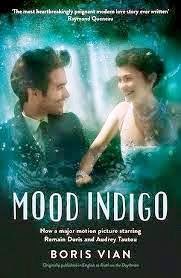
Book Review: Mood Indigo by Boris Vian

http://www.amazon.co.uk/gp/product/1846689449/ref=as_li_qf_sp_asin_il_tl?ie=UTF8&camp=1634&creative=6738&creativeASIN=1846689449&linkCode=as2&tag=editsmisc00-21After the enjoyable experience with Linn Ullmann’s Before You Sleep (»»» read my review of past Friday) I thought that it might be a good idea to really plunge into surrealism for a change. Since the origins of the literary movement lie in France it also gives me the perfect opportunity to make another contribution to the Books on France 2014 reading challenge. My choice for today’s review is Mood Indigo by Boris Vian, a French modern classic which was first published in 1947 and translated into English several times under varying titles. Like most of this author’s literary work it achieved cult status and found its way into the French canon only after his death, namely in the 1960s and 1970s.

Boris Vian was born in the Parisian suburb Ville-d'Avray, France, in March 1920. As a child he went through serious illnesses which left him with a weak heart. After high school he became an engineer, but he also got involved in the Jazz scene of Paris in the late 1930s and soon worked as a trumpeter and songwriter. In 1943 he turned his attention to literature as well and wrote Turmoil in the Swaths (Trouble dans les andains) which appeared as a book only in 1966. The years after World War II saw the publication of the author’s surrealist novels Vercoquin and the Plankton (Vercoquin et le plankton: 1946), Mood Indigo (L'Écume des jours: 1947; also translated as Froth on the Daydream and Foam of the Daze) and Autumn in Peking (L'automne à Pékin: 1947) which all sold poorly, though. Boris Vian adopted the pseudonym Vernon Sullivan brought out four crime parodies, most famous among them I Spit on Your Graves (J'irai cracher sur vos tombes: 1946). The again surrealist novels Red Grass (L'Herbe rouge: 1950) and Heartsnatcher (L'Arrache-coeur: 1953) attracted little attention. From then on he concentrated on plays and music, song writing and singing in particular. Boris Vian died from sudden heart failure in Paris, France, in June 1959.

In the beginning of Mood Indigo life is like a pleasant dream for its twenty-two-year-old protagonist Colin. Thanks to an inheritance he leads a carefree existence in his own spacious as well as sun splashed apartment which he has furnished with all thinkable comforts including a pianocktail, an instrument that translates the music played on it into savoury cocktails. Actually, Colin is an sensualist in more than just this one respect. He loves good meals which accounts for the presence of Nicolas, a proud cook and man-servant of twenty-nine with a passion for the culinary creations of Jules Gouffé who turns into a true friend as the story advances. Colin also adores music, most of all Jazz by Duke Ellington, and he has a distinct sense for fashion and style. Beauty in all its forms is important to him, but so is friendship. His best friend is Chick, an engineer of his own age, who has a hard time making ends meet with his meagre salary. Colin helps him best he can inviting him for dinner and making him presents every so often. The encounter with Chick’s attractive girlfriend Alise awakens in him a great desire for love which soon finds its subject: during a party Colin is introduced to beautiful Chloë. It’s inevitable that the two fall in love, soon get married in the most bombastic wedding ceremony and leave for their honeymoon in the south. To share his happiness Colin gives Chick one quarter of his money which will allow him to marry Alise. Alas, it isn’t meant to be. Instead of marrying Alise, Chick spends everything on books and memorabilia of the philosopher Jean Sol Partre (easily identifiable as Jean Paul Sartre) whose obsessive fan he is. Also Colin’s life is going downhill because during the honeymoon Chloë catches a dangerous infection: a water lily is growing in her lung. The only cure is the perfume of fresh flowers which are so expensive that Colin’s fortune is soon used up and he has to look for a job to save his love’s life.

The plot of Mood Indigo tells a rather simple, if not trivial story of love and friendship, but it’s set in a world obeying other natural laws and social conventions than we are used to. Sun rays behave like living creatures that shy from hidden or unpleasant corners and seek open or beautiful places. An apartment (and everything in it including Nicolas) responds to the protagonist’s emotions: it turns increasingly sombre and shrinks as the worries of Colin about Chloë’s deteriorating health grow. With the exception of Colin and his friends people are treated like lifeless objects that can be disposed of like rubbish when they are in the way or somehow damaged. My personal favourite is the final scene with the mouse committing suicide by begging a rather reluctant cat to bite its neck. Many other bizarre scenes and images fill this novel, but never to an extent that would make the basic plot difficult to follow or to see through. As fits a surrealist writer, Boris Vian also salted his novel with lots of word plays which I reckon must be awfully difficult to translate into English. The passionate musician in him included many references to music as well, especially to a song called Chloë, and different English translators thought it appropriate to give the novel the title of Duke Ellington’s Jazz standard Mood Indigo instead of translating the original one. All things considered, it’s a read that requires some attention in order not to lose the thread and a mind set to thinking about hidden meanings.

Although in general I’m not very attracted by the bizarre and the absurd, I enjoyed Mood Indigo by Boris Vian very much. It was an interesting read with many fascinating ideas about life shining through the lines which makes me wonder what this author’s other works may be like. And of course, I recommend the novel for reading!

Wednesday, 21 May 2014

Marginal Note: Algorithmic Patterns

or Why I Do Not Want a Computer to Choose My Reads

Like for most people, prize competitions are a constant temptation for me, too. Why not try my luck to win something that I don’t desperately need and therefore won’t buy, but wouldn’t mind calling my own? It goes without saying that in general the prize isn’t mine – unless it’s a book. Of course, I don’t win every book disposed of by lot, and yet, I must say that I’ve been lucky strikingly often in my life. Again there is an important exception: GOODREADS giveaways. 

I don’t know exactly how often I entered to win a book on GOODREADS since I discovered the giveaway section. Maybe it was about fifty times? At any rate it wasn’t too often considering the number of books made available by authors every week. What I do know for sure is that I won only a fraction of the carefully chosen novels, short-story collections and magazines that I would have liked to read although after the drawing I never bothered to search for one of them in a shop. 

GOODREADS like other sites uses an algorithm to pick the winners of its giveaways. It’s only fair that the number of books that a member already won lessens the chances for another draw. It’s alright with me too that every (positive) review of a giveaway published on the site increases the chances to win. However, I find it annoying that the content of my shelves and my assessment of the individual books has an influence as well although I certainly understand the reasons why. 

Those past couple of months I tried several times to win the new English translation of a nineteenth-century classic that one of my many literary birthday twins wrote, but it doesn’t fit into my usual reads. My focus uses to be on literature from 1900 on and I’m no frequent reader of romances, so I waited in vain for the congratulation e-mail telling me that I won. And it wasn’t the first time that I entered to win the very same book again and again on GOODREADS without ever being chosen. 

Unfortunately, the GOODREADS algorithm doesn’t take account of people like me who take considerable pleasure in trying out something new every once in a while. Mind you, I really enjoy making literary side steps to discover genres and writers whose work usually escapes my attention. Giveaway lists are a good way to come across something out of the rut that I would never think of buying. It’s a pity that readers aren’t given much of a chance to go astray, though. 

Also the book suggestions of GOODREADS, amazon and others are rarely my cup of tea. They are always too much in a line with my latest reads or searches. I hate following such narrow patterns! It would mean to reduce my horizon instead of widening it. In addition, it would be boring. It would rob me of the pleasure of new discoveries. To cut a long story short: an algorithm will never be able to anticipate my reading choices and my assessment of books.

Monday, 19 May 2014

Poetry Revisited: The Merry Month of May by Thomas Dekker

The Merry Month of May

(From the play The Shoemaker's Holiday: 1599)

O, the month of May, the merry month of May,
So frolic, so gay, and so green, so green, so green!
O, and then did I unto my true love say,
Sweet Peg, thou shalt be my Summer's Queen.

Now the nightingale, the pretty nightingale,
The sweetest singer in all the forest quire,
Entreats thee, sweet Peggy, to hear thy true love's tale:
Lo, yonder she sitteth, her breast against a brier.

But O, I spy the cuckoo, the cuckoo, the cuckoo;
See where she sitteth; come away, my joy:
Come away, I prithee, I do not like the cuckoo
Should sing where my Peggy and I kiss and toy.

O, the month of May, the merry month of May,
So frolic, so gay, and so green, so green, so green;
And then did I unto my true love say,
Sweet Peg, thou shalt be my Summer's Queen.

                                                              Thomas Dekker
                                                               (c. 1572–1632)

Friday, 16 May 2014

Book Review: Before You Sleep by Linn Ullmann

http://www.amazon.co.uk/gp/product/1447248333/ref=as_li_qf_sp_asin_il_tl?ie=UTF8&camp=1634&creative=6738&creativeASIN=1447248333&linkCode=as2&tag=editsmisc00-21For today’s review I picked a piece of contemporary Scandinavian literature for a change. And no, it’s not a crime story or a romance although it sometimes seems to me as if hardly any other writings from the European north made its way into Austrian bookshops these days. Instead my choice is an entirely fictitious narrative about the influence that our families and personal history have on who we are and how we deal with life. It’s the presence of a child who doesn’t yet know his parents’ and grand-parents’ past that starts the stream of memories on which Linn Ullmann built her first novel Before You Sleep to explore the vicissitudes of life and love. 

Linn Ullmann, real name Karin Beate Ullmann, was born in Oslo, Norway, in August 1966. After graduating in English Literature from New York University the daughter of actress Liv Ullmann and film director Ingmar Bergmann worked as a literary critic in Norway. In 1998 she brought out her debut novel titled Before You Sleep (Før du sovner) which immediately earned her much critical acclaim. In the new millennium followed her novels Stella Descending (Når jeg er hos deg: 2001), Grace (Nåde: 2002), and A Blessed Child (Et Velsignet Barn: 2005). The authors latest published novel is The Cold Song (Det dyrebare: 2011). Linn Ullmann lives in Oslo, Norway, with her family. 

The frame plot of Before You Sleep is set in Oslo, Norway, in 1998. The main narrator is Karin Blom who is taking care of her seven-year-old nephew Sander while his parents are on a second honeymoon in Italy to save their marriage. In the opening scene the two lie in bed waiting for the phone call to tell them that they have arrived safe and sound at their hotel. Karin has allowed the boy to stay up to say good night to his parents, but it’s already after midnight and they should have heard from them hours ago. To kill time Karin tells Sander a fairy tale about the north wind and the sun which was among the things buried in a time capsule during the World Fair in New York in 1939. It’s a piece of family history and starts a train of memories which seemingly at random connects the past seven decades with the present. The Blom family has seen ups and downs just like any other family and they struggle to make their dreams of happiness and love come true, but for everybody it means something different. Each generation has adopted its own strategies to deal with the moments of joy and grief that make up life. While Karin’s grandfather, Rikard Blom, followed his dream of America and was perfectly happy in the 1930s selling costumes including dreams in his New Yorker shop called Cinderella Scissors, his wife June relied on being disciplined and severe to herself like a soldier who only advances and never looks back. Karin’s mother Anni trusts in her looks, above all in her irresistible smile, but it isn’t enough to hold her husband who leaves her and their two daughters as soon as he feels that love is over. When she grows older, the awareness of her fading beauty inevitably plunges her into confusion and makes her take a stupid decision. Karin’s sister Julie is soft and defenceless against the hardships of life. She gets married to feel safe in the refuge of love and family. And Karin… she got into the habit of lying to protect herself from pain, but her armour also prevents her from finding the human warmth and happiness she always longed for.

The greatest part of Before You Sleep is the first-person narrative of Karin. It’s a meditative story not just about the narrator herself, but about her entire family that through example and education shaped her character. Karin’s world is populated by unique types with clear outlines. Certainly, their distinguishing traits are exaggerated, sometimes even to the point of the absurd and funny, and yet, they all feel so realistic that it wouldn’t be surprising at all to run into them around the next corner. Even the stray cat making an appearance in the last part of the book doesn’t make an exception there. The novel’s language and style are unpretentious and easy to follow despite the many flashbacks on family history and Karin’s own past which constantly interact with the present. The prose is rich in often powerful pictures. Also several episodes are salted with surreal symbols that, giving them a thought or two, don’t seem that far-fetched after all.

All in all, I enjoyed Before You Sleep by Linn Ullmann very much. It was an amusing read which made me think too and therefore I’m more than willing to recommend it for reading.