Friday, 30 August 2013

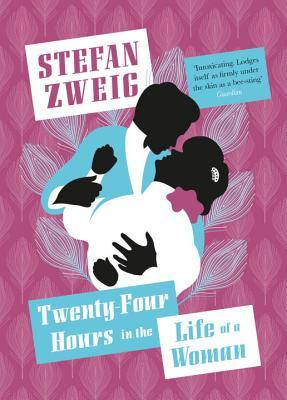
Book Review: Twenty-Four Hours in the Life of a Woman by Stefan Zweig

http://www.goodreads.com/book/show/28186177-twenty-four-hours-in-the-life-of-a-woman
Monaco is a tiny principality at the Riviera, a modern city state attracting the rich and the glamorous as well as social climbers and tourists who just want to taste high life. Surrounded by French territory, the enclave of the Grimaldi family is an expensive place to live in, but well-to-do people always had the habit of spending money lavishly – not least in the casinos of Monte Carlo. Since 1856 the country has been a gamblers’ paradise which easily turns into a hell for those who become addicted and lose more than they can afford. Such doomed characters have also found their way into literature. One of them is a young Polish-Austrian aristocrat whose presence at the roulette table accounts for special Twenty-Four Hours in the Life of a Woman which Stefan Zweig tells in his novella.

Stefan Zweig was born in Vienna, Austria-Hungary, today Austria, in November 1881. Already during his studies of German language and literature he began to travel about and to write. First poems were published in 1901, first novellas followed in 1904 and a first biography (that of Émile Verhaeren) in 1910. The experience of World War I and the encounter with Romain Rolland transformed him into a fervent pacifist. In 1919 he moved to Salzburg, Austria, where he lived until 1934 when he wasn’t travelling. Three collections of biographical essays – Three Masters: Balzac, Dickens, Dostoeffsky (1920), The Struggle with the Daemon: Hölderlin, Kleist, Nietsche (1925), Casanova, Stendhal, Tolstoy: Adepts in Self-Portraiture (1928) –, the historical miniatures titled Decisive Moments in History (Sternstunden der Menschheit: 1927), the biographies of Romain Rolland (1921), Joseph Fouché (1929) and Marie Antoinette (1931), several novellas – among them the collections Amok (1922) and Confusion (Verwirrung der Gefühle: 1926) including Twenty-Four Hours in the Life of a Woman (Vierundzwanzig Stunden aus dem Leben einer Frau) – as well as some plays came out making Stefan Zweig a bestselling author. In 1934, when he couldn’t bear the anti-Semitic atmosphere any longer, Stefan Zweig left Austria and became a writer in exile. First he lived in England where he wrote the biographies of Mary Stuart (Maria Stuart: 1935) and Magellan (1938) along with his most famous novel Beware of Pity (Ungeduld des Herzens: 1939). In 1941 he moved to Brazil where he lost all hope for an end of the war and a return to his country and culture of origin. The prolific writer killed himself in Petrópolis, Brazil, in February 1942. His novella Chess (Schachnovelle) and the autobiography The World of Yesterday (Die Welt von Gestern) finished in Brazil were both published posthumously in 1942 and 1944 respectively. 

Twenty-Four Hours in the Life of a Woman is a novella set among members of the European high society passing their holidays at the Riviera. It’s about ten years before the beginning of the Great War, in 1904, when the wife of one of the hotel guests and mother of two teenage girls runs away with a young French man whom she got to know only a couple of hours earlier. The following day the guests discuss her scandalous behaviour at table and the first-person narrator takes a strong stand in favour of the young woman. Some days later Mrs. C., a distinguished Englishwoman of sixty-seven who has been of the party, asks the young narrator to come to her room because she feels that she can tell him an embarrassing episode of her life without being condemned and because she hopes that this confession of a sort will ease her conscience. He listens to her story which took place in Monte Carlo sometime around 1880. She had been a widow for two years then and killed her time observing the hands of the gamblers at the roulette table in the casino as her husband had taught her. One night the eloquent hands of a young man scarcely older than her own two sons attracted her attention and she couldn’t let go of them anymore. She didn’t know then that the gambler they belonged to was a Polish-Austrian aristocrat, nor could she imagine that the encounter would put her life upside-down for twenty-four hours and make her jeopardise her good reputation in order to save him from himself. She couldn't help plunging into the adventure, but as it turned out it isn't as easy to reform a gambler as she had thought.

The novella Twenty-Four Hours in the Life of a Woman is written in the typical style of its time of origin in the late 1920s. In German the diction of Stefan Zweig is characteristic of the Interwar Period and sounds slightly antiquated today, but the writer definitely succeeds in drawing the reader into his story with much ease as well as skill. To my regret the title-giving narration of Mrs. C. making up the greater part of the novella feels a bit lifeless at times which mirrors, however, the expected stiff and repressed character of an Englishwoman born and raised in the early Victorian period. Personally, I’d also have appreciated a shorter introduction leading to the main plot dealing with those important twenty-four hours which were so close to changing the whole course of the protagonist's life. 

All in all I enjoyed reading this piece of Austrian literature very much although Twenty-Four Hours in the Life of a Woman may not be the best of Stefan Zweig’s works. Usually, the novella is part of a collection, but a single edition of it has just come out in German… and for the first time as it seems. In English the stand-alone novella has been available for years and I hope that my review will have inspired some of you to read it. It’s definitely worth the time!

Friday, 23 August 2013

Book Review: Small Wars by Sadie Jones

http://www.goodreads.com/book/show/6916726-small-warsThere are countries receiving little attention from the public unless they are the venue of disaster or scandal. Cyprus is one of them and I decided to pay a brief literary visit to this remote outpost of the European Union. Today the island seems a quiet place, but its strategically important location in the Eastern Mediterranean always tempted foreign powers, the Ottomans and the British being only the last in a long row. The British colony became a sovereign country in 1960 after decades of growing tension and violence. In her novel Small Wars Sadie Jones depicts the situation in the late 1950s.

Sadie Jones was born in London, UK, in 1967 as daughter of poet Evan Jones and actress Joanna Jones. After years of travelling many countries and working in different kinds of jobs she settled down as a scriptwriter in London. Her literary work has been rejected by publishers for many years, but with the award winning novel The Outcast she made her breakthrough as a writer in 2008. Small Wars followed already in 2009. Her latest novel is The Uninvited Guest published in 2012. Sadie Jones lives in London, UK.

Small Wars is the story of the British regular officer Major Henry ‘Hal’ Treherne and his wife Clara who arrives with their twin baby daughters Lotti and Meg in Limassol, Cyprus, in January 1956, about a month after her husband’s transfer from Germany to the garrison of Episkopi. Guerrilla rebels are fighting with all means, including bomb attacks and assassination, against the colonial troops. The constant threat gives occasion to regular raids in the villages during which soldiers are running wild and destroy the property of the villagers or worse, especially when a British soldier has been wounded or killed in an attempt shortly before. A serious incident during such a raid reported to Hal and then covered up makes him question not only his orders, but also his own role as an honourable soldier on the spot and British presence on Cyprus altogether. Meanwhile Clara fights back her growing fears and hides them from Hal. Relations between them cool and they hardly talk to each other anymore. Clara feels safer when they move from the small house in Limassol to premises on the military base, but then the terror reaches the beach belonging to Episkopi garrison and Hal is there to witness it. Hal is tormented by recurring nightmares and finds it increasingly difficult to reconcile the atrocities committed by his own men with his pronounced sense of honour. Before soon the emotional stress of Clara and Hal held back for months explodes. They have a fight. Hal sends Clara to Nikosia because he wants her out of his way as well as because he believes that it’s safer there for her and the children. During a shopping tour in the old town an assassin shoots down Clara and her friend Grace. When Hal accompanies his convalescent wife and the twins to be flown back to England, he takes a bold decision.

The novel ends in the autumn of 1956, but the violence in Cyprus didn’t stop then, nor a few years later when the island finally gained independence from the British Empire in 1960. Hostilities between the Greek and the Turkish population continued, even increased. A United Nations Peacekeeping Force was sent to Cyprus in 1964 and has been controlling the buffer zone between the territories of the Greek majority and the Turkish minority ever since. In 1974 Turkey occupied the Northern part of the island and a Turkish Republic of Cyprus was proclaimed which has never been recognized by any country other than Turkey, though.

As an author Sadie Jones employs a matter-of-fact tone to give a faithful account of the Small Wars which shook Cyprus at the time and which happen to have some more recent counterparts in the world. In fact the story has been inspired by the war in Afghanistan. Much and in-depth research has been necessary to paint an authentic picture of the small pleasures and constant fears which soldiers and their families experienced in Cyprus. Many loving marriages like that of Hal and Clara will have been put to test by the constant emotional stress. Sadie Jones manages to always stay realistic – as far as I’m in the position to judge it – and she keeps a good balance between thrilling and calming scenes, between ups and downs. Some dialogues contain banalities which don’t add anything to the story, but on the whole the novel is captivating as well as easy to read.

Personally, I devoured Small Wars by Sadie Jones. It’s certainly among the best books which have come my way this year. Although the novel is pure fiction, it allows a glimpse at certain aspects of British colonial history and life in a terror war of independence. In my opinion it’s a read which deserves being highly recommended.

Friday, 16 August 2013

Book Review: Nada by Carmen Laforet

http://www.goodreads.com/book/show/2817206-nadaOn my travel through Europe and around the Mediterranean Sea, I'm making a stop in Spain today, more precisely in Barcelona. There are many novels set in the Catalonian capital, but I decided to review one which deals with the aftermaths of the Spanish Civil War on the individual level and which – undeservedly – is little known outside its country of origin. Nada by Carmen Laforet marked a turning point in Spanish literature and is considered an important modern classic. In addition, it’s one of very few novels of the post-Civil War era written by a woman.

Carmen Laforet was born in Barcelona, Spain, in September 1921. She grew up on the Canary Islands and after the Civil War returned to mainland Spain for her university studies, to Barcelona in 1939 and to Madrid in 1942. Her debut novel Nada (meaning ‘nothing’ in English, but the title usually isn’t translated) came out in 1945 and received the prestigeous Spanish Premio Nadal the same year. Her later works comprise the novels La isla y los demonios (1952; The Island and The Demons) and La mujer nueva (1955; The New Woman) as well as a couple of short stories and novellas, but neither of them seems to have been translated into English, yet. Carmen Laforet died in Madrid, Spain, in February 2004 after having suffered from Alzheimer's disease for a decade.

The scene of Nada is Barcelona and the story begins in autumn 1939, maybe a year or two later. The protagonist is 18-year-old Andrea, an orphan from the province arriving at the Estación de Francia after many hours on the train. It’s midnight and on her way to the Calle de Aribau where she is going to stay with the relatives of her dead mother she experiences a first taste of freedom, away from the narrowness of the village, of the convent school and of life with her cousin who took care of her after her father’s death. Andrea is looking forward to the independence which being a student of literature promises, but in her new home she is received by a bizarre assembly of people in a decayed flat crammed with the relics of a prosperous past. There are her feeble grandmother who says of herself that she never sleeps and who strolls through the flat like a ghost, her austere aunt Angustias holding on to the morals of the old days, her uncle Juan who is a would-be painter beating his wife Gloria because he’s constantly frustrated or jealous and unable to control himself, their baby son who is left nameless in the story, her intriguing and malicious uncle Román charming his surroundings as a gifted musician and painter, and the generally hostile maid Antonia always dressing in black and with the dog Trueno by her side. They draw Andrea into their nightmarish world which is filled with all the big and small tragedies of home life reigned by penury and hunger. Only when Angustias decides to retire to a convent and to take the veil, Andrea is free to come and go as she likes. As often as possible she flees the oppressive and depressing atmosphere in the Calle de Aribau to roam the city and spend time with her well-to-do friends from university, above all with Ena who invites her to her home regularly until she begins to go out with Andrea’s uncle Román. Without her friend Andrea sinks even deeper into loneliness and sadness. The absurdities of home life entangle her mind and Andrea needs all her remaining power to avoid becoming an integral part of the insanity surrounding her. Things take a new turn, when Andrea finds out that Ena has taken revenge upon Ramón for the misery of her mother as a young girl and that after the summer she will move to Madrid with her parents.

Nada is a first-person narrative with all its limits and advantages, but it’s told by the grown-up Andrea and leaves open how much time has passed since the events. The language of this Existentialist novel is clear and simple. In some aspects the book reminds of Françoise Sagan's Bonjour Tristesse and J. D. Salinger's The Catcher in the Rye. In reality Carmen Laforet’s masterpiece is their neglected precursor, though, since it was written and published almost a decade earlier, only a few years after the end of the Civil War in Spain which is most famously represented by Pablo Picasso’s painting Guernica. This historical background makes Nada much more than just the story of a girl who is coming of age in a grotesque environment. The disintegration of society by war terror is depicted in a powerful expressionistic imagery passed on to the reader almost exclusively through Andrea’s impressions and sensations.

When I started reading Carmen Laforet’s Nada, I already knew a few things about life under the regime of General Franco from other novels like for instance The Shadow of the Wind by Carlos Ruiz Záfon or A Manuscript of Ashes by António Muñoz Molina, but this book has given me a new view on the time and the psychological condition of people after the Civil War. I definitely enjoyed the read although in Spanish it was a bit of a struggle as usual. It would deserve much more attention from readers worldwide. 

Friday, 9 August 2013

Book Review: Sunset Oasis by Bahaa Taher

http://www.goodreads.com/book/show/14794671-sunset-oasisDuring most of the past two weeks it has been sweltering hot here in Graz. Yesterday the air currents from the Sahara made temperatures rocket up to the all-time record of 40,5°C in the North-Eastern corner of Austria, to scorching 37°C in my town. Considering the extraordinary heat and the drought in my country, what could be more obvious than writing today's review about a book set in the desert? I picked the novel Sunset Oasis by the Egyptian writer Bahaa Taher, one of the most popular writers in Arabic today.

Bahaa Taher (بهاء طاهر) was born in Gizah, Egypt, in January 1935. He studied literature at the University of Cairo and then worked for Radio Egypt until the mid-1970s, when he was dismissed from his job and banned from writing under Anwar Sadad's regime. After several years of travelling, he went into exile in Geneva, Switzerland, from 1981 until the 1990s where he worked as a translator for the United Nations. The writer in Arabic first received international acclaim with his third novel Aunt Safiyya and the Monastery (خالتي صفية والدير) from 1991 which came out in English translation in 1996. English editions of´his novels Love in Exile (الحب في المنفى) from 1995 and As Doha Said (قالت ضحى) from 1985 followed in 2001 and 2008 respectively. His 2007 novel Sunset Oasis (واحة الغروب) was published in English in 2009 after having been awarded the International Prize for Arabic Fiction. Bahaa Taher returned to Cairo, Egypt, in the 1990s where he still lives.

Sunset Oasis is a historical novel set in the Sahara, more precisely in the Siwa Oasis in North-Western Egypt about 50 km from the Libyan border. The novel begins with the undesired transfer (and promotion) of police officer Mahmoud Abd El Zahir to the oasis some time in the 1890s, a couple of years after the failed Urabi revolt (leading to the British occupation of Egypt in 1882) in which he has been involved. As the district commissioner representing the Khedive in Cairo, Mahmoud is charged to collect the high taxes which the rebellious and proud dwellers of the oasis always refuse to pay to the occupiers. Against his wishes his Irish wife Catherine accompanies Mahmoud on the exhausting and dangerous travel through the desert. It is her hope to make important archaeological discoveries in the oasis about which she has read and heard so much. She is particularly interested in finding traces of Alexander the Great in the ruins of the ancient Egyptian temples. As expected, the inhabitants of the oasis give the couple a cold welcome. Not only are people uncommunicative, even hostile towards the strangers, but also the place itself is shutting them out. All the fertile gardens are walled up, so nobody can see what is going on in them. Moreover the commissioner and his wife live isolated in a house outside the village, always aware that their lives are in danger because the people of the oasis don't want them there. Despite all they settle down to a quiet life of routine. Limited to themselves the ghosts of the past invade and estrange them, though. While Mahmoud is haunted by life decisions which he made out of weakness and his inability to hinder Sheikh Sabir from plotting against him and the enemy Western Siwan tribes, Catherine is getting ever more obsessed with Alexander the Great and pursues her research without heed to personal risks or local customs. The arrival of the ambitious as well as opportunistic junior officer Captain Wafsi and Catherine's critically ill sister Fiona in the oasis is the beginning of the end. The presence of those two people suffices to show Mahmoud and Catherine even more plainly the shortcomings of their own lives and to push them further in their desire to achieve something great and memorable.

The story of Sunset Oasis is told from alternating perspectives which give the characters a very authentic and real shape. The main first-person narrators are Mahmoud and Catherine, but as the story evolves Sheikh Sabir, Sheikh Yahyah, and even Alexander the Great take up the thread. The language of Bahaa Taher is simple and at the same time poetic, especially when it comes to descriptions of the desert. It doesn't feel lengthy nor too grave in any place. The historical facts and the tensions of the period are depicted with great precision, but no more than necessary to understand the background. The translator Humphrey Davies, however, provides some additional information on the time and its most important events in his note at the end. The story itself is (almost) pure fiction. A district commissioner called Mahmoud Abd El Zahir never existed, nor is the scholarly Catherine based on a real person, although people like them might well have lived in Egypt in the late nineteenth century.

It goes without saying that I enjoyed the read which gave me the additional benefit of learning a few things about the history of Egypt and British colonialism beyond the clichés of Lawrence of Arabia and The English Patient. To cut a long story short: I warmly recommend the novel Sunset Oasis by Bahaa Taher for reading.

Friday, 2 August 2013

Book Review: Jenny by Sigrid Undset

http://www.amazon.co.uk/gp/product/158642050X/ref=as_li_qf_sp_asin_tl?ie=UTF8&camp=1634&creative=6738&creativeASIN=158642050X&linkCode=as2&tag=editsmisc00-21The past hundred years have seen many important changes. History books are full of their facts and figures, but also literature furnishes proof of everything that has been going on. Novels allow us a glimpse into the past, into a society which no longer exists and which amazes us by the differences and the similarities to our own world. Outside Scandinavia the Norwegian Nobel Prize laureate Sigrid Unset is known above all for her historical novels, but in reality she produced a greater number of contemporary novels like Jenny which I’m reviewing here today.

Sigrid Undset was born in Kalundborg, Denmark, in May 1882. Until 1909 she worked as a secretary to support her family. Then she devoted herself entirely to writing although her literary breakthrough came only in 1911 with her third novel: Jenny. Her greatest success were the historical novels published in the 1920s. The first was the trilogy Kristin Lavransdatter, consisting of The Bridal Wreath (Part I, Kransen: 1920; in other editions The Wreath or The Garland), The Mistress of Husaby (Part II, Husfrue: 1921; also translated as The Wife), and The Cross (Part III, Korset: 1922). In 1924 the writer converted to Roman Catholicm. Between 1924 and 1927 followed the orginially two-volume and now four-volume series of The Master of Hestviken: The Axe and The Snake Pit (Part I and II, Olav Audunssøn i Hestviken), In the Wilderness and The Son Avenger (Part III and IV, Olav Audunssøn og hans børn) which earned Sigrid Undset the Nobel Prize in Literature of 1928. The later works of the writer are again based in a contemporary setting with an increasingly religious touch. During the German occupation of Norway between 1940 and 1945 she lived in exile in New York. Sigrid Undset died in Lillehammer, Norway, in June 1949.

The novel Jenny begins with Helge Gram's long yearned for arrival in Rome, the eternal city. When night falls, he gets lost in the maze of unknown streets, but he sees two young women whose appearance betrays them as Northerners like himself and who he ran across already earlier that day. Shy as he is, he has to work up his courage to address them and ask them for help. They are Jenny Winge and her friend Cesca Jahrman, two painters living in Rome. Since Helge is completely new in town, Jenny invites him to join their group which includes the painter Gunnar Heggen and the Swedish sculptor Lennart Ahlin. They all have dinner in a café. During the following weeks they pass much time together, above all Helge and Jenny. On her birthday in January Helge avows his love to Jenny and asks a kiss of her. At first Jenny is reluctant because she doesn't feel like him, but eventually she gives in.
"She was twenty-eight, and she would not deny to herself that she longed to love and to be loved by a man, to nestle in his arms, young, healthy, and good to look upon as she was. Her blood was hot and she was yearning..." (Jenny in Part I, Chapter VIII)
The next months are filled with billing and cooing each other neglecting their friends as well as their painting and historical studies respectively. When Jenny's return home is impending in spring, they agree to get married in a couple of months, but Norway is a completely different world than Rome. The atmosphere in Helge's family which is full of jealousy and hate weighs on Jenny. Against her will she is drawn into the net of dissimulation spun by Helge and his father Gert, a failed artist and a womaniser. Jenny and Helge get estranged from one another. When Helge realizes that he isn't and can never be everything in the world to Jenny, more than her work and her friends, he breaks up with her and leaves. Later that night Helge's father Gert visits Jenny to see how she is. Other visits follow and after a while Jenny gives in to his increasing advances. At Christmas Gert leaves his wife and Jenny knows that it's time to end their affair. She visits her friend Cesca in Denmark where she discovers that she is pregnant. She decides to have the baby alone. Hiding away first in Denmark and later in a German seaside resort at the Baltic Sea, she gives birth to a son who lives only six weeks. Grieve-stricken and desperate Jenny travels to Rome again joining her painter friend Gunnar Heggen who does everything in his power to cheer her up. After several months he declares that he loves her and asks her to marry him, but Jenny can't make up her mind to accept the proposal. Then Helge turns up in Rome all of a sudden.
"It all came back – the disgust, the doubt of her own ability to feel, to will and to choose, and the suspicion that in reality she wanted what she said she did not. .... She had pretended to love so as to sneak into a place in life which she could never have attained if she had been honest.
She had wanted to change her nature to fall in with the others who lived, although she knew she would always be a stranger among them because she was of a different kind. ... She felt as if she were dissolving from within" (Jenny in Part III, Chapter XI)
Helge knows nothing of Jenny's affair with his father or of the dead baby and believes that they can go on where they stopped two years earlier. Jenny isn't determined and strong enough to send Helge away and to resist his kisses. They spend the night together, but Jenny has already made up her mind to end her sufferings once and for all as soon as Helge leaves. Gunnar remains behind to mourn her at her grave.

Considering its time of origin, Jenny is not just a realistic, but also a very modern novel. It concentrates on the protagonist's inner development and the way how she copes with her surroundings and her desires. Consequently the stream of consciousness is an important stylistic device used to show Jenny's inner confusion and conflicts. On the one hand Jenny wishes to be independent and an artist; on the other hand she desperately craves for love. Sigrid Undset was the age of her protagonist when she wrote the novel and yet unmarried, but already in this early work she expresses her conviction that the biological nature of a woman inevitably implies the overwhelming wish to be a mother and a wife. Every feminist will feel challenged by this message. However, Sigrid Undset proved much psychological insight into the souls of her protagonists and an enviable skill to tell a capturing story.

As a matter of fact, I have been agreeably surprised by this almost forgotten classic of Scandinavian literature. Jenny was a read which I enjoyed very much although I couldn't always comprehend why Jenny and the others acted or thought the way they did. No doubt, I would have written a different story about them, but then I am I and it's hundred years later than in the book. In any case I'm ready to recommend this novel for reading. It's really worth the time.

An English edition of the novel (translated by W. Emmé) is available as a free e-book here. The new translation of Tiina Nunnally is said to be a lot better and closer to the original, though.

Friday, 26 July 2013

Book Review: Accabadora by Michela Murgia

http://www.goodreads.com/book/show/16598591-accabadoraBirth and death are the two constants circumscribing our lives. They accompany us every day, if we are aware of them or not. Most religions venerate life and protect it. 'Thou shalt not kill' is one of the ten commandments and similar rules exist even in the most primitive societies. Today we are convinced that life is something holy and that nobody has the right to end it before the time. Except during a war and in self-defence murder is a crime, no matter the reasons. Euthanasia is a much disputed topic and Michela Murgia deals with it in her novel Accabadora although it's not really in the centre of her attention as the title makes expect.

Michela Murgia was born in Cabras, Sardinia, Italy in June 1972. She studied Roman Catholic theology and worked among others as religious studies teacher and a saleswoman. Her debut novel Il mondo deve sapere (The World Must Know) developed from a blog about her experiences working in a call centre and came out as a book in 2006. Her biggest success so far is the bestselling novel Accabadora from 2009 which received several literary awards and has been translated into many languages. Her latest published works are the narrative L'incontro (The Encounter) and her contribution to the diary of four Italian writers titled Presente (Present).

The story of Accabadora is set in the small Sardinian village Soreni in the early 1950s. Six-year-old Maria Listru is the unwanted fourth daughter of a widow who has a hard time feeding her family. When Bonaria Urrai, an unmarried woman in her late fifties, observes at the grocer's how ill the girl is treated by her mother, she decides to take her as a 'fill'e anima' (a 'soul child' translated literally into English) which is an informal kind of adoption common in Sardinia for centuries. Maria's mother gladly accepts with the secret hope of profiting indirectly from the relative wealth of Bonaria Urrai. Maria perceives leaving her family of origin to live with her new mother, whom she will always call Tzia Bonaria, as her second birth. Bonaria isn't a very affectionate person – maybe because her dream of marriage was crushed by World War I which robbed her of her fiancé, maybe because it has always been her nature –, but she treats Maria well and instils strong principles in the girl. She insists that Maria goes to school for longer than most villagers consider necessary and doesn't allow the Listru to exploit her when they need someone to help out. For a living Bonaria works as a dressmaker for both women and men, a profession which she teaches to Maria. However, Bonaria Urrai also has a secret occupation and she hides it from her adopted daughter best she can. Intelligent as Maria is, she knows all along that there is something about Tzia Bonaria of which she is ignorant, but she is forbidden to ask questions about the people coming to fetch her at night or about her doings. When her friend Andria Bastíu tells Maria that he watched Bonaria suffocating his crippled elder brother with a pillow one night, she doesn't believe him. Tzia Bonaria doesn't deny it and it dawns on Maria that her second mother is an 'accabadora' (most accurately translated into English as 'finisher'), a woman who kills the agonizing out of mercy. Maria is shocked and disgusted. With the help of her teacher Luciana she moves to Turin as a nanny, but stays there only for little more than a year trying to forget. In the meantime Bonaria Urrai's health is deteriorating. Eventually she has a stroke and is bedridden which requires Maria to return to Soreni. Nursing Tzia Bonaria and watching not only her decline, but also her long agony, she begins to understand the reasons why she was an 'accabadora', one of the last in a long Sardinian tradition.

The story of Maria Listru and the Accabadora Bonaria Urrai is a quiet one which focuses on the growing-up girl. With the exception of ruthless gossip, ancient superstition and a neighbourhood row which costs Andria's brother a leg and his living will, there isn't really much going on in the rural environment which Michela Murgia describes with so much skill. The characters of the novel are quite ordinary ones, but they are carved out expertly in the author's elegant language. Besides, the entire plot is embedded in the social system and the centuries-old traditions of their country which have been quietly slipping into oblivion after World War II.

Accabadora may not have been the kind of novel which I had expected when I bought the book a few weeks ago, but it was a very enjoyable read after all. In fact, I highly recommend it.

Friday, 19 July 2013

Book Review: The Book of Laughter and Forgetting by Milan Kundera

http://www.goodreads.com/book/show/825330.The_Book_of_Laughter_and_ForgettingBohemia seems to be a stimulating place for men and women of letters. Many renowned writers originate from the region like just for instance Franz Kafka, Rainer Maria Rilke, Franz Werfel, Egon Erwin Kisch, or Max Brod. They all were writers in German language and thrived in the bilingual atmosphere of the Austro-Hungarian monarchy around and after 1900. The twentieth century saw important authors who wrote in Czech like for example Jaroslav Seifert, Pavel Kohout, Karel Čapek, Bohumil Hrabal, or Jaroslav Hašek. Many Czech writers were driven to go into exile either soon after the end of World War II in 1945 or after the crushing of Prague Spring in 1968. The Book of Laughter and Forgetting by Milan Kundera, which I'm reviewing today, was written and first published in France.

Milan Kundera was born in Brno, now Czech Republic, in April 1929. Under the impression of the German occupation and World War II he joined the Communist Party, but was expelled in 1950, re-admitted in 1956 and expelled again in 1970. He began his literary career as a poet, essayist and playwright. His first novel, inspired by the expulsion from the communist party in 1950, was The Joke (Žert: 1967). After the violent end of the Prague Spring in 1968 his books were first banned from libraries and then from publication altogether. In 1975 Milan Kundera finally emigrated to France and was denationalized by the Czechoslovak regime four years later. His first work written in exile was The Book of Laughter and Forgetting (Kniha smíchu a zapomnění: 1978) followed by his best known novel The Unbearable Lightness of Being (Nesnesitelná lehkost bytí: 1984). In the 1990s Milan Kundera switched to writing in French instead of his native Czech and he considers himself as a French writer now. His first novel in the adopted language was Slowness (La Lenteur: 1995). His latest published works are the essay collections The Curtain (Le rideau) from 2005 and Encounter (Une rencontre) from 2009. Milan Kundera has been nominated for the Nobel Prize for Literature already several times. Until his death in July 2023, he lived a secluded life in Paris, France.

The Book of Laughter and Forgetting isn't a novel. Milan Kundera himself calls it a variation on a theme, namely on laughter and forgetting, and in fact it's a collection of seven independent stories linked together by those two essential reactions of human nature to the outside world, be it in the sphere of politics, history, love or life in general. The first story titled Lost Letters is about Mirek who wishes to forget his Communist youth which included a love affair with unalluring Zdena. He tries in vain to make her return his love letters because they could discredit him in the dissident community. On his return home he and his son are arrested. Mama is the second story. It deals with an old woman from a provincial town who visits her son Karel and daughter-in-law Marketa in Prague. She is introduced to Eva, an alleged cousin of Marketa and really the lover of Karel. When the mother drops in to tell Karel that Eva reminds her of her old friend Nora, she almost catches the three in a sex game which they arranged for that Sunday. In the end the old woman retreats to her room and the memory of Nora turns on Karel to play his role in his game with Marketa and Eva. In the third story The Angels in the shape of two American students and a teacher called Mrs. Raphael make an appearance. It's a story about absurdity, that of Eugène Ionesco's Rhinoceros, that of politics in Czechoslovakia under Communist reign which forced Milan Kundera to secretly write horoscopes, and that of life altogether. The masses are described as the circle-dancing angels soaring into the sky laughing. The Lost Letters of the fourth story are those of Tamina's late husband which they left in Prague together with her diaries, when they fled from Czechoslovakia some years earlier. Tamina wants to get them back to revive her fading memory of her husband. When Bibi, a guest from the café where she works and at the same time a friend, tells her that she intends to visit Prague during holidays, Tamina sets all her hopes in her to fetch the letters and diaries. In the end the travel never comes about and all Tamina's talks to her relatives in Czechoslovakia have been in vain. In his fifth story Milan Kundera explains the idea of Lítost, "a state of torment caused by a sudden insight into one’s own miserable self" which - as it seems - has no word in any other than the Czech language. The story serving to explain lítost revolves around Kristyna, the wife of a butcher in a provincial town, and a student from Prague who is invited to a gathering of renowned poets and writers at the Literature Club the very night when he expects to be together with Kristyna. The Angels and Tamina reappear and eventually disappear in the sixth story together with Milan Kundera's terminally ill father. A boy called Raphael takes Tamina to an island of children who are curious, thoughtless, innocent, intrusive and cruel. While the children circle dance, Tamina tries to escape from the island swimming, but drowns in the sea surrounded by the children in a small boat who just watch. The last story is titled The Border and is dedicated to the idea of socially accepted conduct as well as reform. The family Clovis and its friends serve as the model of adapted individuals who consider themselves progressive because they support new ideas which in reality are only the next step in social evolution and in no way revolutionary. Not even a sex orgy excludes its participants from the circle of ordinary people.

There are many passages in The Book of Laughter and Forgetting which remind of magical realism. In addition Milan Kundera interspersed his stories with many autobiographical remarks and first-hand historical information about Czechoslovakia and her people. Altogether it may not be an easy read for a relaxed weekend at home because the book requires concentration as well as a certain gift for reading between the lines or deciphering symbols. The circle dance in the two Angels stories is quite clearly a symbol for society hooked to light entertainment and conformism, but other symbols are less accessible. There's also the sexual component which runs through the whole book and which might not be to everybody's taste. I didn't mind reading about protagonists having sex or participating in sex orgies, but especially readers firmly rooted in a religious setting (Christian, Muslim or other) might feel embarrassed by the frank descriptions although they are far from detailed enough to be pornographic.

For me The Book of Laughter and Forgetting by Milan Kundera was a wonderful read which made me think about society a lot and that's definitely something which I always appreciate. In a nutshell: I recommend the book for reading.