Friday, 29 November 2013

Book Review: Fair Play by Tove Jansson

http://www.goodreads.com/book/show/902743.Fair_PlayAs the season suggests, on my tour around the European continent I’m moving today from Hungary northwards to Finland, the home country of Santa Claus and his reindeers. Every year millions of letters addressed to the white-bearded gentleman in red are delivered to Santa Claus Village in Rovaniemi at the Arctic Circle where he resides according to legend. However, I’m not going to review a Christmas novel – not yet. Instead I picked a book by a writer belonging to the Swedish-speaking minority in Finland: Fair Play by Tove Jansson. The author’s international fame is based above all on her stories for children revolving around the Moomins, but she also wrote noteworthy novels and short narratives for adults like the work which I’m reviewing today.

Tove Jansson was born in Helsinki, then Grand Duchy of Finland, Russian Empire, in August 1914. After her arts studies in Sweden and France she made her living as a writer, painter, illustrator, and cartoonist. In 1945 she brought out The Moomins and the Great Flood (Småtrollen och den stora översvämningen) which was the first in the series of Moomin novels, picture books and comic strips produced over 25 years. Then Tove Jansson‘s dedicated herself to adult fiction producing among others the novels The Summer Book (Sommarboken: 1972), Sun City (Solstaden: 1974), The True Deceiver (Den ärliga bedragaren: 1982), and Fair Play (Rent spel: 1989) as well as several collections of short stories like The Listener (Lyssnerskan; 1971), Art in Nature (Dockskåpet och andra berättelser: 1978; also translated as The Dollhouse and Other Stories), Travelling Light (Resa med lätt bagage: 1987), and A Winter Book (Meddelande: 1998). All along she was also a highly successful painter. Tove Jansson died in Helsinki, Finland, in June 2001.

The protagonists of Fair Play are Mari and Jonna, a writer-illustrator and a filmmaker-graphic artist in their early seventies, who are living somewhere at the Baltic Sea, presumably Helsinki and one of the small islands off the Finnish coast respectively depending on the season. They have been close friends – companions – since childhood and share their lives dwelling
“… at opposite ends of a large apartment building near the harbor, and between their studios lay the attic, an impersonal no-man’s-land of tall corridors with locked plank doors on either side.” 
A series of seventeen seemingly unimportant episodes as can occur on any ordinary day shows how the two women managed to work and live together for so long without losing respect, admiration and love for each other. From the very beginning it becomes clear that allowing each other space has a key role in it. It’s a prerequisite for them to thrive, to simply be themselves and to go their own artistic ways with the support of the other, yet without her unasked meddling.
 “And over the years, [Mari]’d learned not to interfere with Jonna’s plans and their mysterious blend of perfectionism and nonchalance, a mix not everyone can properly appreciate. Some people just shouldn’t be disturbed in their inclinations, whether large or small. A reminder can instantly turn enthusiasm into aversion and spoil everything.” (Changing Pictures) 
Mari and Jonna know the capricious nature of all creative urge. Between them there’s no need to talk about it, no need to explain sudden irascibility and unrest or the unexpected wish for retreat and solitude. They are familiar with each other’s habits and moods before, during and after the act of creating a new piece of art. They understand and do as bid because for both it’s best that way. After all, each one appreciates and admires the work of the other, its power and uniqueness, but also the thought and effort put into it.
“They never asked, “Were you able to work today?” Maybe they had, twenty or thirty years earlier, but they’d gradually learned not to. There are empty spaces that must be respected—those often long periods when a person can’t see the pictures or find the words and needs to be left alone.” (Videomania) 
However, each one of the elderly women is a person of her own right and none of them is prone to submissiveness. So it goes without saying that they aren’t always of one mind and that they quarrel like every couple. In the end, they always sort things out one way or another. Life taught them that they can’t control everything and that sometimes it’s better to let go. They are painfully aware of getting older and of their dwindling strength. They go on living together and travelling together, but at the same time Mari and Jonna have each a life of her own, a life filled with friendship and love.

In Fair Play Tove Jansson produced a very fine and calm piece of literature about creativity and the life-long friendship of two women trying to reconcile life and art in their relationship. Fairness and playfulness are the essential qualities evoked from beginning to end. In a strict sense the slim book is a collection of seventeen vignettes, but the short stories are interweaved and combine to a character study of the two protagonists, a fact which makes it seem justified just as well to call it a novel. There’s no elaborate plot linking the stories and all things considered there isn’t happening much in Fair Play. On the other hand, the psychological conditions of the artist as well as the creative process itself get much room in it and form kind of a red thread. The author’s style is clear and unpretentious at first sight, but the stories use to have a philosophical dimension, too, which isn’t always obvious and which therefore may be less accessible to a quick reader.

For me Fair Play by Tove Jansson was an easy and light read in which I often recognized myself as an artist. I enjoyed the calm stories of everyday life very much and it was nice to see the relationship of two women depicted as true friendship instead of a never ending series of stupid intrigues. Consequently I recommend the book for reading.

Wednesday, 27 November 2013

Marie von Ebner-Eschenbach

http://commons.wikimedia.org/wiki/File:Blaas_%E2%80%93_Marie_von_Ebner-Eschenbach.jpg?uselang=de
Marie von Ebner-Eschenbach
painted by Karl von Blaas
(1873)
It’s no secret. When I choose something to read and review here on Edith’s Miscellany, the odds are almost 100% that it’ll be a book first published between 1900 and the present. Every once in a while I also go for a classic from the nineteenth century or before, but such reads attracted me a lot more when I was a teenager. Despite all I’m fully aware of the period having brought forth many important writers, notably women, whose work is appreciated up to this day. Everybody knows George Eliot and the Brontë sisters, but other nineteenth-century writers are rarely heard of. One of the most outstanding German-language authors between 1850 and the fin-de-siècle was the Austro-Hungarian noblewoman Marie von Ebner-Eschenbach. 

The career of Marie von Ebner-Eschenbach as a writer was quite extraordinary considering that she belonged to the Catholic-Bohemian aristocracy of Austria-Hungary and that in her time writing wasn’t considered a suitable occupation for a woman, even less for one of her rank. Marie Baroness von Ebner-Eschenbach, née Baroness Dubský von Třebomyslice, was born in Zdislavice Castle near Kroměříž in Moravia, Austrian Empire (Austria-Hungary as from 1867; Czech Republic today), on 13 September 1830. As a matter of fact, she was an almost exact contemporary of the Austrian Emperor and Hungarian King Francis Joseph I who had come into the world less than a month earlier. Marie’s mother died from puerperal fever like so many at the time and her father remarried soon, but the girl became very close to both her stepmothers Eugénie Bartenstein (who died when she was seven years old) and Countess Xaverine Kolowrat-Krakowsky. 

The little baroness grew up in Zdislavice Castle where she passed the summers and in the family’s winter residence in Vienna. German and French governesses were charged with her education which was carefully supervised by Marie’s maternal grandmother, her aunt Helen and her stepmothers. As was often the case in noble families, the girl’s first language was French, but she also learned German and Czech, the latter certainly to a great part owing to Czech servants. When they stayed in Vienna, her second stepmother often took the girl to the Burgtheater and encouraged her to read, while she didn’t approve of her literary attempts. Marie was seventeen when her stepmother sent some poems to the famous Austrian poet and dramatist Franz Grillparzer in the hope that he would call them awful, but he didn’t. On the contrary, he praised them and thus transformed the girl’s wish to be a writer into determination. 

At the age of eighteen Marie Baroness Dubský von Třebomyslice married her cousin Moritz Baron von Ebner-Eschenbach who was fifteen years her senior and moved with him to Louka near Znojmo in Southern Moravia (today Czech Republic) where he taught at the Military Engineering Academy until his transferral to Vienna eight years later in 1856. Encouraged by Franz Grillparzer and with the full support of her husband Marie von Ebner-Eschenbach pursued her literary ambitions. In 1858 she dared a first step into the public: her epistolary satire Aus Franzensbad was published anonymously. After that she focused on dramas in the style of Friedrich Schiller for about twenty years, but none of those (Maria Stuart in Schottland: 1858; Marie Roland: 1867; and several one-act plays) was successful. 

At last Marie von Ebner-Eschenbach turned to the genre in which proved to lie her true talent: narrative writing. Her short novel Božena came out in the journal Deutsche Rundschau in 1876 and received some positive attention which encouraged her to continue on her new way. In 1879 Marie von Ebner-Eschenbach did an apprenticeship as a clock maker – probably because she collected clocks – and wrote the narrative Lotti die Uhrmacherin (engl. Lotti the clock maker) printed in the Deutsche Rundschau in 1880. From then on publishing houses stood open to her and Marie von Ebner-Eschenbach became one of the most widely-read and important authors of her time, noted above all for her elegant style and realistic depiction of characters and scenery. 

After a collection of Aphorismen (1880, translated as Aphorisms) and two series of very popular short stories (Dorf- und Schloßgeschichten: 1883 – including her most famous novella Krambambuli; Neue Dorf- und Schloßgeschichten: 1886) the writer brought out her most important novel Das Gemeindekind in 1887. Over the following twelve years Marie von Ebner-Eschenbach produced a large number of short stories and novellas like Two Contesses (Zwei Comtessen: 1885) and Beyond Atonement (Unsühnbar: 1890) in addition to the novel Agave (1903) and autobiographical sketches titled Meine Kinderjahre (1906). Altweibersommer from 1909 was the last work published during her lifetime.

Marie von Ebner-Eschenbach’s husband died in 1898, the same year when she received the highest civilian decoration of Austria-Hungary, the Cross of Honour for Arts and Literature. Two years later the University of Vienna honoured the writer for her life’s work conferring upon her as the first woman ever the degree of doctor of philosophy, honoris causa.

Marie Baroness von Ebner-Eschenbach died in Vienna, Austria-Hungary, on 12 March 1916 just a couple of months before Emperor Francis Joseph I.

If you wish to learn more about life and work of Marie Baroness von Ebner-Eschenbach I recommend the following biographies:

Monday, 25 November 2013

Poetry Revisited: November

(1844)

No sun – no moon!
No morn – no noon –
No dawn – no dusk – no proper time of day.
No warmth, no cheerfulness, no healthful ease,
No comfortable feel in any member –
No shade, no shine, no butterflies, no bees,
No fruits, no flowers, no leaves, no birds! –
November!

                                                 Thomas Hood
                                                  (1799–1845)

Friday, 22 November 2013

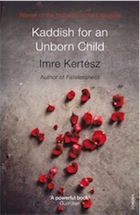
Book Review: Kaddish for an Unborn Child by Imre Kertész

http://www.goodreads.com/book/show/11060037-kaddish-for-an-unborn-childOn my literary tour of Europe I visit Hungary today and it almost goes without saying that I continue with a book connected to war and death. Hungary entered World War II in 1941 siding with Nazi Germany, but only in March 1944 German troops occupied the country and began with the deportation of the Jewish population to concentration camps. In February 1945 Red Army forces liberated Hungary as can be read in Sándor Márai’s masterly novel Szabadulás (meaning “liberation”) set during the siege of Budapest which lamentably doesn’t seem to have been translated into English. The country remained under Soviet supremacy (and control) until 1989. All those hardships naturally influenced the further lives of people, among them the Nobel Prize laureate in literature 2002 Imre Kertész who made his balance in Kaddish for an Unborn Child.

Imre Kertész was born in Budapest, Hungary, in November 1929. For being of Jewish descent he was arrested and deported to Auschwitz at the age of fourteen and later moved on to Buchenwald. After his liberation from the concentration camp in 1945 he returned to Hungary, finished school and then worked for a newspaper, as an industrial worker and a ministerial officer until his obligatory two-year military service. From 1953 on Imre Kertész earned his living as an independent writer and translator of German-language authors and philosophers. The author’s first and probably most famous novel published in 1975 is Fatelessness (Sorstalanság; also translated as Fateless) which together with Fiasco (A kudarc: 1988), Kaddish for an Unborn Child (Kaddis a meg nem született gyermekért: 1990; also translated as Kaddish for a Child Not Born), and Liquidation (Felszámolás: 2003) forms kind of a tetralogy with strong autobiographical echoes like all his fiction and essays. In 2002 Imre Kertész was awarded the Nobel Prize in Literature. Since 2001 the author lives mainly in Berlin, Germany.

The Kaddish is the Jewish prayer for the dead. The narrating protagonist writes his Kaddish for an Unborn Child or to be precise for a son or daughter who could have been, but never even was conceived because he always refused to bring children into a world in which the holocaust had been possible. At the beginning stands the innocent question of a philosopher making conversation during a walk through the park of a rest-home in the Hungarian highlands. He wants to know whether the ageing narrator has children. His answer is an as immediate and vehement “No!” as when his then wife, now (remarried) ex-wife, told him that she wanted a child. What follows is a bitter look back at his failed marriage, at his career as a writer compelled to do translations for a living, at his ordeal in the concentration camps, at his relations with the autocratic father and his time in a boarding school, thus at his entire existence. He also meditates on what relevance his Jewish heritage has in all this, especially for him who has no faith. He knows that in reality he has died long ago together with millions of others. Like many holocaust survivors he feels that he has no right to exist and that his purpose is to complete the task which the Nazi bloodhounds began in the concentration camps. So he is constantly “digging his grave in the air”. As a natural consequence he is unable to commit to anyone or anything with his entire self, be it his wife, his career, his dwelling – or a child.

Kaddish for an Unborn Child is a thin book offering dense content with many philosophical insights. It’s a first-person narrative addressed to the child whom the narrator never fathered and in a way it reminded me of a long letter. In fact, a thoughtful monologue interrupted only by some remembered dialogues fills the pages from beginning to end. In addition Imre Kertész didn’t structure his novel in any usual way. There are no chapters and only few paragraphs. Sentences are long and meandering. Form and style are entirely subordinated to the natural flow of the stream of consciousness which also forces a line break whenever the narrator hurls another firm “No!” at his wife and at the world. Also the inner order of the story isn’t chronological, but it works like our mind picking up ideas and thoughts on the spur of the moment. So in a certain way it’s a difficult read requiring sometimes to leaf back and to re-read passages to understand properly.

If you’re looking for a cheerful and entertaining read Kaddish for an Unborn Child by Imre Kertész definitely is the wrong choice. If you enjoy intelligent as well as intense writings and don’t mind a dark mood, it’s the perfect read. Highly recommended to everyone who wishes to understand the minds of holocaust survivors and their children.

Monday, 18 November 2013

Poetry Revisited: Temps Perdu

(1931)

I never may turn the loop of a road 
Where sudden, ahead, the sea is Iying, 
But my heart drags down with an ancient load- 
My heart, that a second before was flying. 

I never behold the quivering rain- 
And sweeter the rain than a lover to me- 
But my heart is wild in my breast with pain; 
My heart, that was tapping contentedly. 

There's never a rose spreads new at my door 
Nor a strange bird crosses the moon at night 
But I know I have known its beauty before, 
And a terrible sorrow along with the sight. 

The look of a laurel tree birthed for May 
Or a sycamore bared for a new November 
Is as old and as sad as my furtherest day- 
What is it, what is it, I almost remember?

                                            Dorothy Parker
                                             (1893 - 1967)

Friday, 15 November 2013

Book Review: Memento Mori by Muriel Spark

http://www.goodreads.com/book/show/7102005-memento-moriNovember is a month of commemoration: All Saints’ Day, All Souls’ Day, “Kristallnacht” Memorial Day, Armistice Day, Veterans’ Day, Remembrance Day. At least in my Central European corner death and war are a quasi-omnipresent theme at this time of year. As you may have noticed by now, I joined into the contemplative, even melancholy mood. I gladly do this because I believe that in our modern and fast-paced era we tend to forget that life is finite by nature and that our history is paved with senseless slaughtering. Today, however, I decided to give you a bit of a break and to approach death from a humorous side. I think that Memento Mori by Muriel Spark is just the right choice. 

Dame Muriel Spark was born as Muriel Sarah Camberg in Edinburgh, Scotland/U.K., in February 1918. Until after World War II she led the life of an English teacher, secretary, intelligence officer, wife and mother. Then she dedicated herself to a literary career starting as a poet, critic and editor at first. Encouraged by her conversion to Roman Catholicism as well as by the fellow authors Graham Greene and Evelyn Waugh, she ventured at her debut novel, The Comforters, which was published in 1957. Over the following five decades the writer produced a great number of successful novels along with short stories. Her most famous works are Memento Mori (1959), The Prime of Miss Jean Brodie (1961), The Girls of Slender Means (1962), The Mandelbaum Gate (1965), The Public Image (1968), The Driver’s Seat (1970), Loitering with Intent (1981), A Far Cry from Kensington (1988), and The Finishing School (2004). After an interim of several years in New York, USA, the author settled in Italy in the late 1960s. Dame Muriel Spark died in Florence, Italy, in April 2006.

The plot of Memento Mori revolves around a circle of Londoners in their seventies and eighties who have known each other for ages, most of them well-to-do and suffering to different degrees from the common afflictions of advanced age. One after another receives anonymous telephone calls which account for the novel’s unusual title. The Latin phrase “memento mori” is generally translated as “remember you must die”, the sentence which the mysterious strangers pass on to their elderly targets. Each one of the protagonists reacts differently to those calls. Dame Lettie Colston understands them as an immediate threat for her life and during the course of the novel the charity lady with a cold heart becomes increasingly paranoid. For her brother Godfrey the calls are little more than a good reason to grumble and make accusations, while his wife Charmian, a once famous novelist seeing a revival of her work, takes them easy. On one occasion she answers the anonymous caller:
“… for the past thirty years and more I have thought of it from time to time. My memory is failing in certain respects. I am gone eighty-six. But somehow I do not forget my death, whenever that will be.” 
Charmian Colston’s former servant and companion Jean Tayler lives in the geriatric ward of a hospital among other “grannies” more or less confined to bed and begins to meditate on death when she hears about the calls. Alec Warner, her friend and almost fiancé of old times, on the other hand, observes the reactions of his peers with the precision of a scientist and records his findings. Others like Mrs. Pettigrew, who has been engaged to take care of Charmian Colston and who blackmails Godfrey, choose to simply ignore the calls. The retired police Inspector Henry Mortimer wonders whether it might not be Death himself calling, since he can’t make out the offender any more than his former colleagues. In fact, the callers are described differently by their victims as regards presumed age, social background, and even gender.

In Memento Mori Muriel Spark displays the whole range of human reactions to the fact of impending death from sheer terror over stubborn denial to patient expectation. Of course, the characters are exaggerated into types and yet as a reader I never got the impression that they were completely unrealistic. Quite on the contrary their idiosyncrasies adopted during a long life and two wars make them appear very human and give room for quite a number of funny turns despite the serious topic. Thanks to Muriel Spark’s economical language and simple style the novel is a pleasure to read. I didn’t even mind that the narrator ever again comments actions and thoughts as a nineteenth-century writer would have done.

Altogether Memento Mori by Muriel Spark is an exhilarating and amusing read with a critical undertone regarding our ways to deal with (or rather to push away) death and old age. My verdict: highly recommended!

Monday, 11 November 2013

Poetry Against War II: Old War-Dreams

(1865-66)

In midnight sleep of many a face of anguish,
Of the look at first of the mortally wounded, (of that indescribable look,)
Of the dead on their backs with arms extended wide,
          I dream, I dream, I dream.

Of scenes of Nature, fields and mountains,
Of skies so beauteous after a storm, and at night the moon so unearthly bright,
Shining sweetly, shining down, where we dig the trenches and gather the heaps,
          I dream, I dream, I dream.

Long have they pass’d, faces and trenches and fields,
Where through the carnage I moved with a callous composure, or away from the fallen,
Onward I sped at the time – but now of their forms at night,
          I dream, I dream, I dream.

                                                                                                            Walt Whitman
                                                                                                             (1819-1892)