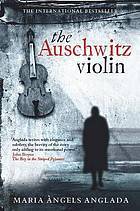
 As regards books, I’m starting into the year 2018 on a rather sad note. This is because I dedicate this whole month to the horrors of the holocaust and World War II in Eastern Europe as they come to life through the very different stories of four survivors, ones real, others more or less fictionalised, if not fictitious. Three of the four books on my blogging schedule of January have protagonists who devoted their lives to music. The novel that I picked for my first review of the year evokes the literally life-saving craftsmanship of a young Jewish violin maker in a small subcamp of Auschwitz. When the camp commander finds out that Daniel is a luthier, he orders him to make The Auschwitz Violin following a bet with the sadistic camp doctor. Not knowing that his life is even more at stake than usual, Daniel plunges into the work he loves.
Showing posts with label Catalan literature. Show all posts
Showing posts with label Catalan literature. Show all posts
Friday, 5 January 2018
Book Review: The Auschwitz Violin by Maria Àngels Anglada
As regards books, I’m starting into the year 2018 on a rather sad note. This is because I dedicate this whole month to the horrors of the holocaust and World War II in Eastern Europe as they come to life through the very different stories of four survivors, ones real, others more or less fictionalised, if not fictitious. Three of the four books on my blogging schedule of January have protagonists who devoted their lives to music. The novel that I picked for my first review of the year evokes the literally life-saving craftsmanship of a young Jewish violin maker in a small subcamp of Auschwitz. When the camp commander finds out that Daniel is a luthier, he orders him to make The Auschwitz Violin following a bet with the sadistic camp doctor. Not knowing that his life is even more at stake than usual, Daniel plunges into the work he loves.Wednesday, 12 July 2017
Lagraziana's Kalliopeion: Death in Spring by Mercè Rodoreda
 A Suffocating Village:
Death in Spring by Mercè Rodoreda
Less than a year ago I reviewed a novel by Catalan author Mercè Rodoreda (1908-1983) who is much celebrated in her country but virtually unknown elsewhere. I was so impressed by the book that I felt like reading also others of her works and from the two novels published posthumously, both of them unfinished, I eventually picked the one available in English translation, namely Death in Spring or in the original Catalan La mort i la primavera, i.e. Death and Spring. At first the title seems a bit strange, if not contradictory because it links death with nature’s rebirth after winter, but given that the novel flows over with powerful as well as poetical symbols and metaphors of life and death it’s quite appropriate. It’s a complex and well-constructed story about society that reminds me a lot of the works of Franz Kafka although it’s different in style.
Read more » (external link to Lagraziana's Kalliopeion)
related reviews on Edith's Miscellany:
»»» In Diamond Square by Mercè Rodoreda
Friday, 2 September 2016
Book Review: In Diamond Square by Mercè Rodoreda
 2016 review of a book written
by an author whose family name starts with the letter
A B C D E F G H I J K L M N O P Q R S T U V W X Y Z
The first half of the twentieth century saw many changes, notably with regard to society. By the end of the Great War of 1914-18 courageous women – disapprovingly called “suffragettes” – had claimed already for some decades not yet equality with men but at least more rights. The great majority of women, however, kept following quite naturally the traditional female role model that tied them to a man, be it a husband, father, brother or other male relative, and confined them to what we call the three K’s in German, namely “children” (Kinder), “kitchen” (Küche) and “church” (Kirche). Young Natalia, the protagonist of the much acclaimed Catalan novel In Diamond Square by Mercè Rodoreda, is one of them. She lives in Barcelona of the 1930s and becomes the docile wife of the Joe who does whatever he likes without considering Natalia or their children, even when it’s the question of risking his life in the Spanish Civil war.
Subscribe to:
Posts (Atom)