 Just a hundred years ago the status of a girl largely depended on her chances for marriage. If she hadn’t found a husband by her mid-twenties people around would start looking at her askance, especially when there was nothing in her looks, behaviour or family background to put off courters. Only few women dared to actively defy society’s expectations, least of all the teenage ones who didn’t really know life yet. It was universally acknowledged that a girl who received a marriage proposal from a suitable match should be overjoyed and so is the letter-writing protagonist of the 1907 epistolary novel Fräulein Schmidt and Mr. Anstruther by Elizabeth von Arnim. Twenty-five years old and a poor scholar’s daughter, she was convinced to end her life as old maid, but all of a sudden she finds herself secretly engaged to an Englishman much above her. The initial happiness doesn’t last, though…
Showing posts with label English literature. Show all posts
Showing posts with label English literature. Show all posts
Friday, 6 December 2019
Book Review: Fräulein Schmidt and Mr. Anstruther by Elizabeth von Arnim
Just a hundred years ago the status of a girl largely depended on her chances for marriage. If she hadn’t found a husband by her mid-twenties people around would start looking at her askance, especially when there was nothing in her looks, behaviour or family background to put off courters. Only few women dared to actively defy society’s expectations, least of all the teenage ones who didn’t really know life yet. It was universally acknowledged that a girl who received a marriage proposal from a suitable match should be overjoyed and so is the letter-writing protagonist of the 1907 epistolary novel Fräulein Schmidt and Mr. Anstruther by Elizabeth von Arnim. Twenty-five years old and a poor scholar’s daughter, she was convinced to end her life as old maid, but all of a sudden she finds herself secretly engaged to an Englishman much above her. The initial happiness doesn’t last, though…Friday, 4 October 2019
Book Review: Meet Me at the Museum by Anne Youngson

Friday, 14 September 2018
Book Review: The Unicorn by Iris Murdoch
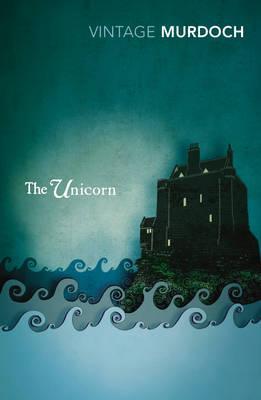 Fairy-tales, legends and myths have always been key sources of inspiration for writers. Among the most striking examples of this doubtlessly count the plays credited to William Shakespeare, but there must be countless others who during their careers borrowed more or less generously and palpably to varying degrees from them. In the 1960s, it seems to have been fashionable to write novels with titles referring to a mythological creature that symbolises the protagonist. The Unicorn by Iris Murdoch is one of these. At its centre is a young woman resigned to living like a prisoner on her estate in a remote part of Ireland. Her almost complete passivity pains the newly arrived governess (or rather lady companion) who finds out about the tragic events that made her husband shut her up and who is determined to give her amiable mistress back freedom as well as the joys of real life.
Friday, 29 June 2018
Book Review: The Kappillan of Malta by Nicholas Monsarrat
 However pleasant island life can be, it can also have serious disadvantages when it comes to assuring supply with all those things that nature can’t offer at all or not in sufficient quantities. In war times, for instance, the watery enclosure can turn into an almost unsolvable, even life-threatening problem, notably when the island is located in a strategically important place and becomes target of military action. In history, the latter has been more than once the fate of the small island of Malta in the middle of the Mediterranean Sea between Sicily and North Africa as shows the historical novel The Kappillan of Malta by Nicholas Monsarrat. During World War II Father Salvatore takes it upon him to look after the bombed-out sheltering in catacombs and to improve their morale speaking to them about the many challenges that their forefathers faced and survived in more than two millennia.
Friday, 25 May 2018
Book Review: The World My Wilderness by Rose Macaulay
 A change of scenery is a good idea sometimes, but it has hardly the power to do wonders, at least not promptly. The world that each one of us lives in is more than the environment that we perceive with our senses. Memories and experiences give everything a unique tint no matter where we are or go, i.e. we can’t run away from them – nor from ourselves. The novel The World My Wilderness by Rose Macaulay is about Barbary, a tomboy whom her mother sends away from Provence to live with her father in London and to drop her savage habits adopted in the French Resistance. Emotionally scarred by the experience of occupation and war as well as by the separation from her mother, she feels completely out of place in her father’s new family and roams the ruins left by air raids seeking the company of outcasts like herself.
 Friday, 13 April 2018
Book Review: The Road to Gandolfo by Robert Ludlum
 There are many reasons why Italy is a country of longing for so many people worldwide. The mild climate allures winter-weary Northerners craving for the sun, the remains of ancient Roman civilisation stir the nostalgia of history as well as classics enthusiasts, priceless works of art from more than two millennia mesmerise art lovers and the Pope as living idol of millions of faithful Roman Catholics brings streams of pilgrims to Rome. In the 1975 satirical novel The Road to Gandolfo by Robert Ludlum highly decorated US army veteran Lieutenant General MacKenzie Hawkins makes out a fictitious Pope Francesco I as his ticket to retirement without financial worries. He blackmails army lawyer Sam Deveraux into helping him to put his audacious plan into practice with hush money squeezed out of four international crooks and with the willing support of his ex-wives. But the Pope doesn’t react as expected.
Friday, 22 December 2017
Book Review: Star Over Bethlehem by Agatha Christie Mallowan

Christmas is a time of many stories and not least thanks to the Holy Bible, but it seems to be part of the season’s magic to inspire writers to ever new ones. Sometimes the creative process is guided by strong religious belief or by the desire to capture the special mood that the Christian feast just after Midwinter spreads. Other reasons to write a Christmas book may be a lot more prosaic, not to say lamentably materialistic, and little wonder that more often than not the stories are worldly through and through. The all-time bestselling “Queen of Crime” too penned a few Christmassy works and some of them are quite out of her usual line. Star Over Bethlehem by Agatha Christie Mallowan is a little-known collection of poems and holiday stories about characters from the Bible (including a donkey), the fourteen auxiliary saints and ordinary English people instead of detectives and killers.
Sunday, 10 December 2017
Bookish Déjà-Vu: An Artist of the Floating World by Kazuo Ishiguro

On the occasion of the Nobel Prize Award Ceremonies held today in Stockholm (and Oslo for the Peace Prize), I'm reblogging my review of the picturesque novel An Artist of the Floating World by Kazuo Ishiguro. I originally posted it in July, i.e. less than three months before the British author born in Japan to Japanese parents was officially announced this year's recipient of the Nobel Prize in Literature. It's the first time not that I read a book penned by a writer whom the Swedish Academy would later honour with this prestigious and remunerative prize, but that I reviewed such a one here on Edith's Miscellany.
»»» click here to read my review
Friday, 20 October 2017
Book Review: Darkness Visible by William Golding
 Fairy tales like The Beauty and the Beast should have prepared us for the fact that in life appearance often deceives. And yet, we all tend to neglect this ancient wisdom judging the world and especially people by what we see or otherwise perceive instead of taking a good look under the surface. Thus we can be deeply shocked at recognising that something beautiful is fundamentally evil and stunned at finding good in the ugly. Unfortunately, it isn’t always so easy to distinguish the one from the other because there are many shades between the light of Heaven and the dark of Hell. The hell of Darkness Visible by William Golding is a very human one. Starting in the inferno of World War II the novel tells the story of disfigured Matty with a mystical vocation in life and the beautiful twins Sophy and Toni who turn to crime or terrorism respectively.
Wednesday, 13 September 2017
New on Lagraziana's Kalliopeion: The Adventure of the Black Lady by Aphra Behn
A Young Woman’s Flight:
The Adventure of the Black Lady by Aphra Behn
 The English prose novel as we know it today is an amazingly recent invention. Its rise began only in the seventeenth century thanks to writers like Daniel Defoe (c.1660-1731), Jonathan Swift (1667-1745)… and Aphra Behn (1640-1689) whose work was rediscovered only in the early twentieth century (»»» read my author’s portrait). Although in her time Aphra Behn was first of all a renowned playwright, she also wrote several novels in her later years. By modern standards, however, these novels are hardly more than novelettes or even short stories. One of these little known prose works from the pen of the first Englishwoman who was able make her living as a writer is The Adventure of the Black Lady first published in 1684. It’s the story of a young woman called Bellamora who has come from Hampshire to Covent Garden in the hope to find refuge and help with a cousin of hers.
Read more » (external link to Lagraziana's Kalliopeion)
* * * * *
This review is a contribution to
(images linked to my reading lists):
(images linked to my reading lists):

Friday, 28 July 2017
Book Review: An Artist of the Floating World by Kazuo Ishiguro
Very popular subjects of the famous Japanese colour woodblock prints from the seventeenth century on are scenes from ephemeral life in the pleasure districts which accounts for their being called ukiyo-e (浮世絵), i.e. “pictures of the floating world”. But life is in constant flow elsewhere too: πάντα ῥεῖ. In turbulent times, the flow even seems to accelerate and turn into a maelstrom that threatens to crush whatever or whoever gets caught in the strong current. In 1948, once famous painter Masuji Ono from An Artist of the Floating World by Japanese-English writer Kazuo Ishiguro finds himself stranded in a world where his art work has become an unwanted reminder of totalitarian ideals that led the Japanese Empire into disaster and where his daughter is no suitable match for any decent man because of his shameful part in the terror before and during the war. As he looks back, time passes, wounds heal and bitterness fades.Friday, 23 June 2017
Book Review: A Love Letter From a Stray Moon by Jay Griffiths
 Human soul is amazing. Ever again it happens that instead of being crushed by a terrible experience a person draws great force from it and even succeeds in transcending it into a powerful incentive to stop just dreaming the impossible dream and to actually reach for the stars at last. Often only the closest family gets a chance to witness such personal growth born from suffering because seen from outside nothing has changed, but sometimes it’s the birth of a completely altered person who decides to make a fresh start into a new direction. It was a horrible bus accident at the age of eighteen that upset Frida Kahlo’s life and made her turn her attention to painting as a way of expressing herself. In A Love Letter from a Stray Moon by Jay Griffiths the celebrated Mexican painter writes a poetical review of her turbulent and painful life from beyond her grave.
Friday, 26 May 2017
Book Review: No Silver Spoon by Katie Flynn
 Much in life comes as a surprise, be it an agreeable or an unpleasant one. Biographies without more or less significant swerves, detours or even sharp turns are rare although we tend to believe that the rich and successful have to overcome less obstacles and can head straight towards their goals. And yet, the way we cope with the vicissitudes of life is just as important as the right focus. As children neither the Irish girl Dympna nor the Liverpudlian boy Jimmy in No Silver Spoon by Katie Flynn could expect to go into the direction that events made them choose, but they both accept the challenge and are determined to make the best of whatever may come. Their paths have crossed and separated already twice before love finally joins them and fate tears them apart again in Liverpool of the 1930s. But what is meant to be, will be.
Friday, 5 May 2017
Book Review: A Bend in the River by V. S. Naipaul
 Freedom, independence and self-determination are values that we hold high in esteem in our modern western-style democracies, but to gain as well as to keep them often had and sometimes still has a high price. In the name of freedom many wars have been fought and many people have been killed everywhere on this planet, notably in Africa. Unfortunately, to throw out foreign rulers and chase away home-bred tyrants has seldom been enough because what followed far too often was a ferocious and violent struggle for power between opposing political or/and social groups. In the novel A Bend in the River by V. S. Naipaul, the recipient of the Nobel Prize in Literature 2001, a young Indian-Muslim shopkeeper who came from the East Coast to an unspecified country at the heart of Africa to make his fortune gives testimony of the chaos after independence that made possible the rise of the “Big Man”.
Friday, 24 February 2017
Book Review: A Meeting by the River by Christopher Isherwood
 It isn’t always easy to understand and even less to wholeheartedly accept and support the choices of others. Of course, we all want family, friends, everybody in the whole world to be happy and contented, but our definition of what is good and right is largely determined by personal as well as society’s standards. It’s true that in our modern western world social conventions are no longer as narrow as they used to be, and yet, there are still limits that we sometimes protect fiercely as if the future of men depended on it. In Christopher Isherwood’s novel from 1967 titled A Meeting by the River, the Englishman Patrick visits his younger brother Oliver in a monastery near Calcutta to dissuade him from becoming a Hindu monk because he thinks that it’s only a whim and ends up confessing a side of himself to which he doesn’t dare to stand publicly.
Wednesday, 11 January 2017
New on Lagraziana's Kalliopeion: The Professor by Charlotte Brontë
 To read the first work of a much adored writer can be either a revelation or more likely a deception, sometimes even a big one because not many succeed in producing outstanding literature already in the very first try. Writing like any other occupation needs practice. And experience of life usually isn’t a disadvantage, either. Quite a lot of the great men and women of literature that we know today saw their first novels (poems, short stories,…) rejected by publishers, often by more than just one, as show their biographies. In the Victorian age this wasn’t any different from today. Charlotte Brontë, for instance, never saw her first novel in print. The Professor was first published under her pen name Currer Bell in 1857, i.e. only two years after her premature death, and to this date it’s less widely read than her masterpieces Jane Eyre and Villette or even Shirley.
Read more » (external link to Lagraziana's Kalliopeion)
Thursday, 15 December 2016
Book Review: Flaubert's Parrot by Julian Barnes

by an author whose family name starts with the letter
A B C D E F G H I J K L M N O P Q R S T U V W X Y Z
Most avid readers like me will know the experience. You get engrossed in a book and as you advance page by page you become ever more impressed by the power, the wisdom and the beauty of the words. And it’s only natural to long for more of it, isn’t it? Sometimes it can be sobering to read another work from the pen of the same author who caught our attention and touched us in such a way. If we’re lucky, though, further reads confirm the first impression and we become fans not just of the writings but of the woman or man who put them to paper. The narrator of Flaubert's Parrot by Julian Barnes greatly admires the work of the nineteenth-century French writer Gustave Flaubert. During another visit to Rouen on the traces of his literary idol he becomes obsessed with finding the stuffed parrot that Flaubert had on his desk for a while in 1876.
Friday, 18 November 2016
Book Review: The Woman Who Walked Into Doors by Roddy Doyle
 2016 review of a book written
by an author whose family name starts with the letter
A B C D E F G H I J K L M N O P Q R S T U V W X Y Z
Domestic abuse is a sad reality and even in modern western society it’s probably much commoner than we are ready to believe. Today it may be less of a taboo to talk about it than it used to be in former times, but still many victims keep suffering in their own homes without losing a word about their ordeal even to closest friends or family. For someone who has never been in the situation it’s really hard to understand why anyone would put up with being verbally or physically attacked on a regular basis, maybe even daily and sometimes so violently that being killed is an actual possibility. Quite obviously, it’s a very complex matter psychologically. The Irish novel The Woman Who Walked Into Doors by Roddy Doyle shows the mixed feelings that Paula Spencer has about her husband who early on in their marriage began to beat her up ferociously and who drove her into alcoholism.
Friday, 7 October 2016
Book Review: The Dark Flower by John Galsworthy
 2016 review of a book written
by an author whose family name starts with the letter
A B C D E F G H I J K L M N O P Q R S T U V W X Y Z
Just like the body ages and changes with time, emotions don’t stay the same during a whole life. Therefore the experience of love can be very different depending on how old we are when it comes over us, be it like a coup de foudre or only gradually. However much we like the idea of eternal love, we have come to distinguish between three, four or even more seasons of love with good reason. The protagonist of The Dark Flower by John Galsworthy, the Nobel Prize laureate in literature of 1932, is a sculptor and unlike the average Englishman of his time who has learnt to appear calm and poised under all circumstances, he is full of emotions that he finds difficult to control and hide. Three times in the course of nearly thirty years he is swept away by passionate love to women who are forbidden to him because of the bonds of their or his own marriage
Friday, 26 August 2016
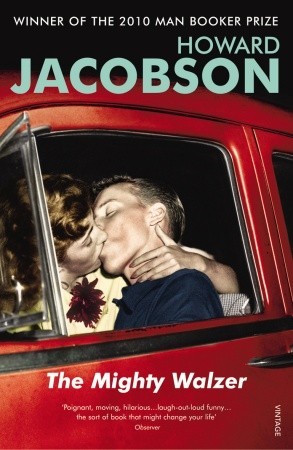
Book Review: The Mighty Walzer by Howard Jacobson
 2016 review of a book written
by an author whose family name starts with the letter
A B C D E F G H I J K L M N O P Q R S T U V W X Y Z
We all know – if not from own experience, then from what we see, hear and read every day – that the years of adolescence are an enormously formative period of life. Moreover, they can be a terribly confusing and difficult time for the youths. They are even harder for a boy who grows up surrounded mostly by women, moreover Jewish ones in 1950s England, and who happens to be so shy that he is blushing virtually for no reason and that he prefers to hide on the toilet for hours on end. As a woman in my mid-forties I can relate only to some of it, but this is the life that the scarcely teenage protagonist of the award-winning comic novel The Mighty Walzer by Howard Jacobson has until an unexpected talent for table tennis opens a whole new world to him and eventually even allows him to study in Cambridge.
Subscribe to:
Posts (Atom)