Sunday, 30 June 2013

Month of Roses


The perfume of roses drifts through the air,
Invites passers-by to stop and rest.
People on benches devour the sun,
The roses around shine in bright colours.

It's the month of June!
Well... just for a few more hours.

© LaGraziana 2013 

Friday, 28 June 2013

Book Review: Night Train to Lisbon by Pascal Mercier

http://www.goodreads.com/book/show/2562865.Night_Train_to_LisbonLife is like a journey on a train. Sometimes it feels as if it were standing still although in reality we are advancing at the usual pace without noticing it because the landscape by the wayside is so uniform or dark. Sometimes we seem to be rushing through such an incredibly varying scenery that we get dizzy looking out of the window of our compartment. The big question is: do we prefer travelling through unspectacular and secure spheres or are we ready for some adventure and nausea? The novel Night Train to Lisbon by Pascal Mercier that I picked for today’s review deals with such choices and what makes us take them.

Pascal Mercier is the pen name of the Swiss writer and philosopher Peter Bieri who was born in Berne, Switzerland, in June 1944. After his studies of philosophy he pursued a scientific career becoming a full professor of philosophy at the Free University of Berlin in 1993. His debut novel Perlmann’s Silence (Perlmanns Schweigen) came out in 1995 and was followed by Der Klavierstimmer (The Piano Tuner, still untranslated into English) in 1998. Night Train to Lisbon (Nachtzug nach Lissabon) was released in 2004 and soon became an international best-seller. Pascal Mercier’s latest published fiction work is Lea (still untranslated into English) from 2007.

The protagonist of Night Train to Lisbon is 57-year-old Raimund Gregorius who has been teaching ancient Greek, Latin and biblical Hebrew in a grammar school in his birth town Berne for decades. He is a creature of habit and a model of reliability paired with precision avoiding the imponderables of life best possible. He doesn’t enjoy travelling out of fear to get lost or to lose his already very poor eyesight and delights in ancient languages for their invariability which gives him security. Everything changes on a rainy morning when Raimund Gregorius encounters a woman about to jump from the bridge that he crosses every day on his way to school. To his question about her native language, she answers only one word: ‘português’. In his ears it sounds like music that adds to the mystery surrounding the deadly pale stranger. 

The daily routine is broken and in class Gregorius’ mind wanders off to questions about the rich future lying ahead of his students. In the middle of his lesson he leaves school without a word knowing inside that he won’t return. He strolls through the city of Berne and ends in the Spanish bookshop where a humble grey book printed in Lisbon in 1975 attracts him: UM OURIVES DAS PALAVRAS – A GOLDSMITH OF WORDS. The owner of the shop translates the first passages for him and he is hooked. Its Portuguese author Amadeu Inácio de Almeida Prado expressed his thoughts in a way that makes Gregorius feel as if the words were directed at him alone: 
‘Given that we can live only a small part of what there is in us – what happens with the rest?’ 
The book and its author intrigue Gregorius. It doesn’t suffice him to translate the text with the help of his sound knowledge of Latin and a Portuguese self-study course for beginners. After only one night immerged into the thoughts of Amadeu Inácio de Almeida Prado he knows that he must find out more about the man and his life. He needs to go to Portugal, but for a moment he hesitates because it means giving up his settled and secure existence. Then his mind is set and he takes the night train to Lisbon not knowing what he will find, nor what he is really looking for. In Lisbon he plunges into the history of Amadeu Inácio de Almeida Prado and that of Portugal during the dictatorship of António de Oliveira Salazar. He investigates the life of the mysterious medical doctor from a noble family, traces and meets people who knew him, sees places where he was at some point, and learns about events that made him the person who eventually brought to paper a goldsmith’s words. Putting together all those pieces of the puzzle, he reveals an ever completer picture of Amadeu Inácio de Almeida Prado. At the same time Gregorius analyses and questions his own life as a school teacher without ambitions and as a divorced man without passion. 

Pascal Mercier’s Night Train to Lisbon is no light read. It’s a philosophical novel about the search for identity, for the outer events of a life and seized as well as missed opportunities moulding a personality. In addition the text is interspersed with Portuguese phrases that Gregorius translates with ever more ease as his studies of the language advance. The story is absorbing like a thriller with the difference that on the way through the book we aren’t hunting for a dangerous killer, but for the life story of a person never catching more than just a small glimpse of it at a time. 

Some may find Night Train to Lisbon too meditative and/or too intricate a novel, but for me it was a real treat. It’s definitely among the best books that I ever read in my life. I enjoyed it very much and recommend it more than warmly to everyone with a philosophical vein.

Wednesday, 26 June 2013

Murder on the Orient Express

These days I’m no big fan of crime fiction although the books of Agatha Christie were my gate to the world of original English versions. Later on I lost my taste for murder, kidnappings and the like. They use to remind me too much of criminal law which I thoroughly disliked throughout my law studies. However, every once in a while I still take pleasure in watching a murder mystery, preferably an old one. Today I’m in the mood for writing about one of those legendary films: Murder on the Orient Express based on the crime novel of the same title by Agatha Christie. 

The film Murder on the Orient Express directed by Sydney Lumet came out late in 1974, forty years after the book had been released and little more than a year before Dame Agatha Christie died at Winterbrook House, U.K., aged 85. As it seems, it was one of few screen adaptations of her stories that she sort of appreciated although she is reported to have complained about Hercule Poirot’s moustache that wasn’t as fine as she had described it. The film was a big success. It was nominated for several Oscars, but only Ingrid Bergman was awarded one as Best Supporting Actress. 

The story of Murder on the Orient Express is set in the 1930s, when travellers still took the prestigious train to get from Istanbul to Western Europe although plane flights already began to be quite popular at the time. The film starts with a flashback on past events: the kidnapping and murder of a baby that Agatha Christie clearly modelled after the Charles Lindbergh case in the USA filling the newspapers from 1932 on. Then the real plot sets off. At Istanbul main station travellers board the Orient Express, among them Hercule Poirot (played by Albert Finney). When Poirot talks to his friend Bianchi (played by Martin Balsam), who is a director of the company operating the train line, he learns that all first-class sleeping-berths are booked out although winter uses to be the slow season. Later Poirot is addressed by Mr. Ratchet (played by Richard Widmark), a wealthy businessman from the USA, because he received death threats and would like the famous Belgian detective to find the culpable. The case doesn’t tempt him at all and he refuses. During the following night a cry rouses Hercule Poirot from sleep. He hears muffled voices and steps in the corridor, but when he gets up to have a look everything is quiet. Only in the morning he learns that Mr. Ratchet has been killed in his sleep. As luck would have it, during the night the train was snowbound somewhere on the Balkans in the middle of nowhere and Bianchi asks Hercule Poirot to help him solve the crime. 

Dr. Constantine (played by George Coulouris), a Greek medical doctor and acquaintance of Bianchi, examines the corpse and confirms what Hercule Poirot expected, namely that Mr. Ratchet was stabbed several times. He counts twelve wounds, some of them slight, others mortal. The circle of suspects can quickly be reduced to the travellers on the first-class coach and the French conductor, Pierre-Paul Michel (played by Jean-Pierre Cassel), who helps in the investigation. Hercule Poirot begins a series of interrogations and cross-examinations of the travellers. There are the victim’s employees, the secretary and translator Hector McQueen (played by Anthony Perkins) and the English valet Edward Henry Beddoes (played by Sir John Gielgud). The other travellers are the widowed American socialite Harriet Belinda Hubbard (played by Lauren Becall), the Swedish missionary Greta Ohlsson (played by Ingrid Bergman), the Hungarian diplomat Count Rudolf Andrenyi (played by Michael York) and his wife Elena (played by Jacqueline Bisset), the elderly Russian Princess Natalia Dragomiroff (played by Wendy Hiller) and her Germen personal maid Hildegard Schmidt (played by Rachel Roberts), Colonel Aruthnott (played by Sean Connery) from the British Indian Army, the English teacher Mary Debenham (played by Vanessa Redgrave), the Italian American car salesman Antonio Foscarelli (played by Denis Quilley), and the talent agent Cyros B. Hardman (played by Colin Blakely). None of them seems to have had any connection with the victim, not to mention a motive for murder, but Hercule Poirot looks beneath the surface and draws the right as well as startling conclusions. 

I won’t disclose anything else because I don’t want to spoil the pleasure of those who don’t know Murder on the Orient Express, yet. Whenever I watch this film, I enjoy it – and not just because the cast list looks like the 1970s' Who's Who of cinema.

 For those who prefer reading:

Tuesday, 25 June 2013

European Reading Challenge 2013


ROSE CITY READER (aka Gilion Dumas) is hosting a reading challenge. I reached the Five Star (Deluxe Entourage) level of participation already long before entering the challenge. Admittedly, I don't aim at winning the Jet Setter Prize because I loathe being pushed by competition, but I definitely want to read more diverse European literature. I adore the idea of making a literary tour of Europe. It's unlikely that I'll be able to read something from every single one of the fifty countries listed (some are really tricky), I'll try my best, though.

By the way, if you like, you can still join in. Just click above on the image, the headline or the link to Gilion's blog!

Here's the list of my reads set in the respective country – including the links to reviews which I wrote about some of the books:

Albania

Andorra

Armenia

Austria
Young Gerber by Friedrich Torberg
Chess by Stefan Zweig
Engel des Vergessens by Maja Haderlap (no English edition found)
Azerbaijan

Belarus

Belgium
The Professor by Charlotte Brontë
Bosnia & Herzegovina

Bulgaria

Croatia

Cyprus

Czech Republic

Denmark

Estonia

Finland


France
Bel Ami by Guy de Maupassant
Thérèse Raquin by Émile Zola
Georgia

Germany
Greece

Hungary

Iceland
Hypothermia by Arnaldur Indriðason
Der gute Liebhaber by Steinunn Sigurðardóttir (original Icelandic title: Góði Elskhuginn; no English edition found)
Ireland

Italy

Kazakhstan
The Zahir by Paulo Coelho
Latvia

Liechtenstein

Lithuania

Luxembourg

Malta

Moldova

Monaco

Montenegro

Netherlands

Norway

Poland

Portugal
Republic of Macedonia

Romania
Russia
San Marino

Serbia

Slovakia
Slovenia
Veronika Decides to Die by Paulo Coelho
Spain
City of Marvels by Eduardo Mendoza


Sweden

Switzerland

Turkey

Ukraine

United Kingdom   
The Art of Leaving by Anna Stothard
Vatican City


Sunday, 23 June 2013

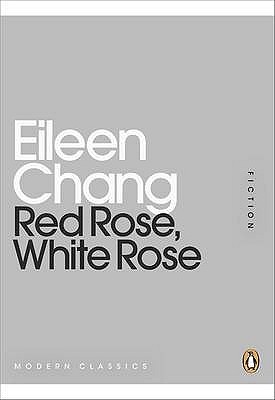
Red Rose, White Rose


“Marry a red rose and eventually she'll be a mosquito-blood streak smeared on the wall, while the white one is ‘moonlight in front of my bed’. Marry a white rose, and before long she'll be a grain of sticky rice that's gotten stuck to your clothes; the red one, by then, is a scarlet beauty mark over your heart.”
from Red Rose, White Rose by Eileen Chang

Friday, 21 June 2013

Book Review: Red Rose, White Rose by Eileen Chang

http://www.goodreads.com/book/show/10453145-red-rose-white-roseThis week I put my focus on Asian literature. There are authors from Japan like Haruki Murakami or Banana Yoshimoto whose novels are rather popular here in Europe, too, but for the rest Asia is almost a white spot on my literary landscape. The works of the Chinese Nobel Prize laureate for literature of 2012, Mo Yan, are only slowly appearing in the shelves of our bookshops and I haven’t yet read any of them. On the other hand, a friend of mine called my attention to one of her favourite writers, Eileen Chang. I decided to pick her novella Red Rose, White Rose for today’s review.

Eileen Chang (張愛玲, correctly transliterated Zhang Ailing) was born in Shanghai, China, in September 1920. She studied English literature in Hong Kong, but due to the war returned to China in 1941 before finishing her degree. In 1943 Eileen Chang began her literary career and within two years rose to be one of the most acclaimed Chinese writers. Together with Love in a Fallen City (倾城之恋) and Lust, Caution (色,戒) the novella Red Rose, White Rose (紅玫瑰白玫瑰) is one of her best known works outside China. In 1952 she moved to Hong Kong again and then immigrated into the USA where her first novel written in English, The Rice Sprout Song, came out in 1955. She finished two more English novels (both partly autobiographical) in 1963, but The Fall of the Pagoda as well as The Book of Change were published only many years after Eileen Chang had died in Los Angeles, USA, in September 1995. 

Red Rose, White Rose is set in Shanghai during the 1940s. The novella revolves around Tong Zhenbao and his attitude towards women as well as life in general. Stemming from a poor family he is the prototype of a social climber and self-made man who subordinates everything and everyone to his plans. He is the product of an education that still treasured traditional Chinese – i.e. strictly patriarchal – values while society was already heading into modern times. As an upper-level manager in a foreign textile company Zhenbao is a successful member of the higher middle class. In addition, he has a home, a wife and a nine-year-old daughter as he ought to. All things considered, he has the ideal life that he always planned to have at this stage. He has been faithful to his resolution to “create a world that was ‘right’, and to carry it with him wherever he went” and has no reason to complain. And yet, he isn’t happy in his ideal world. He feels that in return for goodness and sacrifices he doesn’t receive the respect and sympathy that family and friends owe him.

Love is a particularly difficult matter for Zhenbao because his view of life requires that he is the absolute master of his “little pocket-size world” including the women around him. Strong women who do as they wish, especially if they trespass the bounds that society sets them, shake him and attract him at the same time. Back in China after his studies abroad he can’t resist the charms of Jiaorui, the libertine wife of his friend, and resents himself for it. The affair goes on until Jiaorui tells her husband about it and asks for a divorce. Her initiative shocks Zhenbao because most of all he fears the scandal and its detrimental implications on his career as well as his status. Zhenbao has no intention whatsoever to marry Jiaorui, his red rose of passion, and drops her at once. His idea of the ideal wife is a very different one: she must be spotless, innocent and most of all tractable. To meet his white rose of purity Zhenbao allows his mother to arrange a marriage for him. The girl of choice is Yanli, a pretty and naive university graduate from a good family. Zhenbao gets what he wants, but the trouble is that real people never meet the idealised model assigned to them. 

It’s a rather unsentimental picture of love and marriage that Eileen Chang paints in her novella Red Rose, White Rose. The simple and despite all powerful language of the author leaves hardly any doubt about relationship being in her eyes nothing but a constant fight for control over the other. Zhenbao certainly has a problem with intimacy and isn’t ready to let anybody have a glimpse behind the thick castle walls into his inner world. Always on his guard in order not to lose control, he never learns what love really is. He does good for others to observe his own rules and to serve his own interest rather than out of a philanthropic impulse. In addition, he idealises the world and people. How could he not be doomed to disappointment under such circumstances? 

Red Rose, White Rose by Eileen Chang is a quick read, but it leaves a lasting impact and much to think about. Had I allowed myself more time to digest, I’d probably have found other interesting aspects of the story to write about. However, it’s an excellent novella for everyone interested in Asian literature that doesn’t actually flood the European market. In brief: I highly recommend it for reading.

Tuesday, 18 June 2013

Cha: Literature From and About Asia

Cha is the Chinese word for tea and at the same time it's the name of a Hong Kong-based online literary journal in English founded in 2007. Tea and reading are a wonderful match, at least for me who adores fine tea and quality literature. Of course, it may not be the best idea to sip my organic fairtrade sencha while sitting in front of a computer, but then it's always good to be careful and pay attention to what we do, isn't it? 

It’s obvious that the publishers of Cha gave their literary journal and its website much thought. Probably, they share my taste for tea and reading like many others in the world. Or maybe they just wanted to name their journal after something typically Asian that would convey the notion of cosiness and relish. The name was a good choice for a journal showcasing "Asian-themed creative work and work done by Asian writers and artists", both established and emerging.

Cha is a completely free online literary journal that offers a rich blend of different literary genres with a focus on quality creative work ranging from poetry, fiction and drama to creative non-fiction, essays and reviews. As a complement also photography and graphic art get room in the journal appearing quarterly in March, June, September and November. On the website the last two issues show in the left panel with their respective link to the contributions by genre. Past issues are available via the archives page sorted by date of issue as well as genre.

Selected work published in Cha is later discussed and replied to in the section called A Cup of Fine Tea which seems to be a seperate website, though, and not very active, I'm afraid. There's also a Blog where updates about the journal and its contributors are being published and where bloggers can share their thoughts, at least in principle. At the moment I don't see much going on there, but then it's summer and we're all cutting back on our indoor activities.

The Guidelines for submissions that Cha published are rather strict. Being a journal for Asian literature and art, any work that isn't from or about Asia is ruled out from publication, of course. Submissions also need to meet many formal requirements and if they aren't met the submissions are being ignored without reading. On the other hand, it's a positive surprise to find that the journal also accepts certain texts that have been published previously in other literary journals and magazines. They are placed in a section called Lost Teas.

All in all, Cha looks like a very interesting online literary journal that allows people from around the globe who otherwise don't have easy access to Asian literature to discover a whole different world. It's definitely worthwhile to browse the site and get absorbed in some of the poetry and other texts.