(1898)
Es treibt der Wind im Winterwalde Die Flockenherde wie ein Hirt, Und mancheTanne ahnt, wie balde Sie fromm und lichterheilig wird, Und lauscht hinaus. Den weißen Wegen Streckt sie die Zweige hin – bereit, Und wehrt dem Wind und wächst entgegen Der einen Nacht der Herrlichkeit.
Rainer Maria Rilke
(1875-1926) |
(1898)In the winter woods the wind drives the flock of snowflakes, shepherd-like, and many a fir-tree feels how soon it will be sanctified by lights, and listens out. To the white pathways it stretches its branches – ready, and wards off the wind and grows towards that one single night of glory. Translation: Edith LaGraziana 2013 |
Monday, 9 December 2013
Poetry Revisited: Advent
Friday, 6 December 2013
Book Review: Christmas Holiday by William Somerset Maugham
 It’s December and all over the world Christian families are preparing for Christmas once again. For me as an introvert in a predominantly Roman Catholic country the hustle and bustle of this time of the year is getting almost unbearable and as often as I can I seize the opportunity to hide away at home alone with a good book for hours on end. However, there’s no reason why I shouldn’t pay my blogging tribute to the Advent season and I make the start with a classic from the wake of World War II. Remaining true to myself, I passed over the heaps of mainstream novels revolving around blood-dripping crimes or heart-rending love and instead chose for today’s review Christmas Holiday by W. Somerset Maugham which, as it turned out, offers bits of both.
William Somerset Maugham was born in Paris, France, in January 1874. His childhood was unhappy since by the age of ten the sensitive boy had lost both his parents and grew up in the care of his cold uncle Henry MacDonald Maugham, the Vicar of Whitstable in Kent. He began writing steadily at the age of fifteen and, secretly at first, aspired at being an author. During a year in Heidelberg, Germany, he produced a biography of the opera composer Giacomo Meyerbeer. Back to the U.K. he trained and qualified as a doctor at St. Thomas' Hospital in Lambeth, London, but immediately gave up practicing when his first novel Liza of Lambeth became a tremendous success in 1897. Over the following decades the writer brought out many other novels, plays and short stories along with travel books, essays, literary criticism, and two autobiographical publications. The most famous among his works are Of Human Bondage (1915), The Moon and Sixpence (1919), The Trembling of a Leaf (1921), On a Chinese Screen (1922), The Razor’s Edge (1944), and A Writer’s Notebook (1949). Christmas Holiday is one of his less known novels and came out in 1939. William Somerset Maugham died in Nice, France, where he had been living from the 1920s on, in December 1965.
The title of Christmas Holiday makes expect a light and entertaining read, but as soon as the blue-eyed twenty-three-year-old Londoner, Charley Mason, arrives in Paris it becomes clear that the plot won’t be particularly cheerful. The travel is a present from his father, a reward for having worked hard as an accountant for the family business for a full year after his graduation from Cambridge although he had toyed with the idea of becoming a painter or a pianist. It’s the first time that the shy young man is in Paris alone instead of with his art-loving family. He is looking forward to seeing his best (and only) school-friend Simon again after two years and to having a lark in the city of love. Already at the train station Charley is disappointed for the first time because Simon isn’t there.
As it turns out Simon made a point of not meeting Charley at his arrival. His behaviour is completely in line with his harsh, cynical and unscrupulous nature which made Charley’s mother always dislike him and wonder why her soft and cheerful son admired him so much. As a foreign correspondent Simon began to harden his character even more because he’s convinced that only who first achieves mastery over himself can achieve mastery over others. At dinner he explains to his naïve friend Charley that he intends to further cultivate his strength – rhetoric – and to rid himself of his weakness – humanity. He aspires at complete spiritual aloofness in order to be indifferent to insult, neglect and ridicule. His aim is the development of an unconquerable will; his means is self-denial. In all this there’s no room for friendship or other human relations. Simon never directly answers to what end he denies himself everything that makes life pleasant, but Charley knows his strong sympathies for the Communist cause and it’s obvious that he wants what he calls a life that matters.
Others would have been taken aback by Simon’s radical ideas, but Charley holds on to their friendship and doesn’t give his words much credit. After dinner they move on to a night club called the Sérail where girls of good descent are entertaining the well-to-do clients in baggy trousers, with small turbans on their heads and a naked upper part of the body. Charley learns that misery drove them into prostitution and on Simon’s initiative he is presented to one of them called “Princess Olga”. At the time Charley doesn’t know that he’ll pass the rest of his holidays with this young Russian émigré whose real name is Lydia. Her story will shatter his childish conception of life and let him see the dark sides of human existence as well as the true nature of his friend Simon and his fanatic schemes.
Critics of his time called the prose of W. Somerset Maugham plain and full of clichés. In fact Christmas Holiday is written in a simple language with everyday vocabulary which makes it easy to read. At the same time it’s a partly symbolist period work which might reveal all its significance only to those who have sufficient knowledge of the past, above all the years between the beginning of the Russian Revolution in 1917 and the writing down of the novel in 1939 which saw the rise of several fascist or otherwise ruthless regimes in the world. Another great war was dawning, but the wide public brushed aside the thought preferring to ignore what was going on in Europe and in Germany in particular. Simon with his sombre dark eyes is the prototype of a demagogue and a dictator or at least of one of their cold-blooded executives like those who were later trialled in Nuremberg, while happy-natured Charley with his blue eyes stands for the innocent masses that only know their sheltered lives and look at the world through the rose-coloured spectacles of their own experience. Olga, or really Lydia, with her big blue eyes represents the suffering victim who has lost all illusions and who feels that it’s her duty to atone for the crimes of the ruthless although she’s innocent and her continuing loyalty seems crazy. She may also be seen as an allegory of a miserable reality which can no longer be overlooked by the likes of Charley.
These days the general atmosphere in society is getting harsher again. Performance – thus rhetoric – triumphs far too often over contents – thus expertise or just common sense. Coolness is considered as a desirable quality, while compassion and empathy use to be looked at as weakness, above all in business, but not only there. The complacent lives which most of us lead in the rich industrial countries shield us from the appalling reality of our neighbours. And like ancient Romans who took great pleasure in watching die gladiators or convicts (e.g. the first Christians) in the arena, we content ourselves with panem et circenses – bread and circuses, or in modern words: plenty of food and entertainment. Shouldn’t we know better after so many centuries, even millennia? Shouldn’t we have learned from history?
As you can see, Christmas Holiday by W. Somerset Maugham offers a lot to think about! The read was definitely worth the time and it goes without saying that I highly recommend it. Moreover I invite you to take this novel and the Christmas season as an occasion to re-evaluate your moral standards and your attitude towards others, no matter if you’re a Christian or not, a believer or not.
Monday, 2 December 2013
Poetry Revisited: A Winter Dawn
(1916)
Above the marge of night a star still shines,
And on the frosty hills the sombre pines
Harbor an eerie wind that crooneth low
Over the glimmering wastes of virgin snow.
Through the pale arch of orient the moon
Comes in a milk-white splendour newly-born,
A sword of crimson cuts in twain the gray
Banners of shadow hosts, and lo, the day!
Lucy Maud Montgomery
(1874-1942)
Friday, 29 November 2013
Book Review: Fair Play by Tove Jansson
 As the season suggests, on my tour around the European continent I’m moving today from Hungary northwards to Finland, the home country of Santa Claus and his reindeers. Every year millions of letters addressed to the white-bearded gentleman in red are delivered to Santa Claus Village in Rovaniemi at the Arctic Circle where he resides according to legend. However, I’m not going to review a Christmas novel – not yet. Instead I picked a book by a writer belonging to the Swedish-speaking minority in Finland: Fair Play by Tove Jansson. The author’s international fame is based above all on her stories for children revolving around the Moomins, but she also wrote noteworthy novels and short narratives for adults like the work which I’m reviewing today.
Tove Jansson was born in Helsinki, then Grand Duchy of Finland, Russian Empire, in August 1914. After her arts studies in Sweden and France she made her living as a writer, painter, illustrator, and cartoonist. In 1945 she brought out The Moomins and the Great Flood (Småtrollen och den stora översvämningen) which was the first in the series of Moomin novels, picture books and comic strips produced over 25 years. Then Tove Jansson‘s dedicated herself to adult fiction producing among others the novels The Summer Book (Sommarboken: 1972), Sun City (Solstaden: 1974), The True Deceiver (Den ärliga bedragaren: 1982), and Fair Play (Rent spel: 1989) as well as several collections of short stories like The Listener (Lyssnerskan; 1971), Art in Nature (Dockskåpet och andra berättelser: 1978; also translated as The Dollhouse and Other Stories), Travelling Light (Resa med lätt bagage: 1987), and A Winter Book (Meddelande: 1998). All along she was also a highly successful painter. Tove Jansson died in Helsinki, Finland, in June 2001.
The protagonists of Fair Play are Mari and Jonna, a writer-illustrator and a filmmaker-graphic artist in their early seventies, who are living somewhere at the Baltic Sea, presumably Helsinki and one of the small islands off the Finnish coast respectively depending on the season. They have been close friends – companions – since childhood and share their lives dwelling
“… at opposite ends of a large apartment building near the harbor, and between their studios lay the attic, an impersonal no-man’s-land of tall corridors with locked plank doors on either side.”A series of seventeen seemingly unimportant episodes as can occur on any ordinary day shows how the two women managed to work and live together for so long without losing respect, admiration and love for each other. From the very beginning it becomes clear that allowing each other space has a key role in it. It’s a prerequisite for them to thrive, to simply be themselves and to go their own artistic ways with the support of the other, yet without her unasked meddling.
“And over the years, [Mari]’d learned not to interfere with Jonna’s plans and their mysterious blend of perfectionism and nonchalance, a mix not everyone can properly appreciate. Some people just shouldn’t be disturbed in their inclinations, whether large or small. A reminder can instantly turn enthusiasm into aversion and spoil everything.” (Changing Pictures)Mari and Jonna know the capricious nature of all creative urge. Between them there’s no need to talk about it, no need to explain sudden irascibility and unrest or the unexpected wish for retreat and solitude. They are familiar with each other’s habits and moods before, during and after the act of creating a new piece of art. They understand and do as bid because for both it’s best that way. After all, each one appreciates and admires the work of the other, its power and uniqueness, but also the thought and effort put into it.
“They never asked, “Were you able to work today?” Maybe they had, twenty or thirty years earlier, but they’d gradually learned not to. There are empty spaces that must be respected—those often long periods when a person can’t see the pictures or find the words and needs to be left alone.” (Videomania)However, each one of the elderly women is a person of her own right and none of them is prone to submissiveness. So it goes without saying that they aren’t always of one mind and that they quarrel like every couple. In the end, they always sort things out one way or another. Life taught them that they can’t control everything and that sometimes it’s better to let go. They are painfully aware of getting older and of their dwindling strength. They go on living together and travelling together, but at the same time Mari and Jonna have each a life of her own, a life filled with friendship and love.
In Fair Play Tove Jansson produced a very fine and calm piece of literature about creativity and the life-long friendship of two women trying to reconcile life and art in their relationship. Fairness and playfulness are the essential qualities evoked from beginning to end. In a strict sense the slim book is a collection of seventeen vignettes, but the short stories are interweaved and combine to a character study of the two protagonists, a fact which makes it seem justified just as well to call it a novel. There’s no elaborate plot linking the stories and all things considered there isn’t happening much in Fair Play. On the other hand, the psychological conditions of the artist as well as the creative process itself get much room in it and form kind of a red thread. The author’s style is clear and unpretentious at first sight, but the stories use to have a philosophical dimension, too, which isn’t always obvious and which therefore may be less accessible to a quick reader.
For me Fair Play by Tove Jansson was an easy and light read in which I often recognized myself as an artist. I enjoyed the calm stories of everyday life very much and it was nice to see the relationship of two women depicted as true friendship instead of a never ending series of stupid intrigues. Consequently I recommend the book for reading.
Wednesday, 27 November 2013
Marie von Ebner-Eschenbach
 |
| Marie von Ebner-Eschenbach
painted by Karl von Blaas (1873) |
The career of Marie von Ebner-Eschenbach as a writer was quite extraordinary considering that she belonged to the Catholic-Bohemian aristocracy of Austria-Hungary and that in her time writing wasn’t considered a suitable occupation for a woman, even less for one of her rank. Marie Baroness von Ebner-Eschenbach, née Baroness Dubský von Třebomyslice, was born in Zdislavice Castle near Kroměříž in Moravia, Austrian Empire (Austria-Hungary as from 1867; Czech Republic today), on 13 September 1830. As a matter of fact, she was an almost exact contemporary of the Austrian Emperor and Hungarian King Francis Joseph I who had come into the world less than a month earlier. Marie’s mother died from puerperal fever like so many at the time and her father remarried soon, but the girl became very close to both her stepmothers Eugénie Bartenstein (who died when she was seven years old) and Countess Xaverine Kolowrat-Krakowsky.
The little baroness grew up in Zdislavice Castle where she passed the summers and in the family’s winter residence in Vienna. German and French governesses were charged with her education which was carefully supervised by Marie’s maternal grandmother, her aunt Helen and her stepmothers. As was often the case in noble families, the girl’s first language was French, but she also learned German and Czech, the latter certainly to a great part owing to Czech servants. When they stayed in Vienna, her second stepmother often took the girl to the Burgtheater and encouraged her to read, while she didn’t approve of her literary attempts. Marie was seventeen when her stepmother sent some poems to the famous Austrian poet and dramatist Franz Grillparzer in the hope that he would call them awful, but he didn’t. On the contrary, he praised them and thus transformed the girl’s wish to be a writer into determination.
At the age of eighteen Marie Baroness Dubský von Třebomyslice married her cousin Moritz Baron von Ebner-Eschenbach who was fifteen years her senior and moved with him to Louka near Znojmo in Southern Moravia (today Czech Republic) where he taught at the Military Engineering Academy until his transferral to Vienna eight years later in 1856. Encouraged by Franz Grillparzer and with the full support of her husband Marie von Ebner-Eschenbach pursued her literary ambitions. In 1858 she dared a first step into the public: her epistolary satire Aus Franzensbad was published anonymously. After that she focused on dramas in the style of Friedrich Schiller for about twenty years, but none of those (Maria Stuart in Schottland: 1858; Marie Roland: 1867; and several one-act plays) was successful.
At last Marie von Ebner-Eschenbach turned to the genre in which proved to lie her true talent: narrative writing. Her short novel Božena came out in the journal Deutsche Rundschau in 1876 and received some positive attention which encouraged her to continue on her new way. In 1879 Marie von Ebner-Eschenbach did an apprenticeship as a clock maker – probably because she collected clocks – and wrote the narrative Lotti die Uhrmacherin (engl. Lotti the clock maker) printed in the Deutsche Rundschau in 1880. From then on publishing houses stood open to her and Marie von Ebner-Eschenbach became one of the most widely-read and important authors of her time, noted above all for her elegant style and realistic depiction of characters and scenery.
After a collection of Aphorismen (1880, translated as Aphorisms) and two series of very popular short stories (Dorf- und Schloßgeschichten: 1883 – including her most famous novella Krambambuli; Neue Dorf- und Schloßgeschichten: 1886) the writer brought out her most important novel Das Gemeindekind in 1887. Over the following twelve years Marie von Ebner-Eschenbach produced a large number of short stories and novellas like Two Contesses (Zwei Comtessen: 1885) and Beyond Atonement (Unsühnbar: 1890) in addition to the novel Agave (1903) and autobiographical sketches titled Meine Kinderjahre (1906). Altweibersommer from 1909 was the last work published during her lifetime.
Marie von Ebner-Eschenbach’s husband died in 1898, the same year when she received the highest civilian decoration of Austria-Hungary, the Cross of Honour for Arts and Literature. Two years later the University of Vienna honoured the writer for her life’s work conferring upon her as the first woman ever the degree of doctor of philosophy, honoris causa.
Marie Baroness von Ebner-Eschenbach died in Vienna, Austria-Hungary, on 12 March 1916 just a couple of months before Emperor Francis Joseph I.
If you wish to learn more about life and work of Marie Baroness von Ebner-Eschenbach I recommend the following biographies:
Monday, 25 November 2013
Poetry Revisited: November
(1844)
No sun – no moon!
No morn – no noon –
No dawn – no dusk – no proper time of day.
No warmth, no cheerfulness, no healthful ease,
No comfortable feel in any member –
No shade, no shine, no butterflies, no bees,
No fruits, no flowers, no leaves, no birds! –
November!
Thomas Hood
(1799–1845)
Friday, 22 November 2013
Book Review: Kaddish for an Unborn Child by Imre Kertész
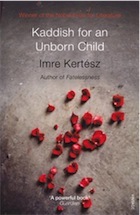 On my literary tour of Europe I visit Hungary today and it almost goes without saying that I continue with a book connected to war and death. Hungary entered World War II in 1941 siding with Nazi Germany, but only in March 1944 German troops occupied the country and began with the deportation of the Jewish population to concentration camps. In February 1945 Red Army forces liberated Hungary as can be read in Sándor Márai’s masterly novel Szabadulás (meaning “liberation”) set during the siege of Budapest which lamentably doesn’t seem to have been translated into English. The country remained under Soviet supremacy (and control) until 1989. All those hardships naturally influenced the further lives of people, among them the Nobel Prize laureate in literature 2002 Imre Kertész who made his balance in Kaddish for an Unborn Child.
Imre Kertész was born in Budapest, Hungary, in November 1929. For being of Jewish descent he was arrested and deported to Auschwitz at the age of fourteen and later moved on to Buchenwald. After his liberation from the concentration camp in 1945 he returned to Hungary, finished school and then worked for a newspaper, as an industrial worker and a ministerial officer until his obligatory two-year military service. From 1953 on Imre Kertész earned his living as an independent writer and translator of German-language authors and philosophers. The author’s first and probably most famous novel published in 1975 is Fatelessness (Sorstalanság; also translated as Fateless) which together with Fiasco (A kudarc: 1988), Kaddish for an Unborn Child (Kaddis a meg nem született gyermekért: 1990; also translated as Kaddish for a Child Not Born), and Liquidation (Felszámolás: 2003) forms kind of a tetralogy with strong autobiographical echoes like all his fiction and essays. In 2002 Imre Kertész was awarded the Nobel Prize in Literature. Since 2001 the author lives mainly in Berlin, Germany.
The Kaddish is the Jewish prayer for the dead. The narrating protagonist writes his Kaddish for an Unborn Child or to be precise for a son or daughter who could have been, but never even was conceived because he always refused to bring children into a world in which the holocaust had been possible. At the beginning stands the innocent question of a philosopher making conversation during a walk through the park of a rest-home in the Hungarian highlands. He wants to know whether the ageing narrator has children. His answer is an as immediate and vehement “No!” as when his then wife, now (remarried) ex-wife, told him that she wanted a child. What follows is a bitter look back at his failed marriage, at his career as a writer compelled to do translations for a living, at his ordeal in the concentration camps, at his relations with the autocratic father and his time in a boarding school, thus at his entire existence. He also meditates on what relevance his Jewish heritage has in all this, especially for him who has no faith. He knows that in reality he has died long ago together with millions of others. Like many holocaust survivors he feels that he has no right to exist and that his purpose is to complete the task which the Nazi bloodhounds began in the concentration camps. So he is constantly “digging his grave in the air”. As a natural consequence he is unable to commit to anyone or anything with his entire self, be it his wife, his career, his dwelling – or a child.
Kaddish for an Unborn Child is a thin book offering dense content with many philosophical insights. It’s a first-person narrative addressed to the child whom the narrator never fathered and in a way it reminded me of a long letter. In fact, a thoughtful monologue interrupted only by some remembered dialogues fills the pages from beginning to end. In addition Imre Kertész didn’t structure his novel in any usual way. There are no chapters and only few paragraphs. Sentences are long and meandering. Form and style are entirely subordinated to the natural flow of the stream of consciousness which also forces a line break whenever the narrator hurls another firm “No!” at his wife and at the world. Also the inner order of the story isn’t chronological, but it works like our mind picking up ideas and thoughts on the spur of the moment. So in a certain way it’s a difficult read requiring sometimes to leaf back and to re-read passages to understand properly.
If you’re looking for a cheerful and entertaining read Kaddish for an Unborn Child by Imre Kertész definitely is the wrong choice. If you enjoy intelligent as well as intense writings and don’t mind a dark mood, it’s the perfect read. Highly recommended to everyone who wishes to understand the minds of holocaust survivors and their children.
Subscribe to:
Posts (Atom)